
Welcome back to the CSPC Dispatch! The midterms may be over, but Congress still has major business to finish before the year ends. In this issue, Senior Fellow James Kitfield looks at one of the biggest items on that list: the showdown over the administration’s roughly $1.5 trillion defense request ahead of a December 11 funding deadline. He talks with Travis Sharp of the Center for Strategic and Budgetary Assessments, who lays out alternative budget paths for Congress and argues that replenishing depleted munitions stockpiles is critical.
In her piece, Amarah Din argues that the bipartisan Women, Peace, and Security Act is being quietly eroded through reassigned programs and unspent funds rather than repealed. She makes the case that the law deserves either real implementation or an open repeal. Finally, Sarena Sohan rounds up the political reform measures that were on state ballots this election, covering campaign finance, redistricting, primaries, term limits, and supermajority thresholds. She notes which ones voters approved, which they rejected, and which are still too close to call.
Looming Defense Budget Showdown
By James Kitfield

President Donald J. Trump shows the signed copy of the National Defense Authorization Act of 2019. Photo courtesy of the U.S. Army.
Even before the celebrations of a historic “blue wave” election were over and the balloons hit the floor, attention in Washington, D.C. was already shifting to a looming budget deadline on December 11 that could provoke another government shutdown. This week Senate and House appropriators met in private for a bipartisan discussion on the matter but adjourned without agreeing on a path forward.
As has so often been the case this year, the focal point of the impasse is a historic $1.5 trillion defense budget request by the Trump administration, plus a roughly $70 billion supplemental for the Iran war. Most Democrats are thought to favor a short-term continuing resolution that would fund the government at current levels until next year, when they will control both the House and the Senate. Some Republicans see the current lame duck session as perhaps their last chance to secure additional funding for the Iran conflict.
To examine the always hoary issue of defense spending in a time of war and global instability, CSPC Senior Fellow James Kitfield spoke with Travis Sharp, a Senior Fellow at the Center for Strategic and Budgetary Assessments and former staff member of the National Defense Strategy Commission. Sharp’s recent report “Plan B for Defense Hawks: Analysis of the 2027 Budget Request” examines four options for paring down the Trump administration’s historically large request while still maintaining an adequate defense. The interview has been edited for length and clarity.
Q: Your new report proposes alternatives to the Trump administration’s 2027 request for a whopping $1.5 trillion in defense spending, which you refer to as “immoderate,” “unbalanced,” and “anything but incremental.” That’s a pretty strong assessment for a defense hawk.
Sharp: Well, there are historical benchmarks for large increases in defense spending, most notably [President Ronald] Reagan’s peacetime defense buildup in the early 1980s. The Reagan Pentagon procured a lot of weapons systems in that period, which is generally seen as one of very high growth in defense spending. During the Reagan buildup you had multiple years that saw defense spending grow 7% or 8% percent year to year, with the peak spending year representing 12% real growth. That Reagan period is widely acknowledged as the largest peacetime defense buildup in our history.
Now compare that to the Trump administration’s 2027 defense budget request, which seeks a 40% increase in defense spending [over the previous year], which is roughly 4 times as big as the peak of the Reagan buildup! That’s why I say in the study that the Pentagon’s 2027 request really warped perceptions of what a good defense budget looks like even from the perspective of a defense hawk.
Q: Does that suggest to you that Secretary of Defense Pete Hegseth was using the old trick of asking for the moon while anticipating more down-to-earth spending on defense?
Sharp: There have been media reports quoting unnamed Pentagon sources that the department had a fallback request of around $1.1 trillion for the base defense budget [absent supplemental spending requests for the Iran war]. That does suggest that they were already thinking about a fallback plan. The larger point I would make is that even before the mid-term election [and Democratic sweep taking control of both the House and Senate – editors note] there was a lot of skepticism on Capitol Hill about the Pentagon’s $1.5 trillion request among both Democrats and Republicans. There is strong evidence that even many Republicans were not onboard with the Trump administration’s defense spending plan.
Q: In the four budget options you outline in “Plan B for Defense Hawks,” you recommend two that avoid the partisan reconciliation process that allows the Senate majority to pass budget legislation on a simple 51-vote margin, overriding the filibuster rules that otherwise require a 60-vote majority. Why?
Sharp: I strongly felt the need to come up with defense budget options that some Democrats like Senator Jack Reed, D-R.I. and Elissa Slotkin, D-Michigan, [both members of the Senate Armed Services Committee] could get on board with and say ‘yes.’ Not surprisingly authorizers and appropriators on the traditional defense committees are against reconciliation, because it sidesteps their power. In general, the minority party is unlikely to agree to a budget proposal that includes a reconciliation procedure, because it poisons the well from a partisan point of view.
Q: Then why offer them?
Sharp: To be clear I recommend against relying on reconciliation, but there’s a chance that some Republican defense hawks might decide that the current lame duck session of Congress represents their last chance to get what they consider sufficient money for defense. Even if Democratic hawks tell their Republican colleagues they remain committed to investing sufficiently in defense, there’s no way they can guarantee being able to get the rest of their caucus onboard next year, especially with so many new Members of Congress.
Q: Have you detected any concerns that a reconciliation procedure also gives the Trump administration too much latitude in how to spend defense funds, further diluting Congress’ power of the purse?
Sharp: Yes, I have heard complaints even from Republican staffers on Capitol Hill that after passing the “One Big, Beautiful Bill” last year using reconciliation the Director of the Office of Management and Budget [Russell Vought] slow-rolled and micromanaged the allocation of money within the Defense Department in order to have the final say on how it was spent. Privately, some staffers don’t believe Vought is an enthusiast for spending large amounts of money on defense.
Q: One of the principals you followed in devising your budget options for “hawks” was at least 2% of real growth in the defense budget year to year. Why was that so important?
Sharp: If you look at the average growth in the defense budget year-to-year over the last decade [2016-2026] it’s been 2.8%. For me that represents an important benchmark because in the past decade the United States has endured a lot of momentous events and dramatic swings in our politics. There were the wars against Al Qaeda and ISIS, the global pandemic, Russia’s invasion of Ukraine, the dramatic military rise of China, and the war with Iran. Our presidential leadership in that timeframe has swung dramatically from Barack Obama to Donald Trump, to Joe Biden, and back to Trump.
Yet year after year over that decade Congress has agreed to a steady uptick in defense spending. I believe that represents evidence of durable bipartisan support for reasonable increases in defense spending. And that’s something I believe is well worth protecting. Some experts insist that level of increase is too modest, and that’s a fair argument to make. On the other hand, the U.S. defense budget this year topped $1 trillion. That’s a level of funding the Pentagon should be able to work with. If it can’t get the job done with over $1 trillion annually, then we probably need some new defense planners.
Q: Another principal you adhered to in formulating budget options was the need to replenish critically low stocks of munitions, especially air-defense missile interceptors and some precision, long-range strike munitions depleted by the Iran war and transfers to allies such as Ukraine and Israel. So you believe the munitions shortfall is severe enough that any defense budget must address it?
Sharp: Yes. Replenishing U.S. munitions stockpiles is absolutely critical. If you look at the Pentagon’s 2027 budget request of $1.5 trillion, it includes $50 billion for critical munitions. All four budget options offered in my report call for spending $40 billion on munitions, which is only $10 billion less. I think that’s reasonable because at CSBA we made rough estimates of the maximum production rates for these critical munitions that the industrial base can sustain over the next couple of years, and that’s covered in that $40 billion topline.
Q: Why do you personally recommend budget option number one in your report, which you call “Steady Investment,” which calls for spending $1.11 trillion on defense, nearly half of which is devoted to spending on procurement and research & development?
Sharp: I think it’s most balanced. Steady Investment calls for a 7% increase in defense spending which approaches the average of the Reagan defense buildup, but all the funding is in the Congressionally determined base budget, which avoids the fractious politics around reconciliation. It is designed to appeal to those alarmed by the erosion of certain U.S. technological advantages relative to China by investing in procurement and R&D, which Congress tends to look on favorably because for many members it means money and jobs in their districts. It also incorporates the biggest cuts in spending proposed by the Congressional defense committees during markups this year. A lot of CSBA analysis supports the widely accepted idea that more spending on the U.S. defense industrial base is appropriate and overdue, but in the Trump administration’s National Defense Strategy there was little specificity about how funds for the defense industry should be spent. It just assumes that any money spent on the defense industry is good. That raises a lot of unanswered questions and can pretty quickly become circular reasoning and undisciplined budgeting. So for me Steady Investment was the most straightforward way to increase the defense budget while playing within normal budgeting procedures.
Q: Your second stated choice is Option 3, which calls for a $1.11 trillion defense budget funded without reconciliation, emphasizing spending on U.S. military personnel and construction, and cuts to military procurement and R&D. Who was that designed to appeal to?
Sharp: It speaks to fiscal conservatives who are also defense hawks. That may sound like a contradiction but that’s a real type. They tend to think weapons systems are over emphasized compared to the end strength of our armed forces. So Option 3 starts from the lower baseline of the 2026 defense budget but adds 5% real growth and includes the biggest increases proposed by the defense committees in this year’s markups.
Q: How concerned are you that the blue wave that swept Democrats into the majority in both the House and Senate, many on promises to quickly end the war in Iran, will leave defense hawks stranded on a shrinking island and unable to adequately protect a stressed U.S. military?
Sharp: I do worry that the post-midterm era we are entering could produce a very dangerous dynamic. Whatever you think of the decision to initiate a war with Iran, the undeniable fact is that the conflict has degraded the readiness and critical munitions stockpiles of the U.S. military. That makes Congress’ ability to limit U.S. military action by cutting funding more complicated than it may first appear. To me it cannot make sense for Congress to leave the men and women in the U.S. military in a state of degraded readiness without adequate munitions in a dangerous world. We have to use common sense.
James Kitfield is a Senior Fellow at the Center for the Study of the Presidency & Congress and a three-time recipient of the Gerald R. Ford Award for Distinguished Reporting on National Defense.
The Fate of Women, Peace, and Security
By Amarah Din

Security Council Chamber ahead of meeting on women, peace, and security. Photo courtesy of the United Nations, Loey Felipe, October 2026.
At the United Nations’ annual debate on Women, Peace, and Security this fall, the United States pledged to continue to prioritize these issues, consistent with the bipartisan Women, Peace, and Security (WPS) Act that President Trump signed into law in 2017. Congress appropriated approximately $112 million to carry out the law’s strategy for the 2026 fiscal year. However, according to a recent report by the Democrats on the Senate Foreign Relations Committee, the administration has yet to put any of it to use.
The WPS Act was never a partisan project. Senator Jeanne Shaheen (D-NH), in partnership with Senator Shelley Moore Capito (R-WV), led it through a Republican-controlled Senate, which passed it with unanimous consent. In the House, Representative Kristi Noem (R-SD) wrote the companion bill with Representative Jan Schakowsky (D-IL). Marco Rubio co-sponsored it as a senator and, as Secretary of State, stated he was proud to have done so. The bipartisan WPS Caucus also stands, with Representative Lois Frankel (D-FL) and Representative Jen Kiggans (R-VA) as its co-chairs.
The law’s aim is practical rather than ideological. It made the United States the first country in the world with a comprehensive WPS law. It acknowledges the significant achievements of women’s involvement in conflict prevention, conflict resolution, and post-conflict peace building processes, even stating that research suggests that peace negotiations are more likely to be successful and sustainable when women are involved. Its main function is to direct the Department of State, the Pentagon, the Department of Homeland Security, and USAID to bring women’s participation into conflict prevention and peace processes. It also requires a government-wide strategy updated every four years.
Yet, since early 2025, the enforcement mechanisms behind the law have declined. Executive orders on diversity programs, foreign aid, and the federal workforce did not necessarily repeal the WPS Act, since only Congress has the power to do that. According to Georgetown’s Institute for Women, Peace, and Security, however, the orders redirected programs and many of the people who ran them to other roles. The State Department eliminated the Office of Global Women’s Issues, and Secretary Rubio stated in May 2025 that the office’s functions would be transferred over to regional bureaus. However, Senate Foreign Relations Committee staff say State Department officials have been unable to explain the logistics behind such a transfer and that officials from regional bureaus have not been given clear guidance as to who is now responsible for women-focused initiatives.
In April 2025, Secretary of Defense Pete Hegseth announced on X that he “proudly” ended the Pentagon’s WPS program, deeming it a “woke” initiative that distracted from warfighting. Instead, he said that the department will meet the minimum statutory requirements with an intent to eliminate it completely through the appropriations process.
The administration says it ended discriminatory hiring practices in favor of merit and restructured foreign aid to cut waste. Georgetown argues WPS was swept up in anti-diversity, equity, and inclusion (DEI) cuts because the two share vocabulary. An analyst from the Center for Strategic and International Studies clarifies that WPS is not a DEI initiative as it does not establish requirements, quotas, or organizational composition goals. Lawfare has reported that it obtained an unclassified Joint Staff memo that showed that “nearly every combatant command in the U.S. military recommended maintaining the WPS program and touted its benefit to national security,” contradicting the claim that it burdens commanders.
Whether WPS is wise policy can be a legitimate debate. But, whether a statute can be set aside by executive preference is a separate question and one that should concern Congress the most.
Congress writes the laws and holds the power of the purse, while the executive branch carries them out. When an administration finds an outdated statute, it can ask Congress to amend or repeal the law, and if it does not want to spend appropriated funds, it can send Congress a rescission request to reconsider. Letting a law be pushed and pulled through reassignment and unspent funds sets a precedent that any future administration could turn against laws even its own supporters favor.
The Senate Armed Services Committee’s version of this year’s annual defense bill, the National Defense Authorization Act (NDAA), would extend the Pentagon’s WPS authorities through 2029, with Senator Shaheen saying senior military officials view WPS as a “low-cost, high-impact” way to keep access and influence with global partners. The House passed its own defense bill in July, but a procedural vote to begin debate on the Senate version failed, and the full Senate never put the bill up. Lawmakers are now negotiating a single compromise bill in the lame-duck session. It is not clear whether the WPS extension will survive.
At this fall’s UN debate, a UN Women official stated, “nearly 80% of active negotiations last year took place without a single woman at the table.” Additionally, none of the 13 ceasefire agreements reached in 2025 substantively referenced women and girls and their specific experiences in times of conflict. These are the settings where fragile deals succeed or fail. As Washington competes with rivals for influence among partners, allies that share these commitments will surely notice if the country that pioneered a comprehensive WPS law stops implementing it. Should the leading champion for the women, peace, and security agenda really turn its back on half the world’s population?
Congress should keep the WPS extension in the final NDAA. It should also use hearings and the Act’s own strategy requirement to ask questions, such as how many people are actively working on WPS, how much of the original $112 million has been utilized, which State Department office runs the program, among many others. If the administration believes the law should change or the money should be returned, it should make an open, substantiated case to Congress.
A law written by members of both parties and signed by a Republican president deserves either implementation or open repeal, not quiet erosion. Wars do not end at the negotiating table, and neither should America’s attention to who is sitting there.
Amarah Din is a returning contributor to the CSPC Dispatch and a former CSPC intern. She is a Legislative Intern at Issue One and is pursuing a master’s degree in International Peace and Conflict Resolution at American University. She graduated with honors from Appalachian State University, where she studied Political Science with a concentration in Pre-Professional Legal Studies and a minor in Criminal Justice.
Political Reform in the 2026 Midterms
by Sarena Sohan
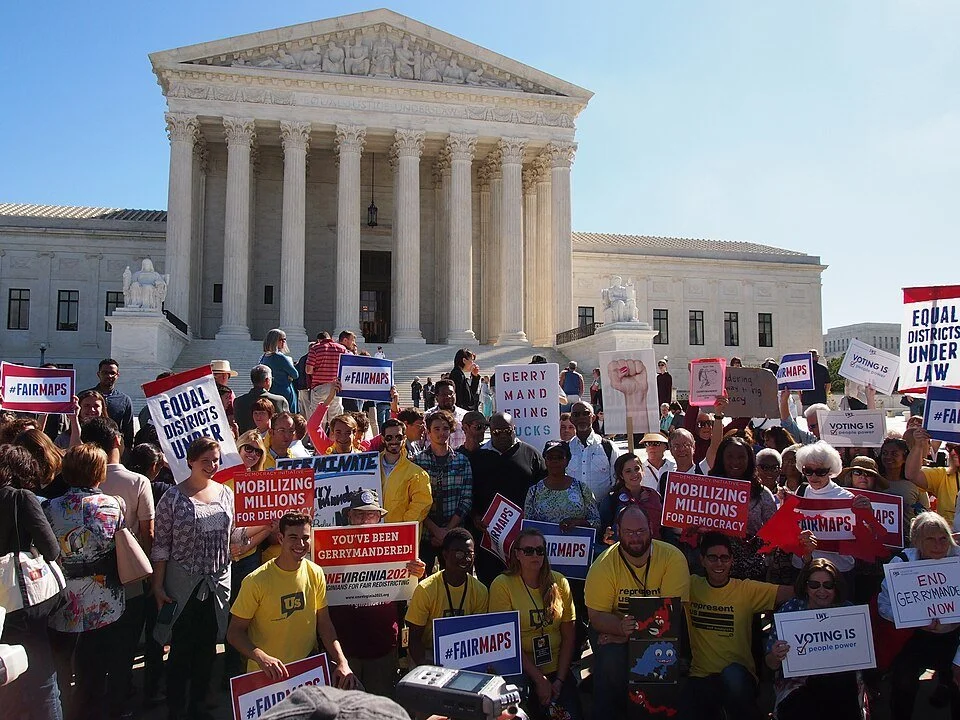

Candidates weren't the only thing on the midterm ballots last week. Several political reform initiatives affecting how state and federal elections are carried out across the country were up for votes, as well. Campaign finance reform topped the list of issues featured in these initiatives as many Americans have grown weary of the increasingly dramatic influx of money into politics. In this year’s midterms, the two campaign finance reforms that were proposed in Montana and Michigan, were passed. While the California initiative is currently still too close to call and the Arizona initiative was defeated.
The campaign finance initiatives each take a different angle. The near approved initiative in Michigan “prohibits regulated electric and gas utilities, government contractors with over $250,000 in annual government contracts, and organizations or individuals with substantial connections to those utilities or contractors from making direct or indirect campaign contributions to candidates for governor, attorney general, secretary of state, the state legislature, and certain local offices, as well as to ballot measure committees” and the approved initiative in Montana would “prohibit artificial persons, as defined in the initiative, from contributing to campaigns, ballot measure elections, or political parties. Artificial persons would include nonprofits, trusts, partnerships, corporations, trade associations, or unincorporated associations that are covered by Montana law, transact in Montana, or own Montana land, including organizations not based in Montana.”
Both were added to the ballot by an initiated state statute brought up by citizens of the state. While votes are still being counted in Montana, over 60% of voters voted in favor of the initiative. In Michigan, currently over 80% of voters voted in favor of the amendment. California’s campaign finance measure would allow public financing of election campaigns, and the results are currently too close to call. Meanwhile, Arizona’s initiative asked voters if the state should ban foreign nationals from making contributions to Arizona’s elections. The fact that campaign finance initiatives featured prominently in several states, highlights a growing interest into the broader questions about the role funding plays in elections. As the outlook for new federal campaign regulations in Washington remains dim, local and state initiatives may be the main vehicle to rein in the ever-growing amounts flowing into American elections.
Following the mid-decade redistricting efforts in several states, gerrymandering and redistricting was another political reform that featured prominently in many state initiatives in this election cycle. In Maryland, Democrats proposed a constitutional amendment that would potentially allow them to reshuffle Congressional districts in the future. Indicating the significance the party put on this measure, Gov. Moore's re-election campaign paid $500,000 to place an ad featuring President Barack Obama to air in the greater Washington D.C. area ahead of the elections. Marylanders overwhelmingly voted to approve the measure. Other states that proposed gerrymandering and redistricting were Colorado and Missouri, and both are pending a defeat. The Colorado approval will leave the state constitution unchanged in regard to the current redistricting system. Similar to Colorado, Missouri’s 2022 congressional district boundaries will remain intact with rejection of the veto referendum.
Primary system reform wasn’t favored among Massachusetts voters. Currently over 60% of voters do not want to eliminate party primaries for state elections and instead use the top-two primary system for state elections. In Alaska, results are currently too close to call, but current results show that voters are leaning away from reform items like rank-choice voting and reverting to a traditional plurality voting system.
Recent discourse around term limits also came to fruition during this election cycle. In Louisiana, the Gubernatorial Two-Term Lifetime Limit Amendment is set to be approved. In Nebraska, the Change State Legislative Term Limits from Two to Three Consecutive Terms Amendment is set to be overwhelmingly defeated. Both proposed initiatives were legislatively referred constitutional amendments. The governor is now limited to a lifetime maximum of two terms total in Louisiana. In Nebraska, the current limit of two consecutive terms remains intact.
Lastly, majority and supermajority threshold reforms haven’t gained much momentum, and the two initiatives in Utah and South Dakota are set to be defeated. If Utah's initiative passed, it would have made it more difficult for citizens to pass new tax laws through ballot initiatives. In South Dakota, voters chose to keep their current system of a simple majority in regard to approving state constitutional amendments.
Each initiative fell into one of four categories. Initiated state statutes, legislative constitutional amendments, initiated constitutional amendments, or veto referendums. The citizen-initiated reforms were most likely to be approved.
Sarena Sohan is an intern at CSPC and a student at George Mason University majoring in Communication with a concentration in Journalism.
CSPC in the News
Why Britain needs a maritime-first defense strategy
Published by Breaking Defense on November 10.
Senior Vice President for National Security and Intelligence Joshua Huminski argues that the United Kingdom should use NATO’s shifting balance of burdens to adopt a maritime-first defense strategy focused on the Euro-Atlantic. Building on his report Reclaiming the Waves, Huminski calls for expanding the Royal Navy with crewed and uncrewed systems, protecting undersea infrastructure, and investing in long-range strike and integrated air and missile defense. He also argues that the Army should first build one fully resourced heavy division for NATO, as Germany and Poland take the lead on land forces in Europe.
Read the full piece here.