
The CSPC Dispatch - June 5, 2026
In this issue, Glenn Nye argues that America's 250th anniversary is not just a moment for celebration but an urgent call to repair the structural incentives that have engineered dysfunction into the DNA of American democracy. Victoria Flick asks whether Europe can rearm quickly enough to replace the American deterrence it has long taken for granted, as a Russian drone strike on Romanian soil signals that the continent's window may be narrowing. Daria Synelnykova explores how the Iran War caught American air defenses off guard and why the counter-drone solutions Washington needs have been available in Ukraine all along. And Isabelle Deng examines the African Growth and Opportunity Act, a rare bipartisan trade framework set to expire this year, and makes the case that Congress should renew it before China fills the vacuum.
America's 250th Anniversary Demands Democratic Renewal
By Glenn Nye
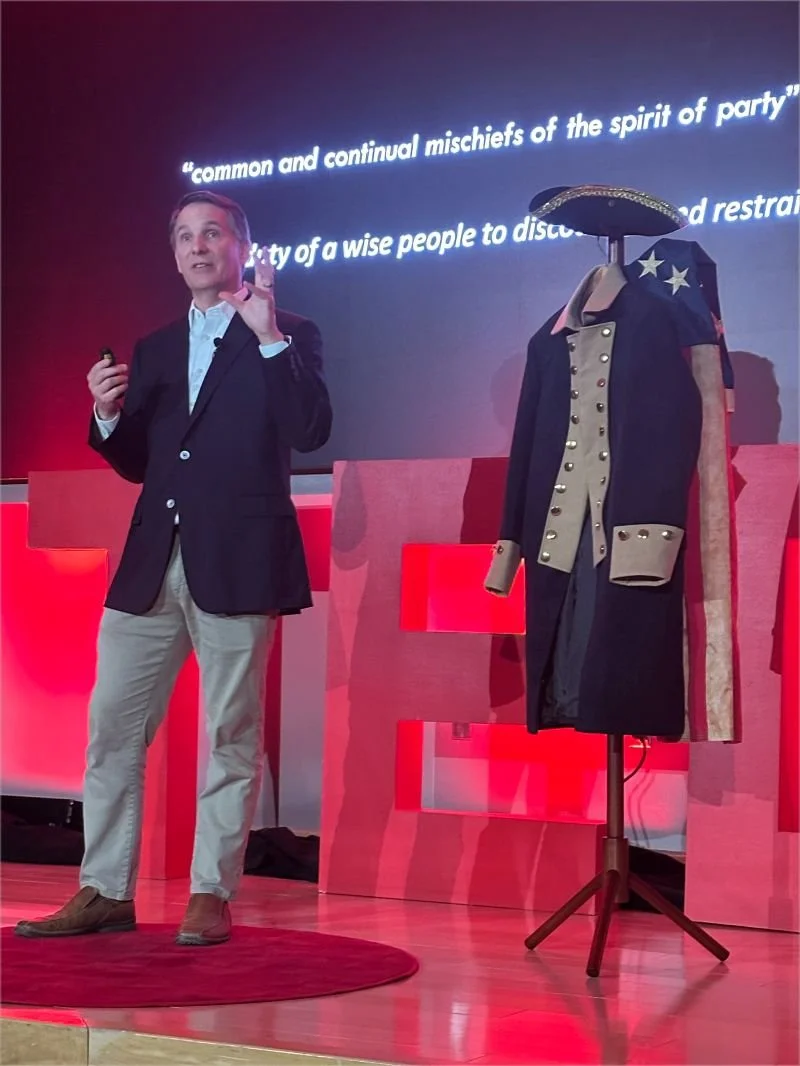
Photo of Glenn Nye delivering this piece as a TEDx talk given at TEDx George Mason U on May 30, 2026.
Note: This piece was adapted from a TEDx talk given at TEDx George Mason U on May 30, 2026
As America approaches its 250th anniversary, we face a question that has confronted every generation before us: What responsibility do we have to strengthen the democracy we will leave behind?
The answer begins with a warning from the nation's first president.
Before leaving office, George Washington, aided by Alexander Hamilton and James Madison, drafted what would become one of the most important documents in American political history: his Farewell Address. Part reflection, part warning, and part plea to future generations, the address identified a threat Washington believed could eventually undermine the republic itself—political partisanship.
Washington understood that partisanship or political tribalism was human nature. He described it as rooted in "the strongest passions of the human mind." But he feared what would happen if political tribes became more important to our identities than the nation they were meant to serve.
He warned that partisan politics would create "ill-founded jealousies and false alarms," "kindle the animosity of one part against another," and produce the "disorders and miseries" of political dysfunction. His concern was not disagreement. Democracies thrive on disagreement. His concern was that Americans would eventually see themselves primarily as members of political camps rather than citizens of a shared republic.
Washington concluded that the "common and continual mischiefs of the spirit of party" made it "the interest and duty of a wise people to discourage and restrain it." He warned that if we optimized our political system for partisanship, the resulting dysfunction would cause citizens to lose faith in democracy.
Two hundred and fifty years later, how are we doing?
Americans have much to celebrate. Our democratic experiment has survived civil war, economic depression, and profound social transformation. Yet despite our successes, most Americans sense that something is deeply wrong.
Public trust in institutions continues to erode. Congress routinely struggles to perform its most basic functions, like pass a budget on time. Government shutdowns have become familiar features of political life. Difficult but solvable challenges, like the mounting national debt, go unaddressed year after year. Meanwhile, Americans increasingly hear political messaging that encourages us to view one another through a partisan lens.
The result is a public exhausted by division and frustrated by dysfunction.
The common explanation is that the problem lies with bad politicians. But that diagnosis misses the deeper issue.
The problem is not primarily the people. It is the incentives.
Over time, we have allowed partisan actors to design and maintain electoral systems that reward division and punish cooperation. They have optimized our politics for partisanship, exactly what George Washington warned us against.
In fact, in the engineering of our electoral system, we have essentially coded into the DNA of American democracy a gene for division and dysfunction.
In many states, taxpayer-funded partisan primaries divide voters into competing camps before the first vote is cast. Electoral rules allow candidates to win without majority support, encouraging division and limiting competition. Legislative districts are drawn in ways that predetermine outcomes to benefit a political party.
We have allowed devoted partisans to become the rule makers and referees of elections in which they are competing. The result is a system in which the most ideologically committed voters wield disproportionate influence and politicians respond rationally to the incentives in front of them. If compromise creates political risk while confrontation creates political reward, division becomes an electoral survival strategy.
The good news is that structural problems have structural solutions.
America's greatest strength has always been its willingness to innovate. We solve difficult problems by experimenting, learning, and adapting. Our democratic institutions should be no exception.
Across the country, some states are already serving as laboratories of democratic reform. Alaska adopted a nonpartisan primary system in which all candidates compete on a single ballot regardless of party affiliation, followed by a general election that requires majority support. Other states are exploring reforms that open primaries to all voters, require majority winners, reduce partisan control over redistricting, or create new forms of representation designed to reward coalition-building rather than polarization.
The goal is not to advantage one party over another. It is to create incentives that encourage politicians to appeal to broader constituencies and govern more cooperatively once elected.
My personal favorite reform for Congress: Members should be prohibited from fundraising for their campaigns until they have completed the basic work of passing and funding the federal budget. Also, any taxpayer-funded primaries should be open to all voters.
Whenever such reforms are discussed, skeptics often argue that our political system has always worked this way.
History says otherwise.
The American democratic tradition is not one of static acceptance. It is one of continuous renewal. Reform is the norm.
The secret ballot was a reform. Direct primaries and women's suffrage were reforms just over one hundred years ago. Independent redistricting commissions were a recent reform. Alaska adopted major election system reforms in 2022.
Each of these changes was controversial. Each challenged old assumptions. And each emerged because citizens were willing to imagine something better.
That is why this moment matters.
America's 250th anniversary should not simply be a celebration of what previous generations built. It should also be an opportunity to ask whether our institutions are prepared for the next 250 years.
The system will not fix itself. Every major democratic reform in our history occurred because citizens entered a national conversation about what needed to change, proposed new ideas, and then summoned the courage to act.
Our generation now faces the same responsibility.
We can continue accepting a politics that rewards division and produces dysfunction, at our peril. Or we can undertake the difficult but necessary work of renewing the institutions that shape our democracy.
George Washington's warning still echoes across the centuries. The question is whether we will finally heed it.
If we do, future generations may look back on this moment not as a period of decline, but as the moment Americans chose once again to strengthen the republic they inherited.
Glenn Nye, a former Member of Congress from Virginia, is President and CEO of the Center for the Study of the Presidency and Congress
Can Europe rearm before deterrence fails?
By Victoria Flick
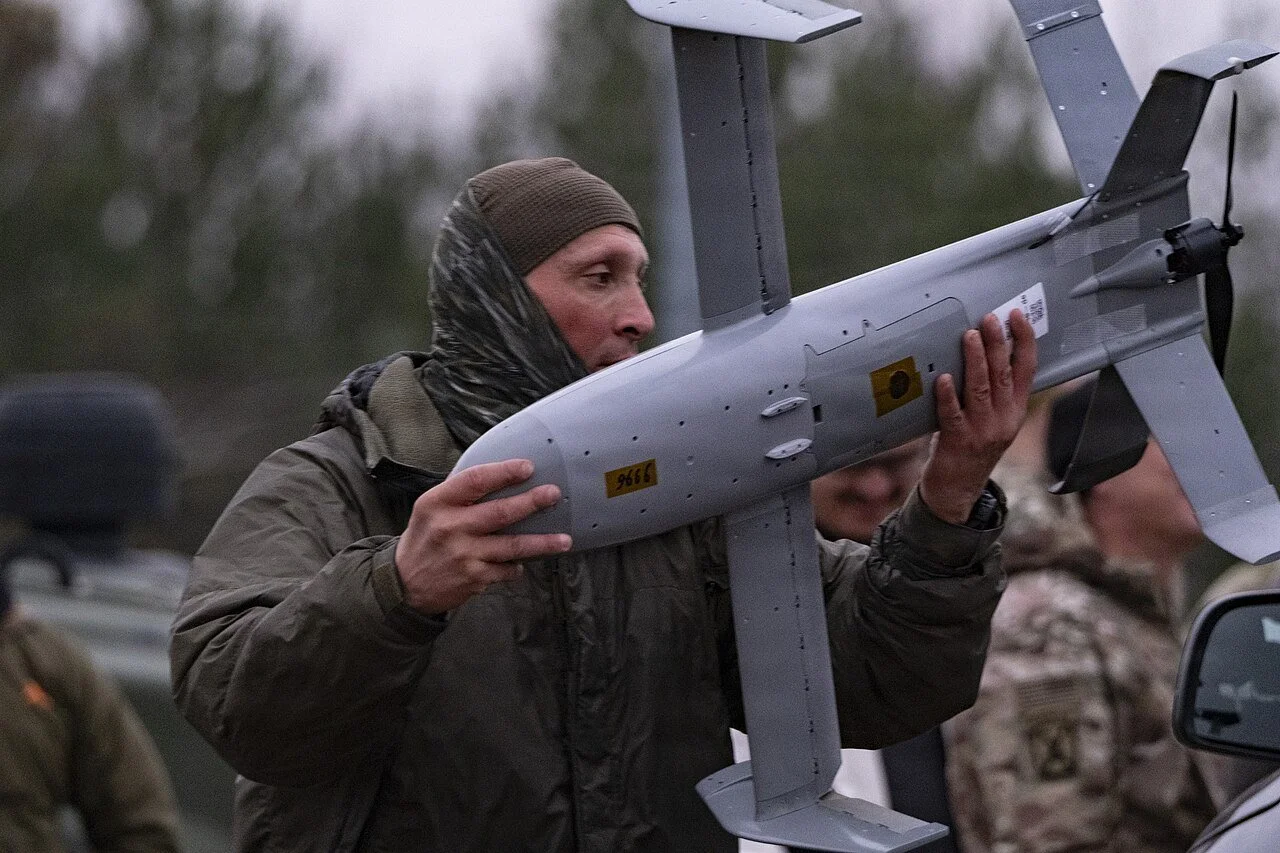
A Polish soldier moves a Surveyor interceptor drone, part of the U.S. Merops counter-drone system, during a training exercise on November 15, 2025.
In the early hours of May 28, the sky exploded and the earth shook violently when an explosive-laden Russian drone struck an apartment building—not in Ukraine, where such attacks have tragically become commonplace over the past four years, but in the Romanian city of Galati, injuring two people. Even though Russian grey zone tactics—including Russian warplanes flying over Estonia, Russian drones penetrating Polish airspace, and Russian hackers striking Polish energy plants— are no novelty in today’s world, this marked the first instance of Russian aggression hitting a civilian facility in a North Atlantic Treaty Organization (NATO) member state. It is exactly the type of spillover from the war in Ukraine that many in Europe have long feared, and it sparked a wave of alarm and condemnation from European powers and NATO alike. This raises the question “If Russia has now struck, by accident or not, a NATO member and injured its civilians, what does the alliance’s security guarantee actually mean?” and more importantly “Who is going to enforce it?”
This question has no easy answer but if it were up to President Trump, the only viable answer would be “Not the United States.” His administration’s recent announcement that the United States would withdraw five thousand troops from Germany, with the threat of cutting more from U.S. bases across Europe should not have taken Europeans by surprise, since his desire for the U.S. to become less involved in Europe and NATO has been a long-voiced one. This American retrenchment from Europe has led international relations scholars, such as Celeste A. Wallander, to start thinking about the implications for NATO deterrence and escalation dominance. Wallander argues that it is conventional forces, not nuclear weapons, that provide the credibility glue that prevents aggressors, such as Russia, from launching an attack on a NATO state. According to this logic, if the United States continues to reduce its military presence in Europe, conventional deterrence may no longer be sufficient to prevent a Russian attack on a NATO member. In that scenario, Washington would face a stark choice: abandon Article 5 and the alliance itself or escalate a conflict that could ultimately carry nuclear risks. Pentagon Policy Chief Elbridge Colby has said the United States will continue to rely on its nuclear arsenal to protect NATO members, even as European allies take on greater responsibility for conventional forces. Critics warn this logic is dangerously circular as they claim that a nuclear guarantee without conventional presence is a bluff, and that Russia knows it.
European governments are slowly starting to react to the reality of a partial U.S. withdrawal from the continent. One concrete strategic counter-move comes from France in the form of President Macron’s “forward deterrence” initiative. This doctrine seeks to anchor France’s nuclear deterrent more firmly within a European security framework, without creating the binding commitments associated with NATO’s nuclear umbrella. As President Macron noted, “We must conceive our deterrence strategy within the depth of the European continent…with the progressive implementation of what I will call ‘forward deterrence.” Recently, Norway has become the ninth country to join, with Prime Minister Støre declaring "we are contending with the most serious security situation since the Second World War." Alongside Norway, Germany, Poland, Sweden, Denmark, Greece, the Netherlands, Belgium and the UK have all signed up. The buy in from numerous European countries signals that “forward deterrence” is no longer a Franco-centric idea, it is becoming a pan-European architecture. The framework is perhaps most advanced in Germany, where the two countries formed a working group promising first concrete steps by the end of 2026, with Germany participating in French nuclear exercises as an observer next September.
Europe’s path toward greater strategic autonomy will not be paved by France alone. As Ethan B. Kapstein and Jonathan Caverly argued in an April essay for Foreign Affairs, a new balance of power is emerging on the continent, with Poland, Germany, France, and the United Kingdom poised to become Europe’s most consequential actors. Among them, Germany and Poland deserve particular attention. Germany, whose security policy has been defined by military restraint for many decades is now rearming at scale, with a pledge to invest as much as $750 billion in military spending over the next four years. In 2025, Germany became the fourth largest spender on defense, trailing behind only the United Staes, China and Russia, marking it the definite military-powerhouse in Europe. Poland, another country directly exposed to the Russian threat, spent 4.3% of its GDP on defense in 2025—the highest share in NATO. Reflecting growing concerns about regional security, Polish leaders have also announced plans to dramatically expand the country’s defense manufacturing capacity. Such military efforts by European countries who are also a member of NATO will certainly make it harder for Russia to steamroll into Europe; however, it will not make up for U.S. deterrence that has prevailed on the continent since the end of the Cold War. Together, these two countries are prime examples for the kind of defense leadership that the European continent direly needs in times like today.
Still, an honest assessment of the European defense picture without the United States’ long-term involvement, leads to a rather bleak outlook. While the French are actively attempting to establish a credible nuclear deterrent, the reality is that with around 290 nuclear warheads, of which 280 are emplaced, it trails nuclear capabilities of China, the United States and Russia. Moreover, and perhaps more importantly, while the “forward deterrence” initiative seeks to embed France’s nuclear deterrent within a broader European security architecture, the ultimate decision to deploy French nuclear weapons remains with the French president, not the President of the European Commission. In a self-help international system, where realist scholars argue that states ultimately act in their own interest to ensure their survival, this distinction matters. What this means for European security is that if France does not deem a threat vital enough to risk its own survival by engaging in or starting a nuclear war, it will likely not pull the trigger, even if that results in catastrophic consequences for the European country at risk. Nevertheless, with Russia becoming less risk-averse, as witnessed by the Romanian strike, the question becomes not whether European deterrence is perfect, but whether imperfect European deterrence is better than the vacuum of no deterrence left behind by the United States.
All of this is to say that while Europe’s defense posture without the United States may appear bleak for the time being, there is no reason to assume it will remain so in the future. Ever since President Trump’s first term, it has become clear that the age of hyper-dependence on the United States is over. While European initiatives, such as France’s “forward deterrence initiative”, Germany’s massive military buildup, Poland’s impressive defense spending as percentage of GDP, might not constitute the perfect deterrence right now, they are slowly building military capabilities that the United States has provided for them for a long time. Therefore, while Europe should be applauded for finally recognizing that overreliance breeds vulnerability, the question that ought to keep Europeans awake at night is whether the continent can rebuild its defenses quickly enough to keep pace with an increasingly dynamic and dangerous threat environment.
Victoria Flick is a Research Fellow at the Center for the Study of the Presidency & Congress.
What the Iran War Reveals About America's Counter-Drone Capability Gaps - and How Ukraine Can Help
By Daria Synelnykova

Russian drone on the ice of Kyiv Reservoir, disposed by sappers of State Emergency Service of Ukraine in Chernihiv region on 19 February 2026. (Photo courtesy of the State Emergency Service of Ukraine, CC BY-SA 4.0)
In August 2025, Ukraine’s President Zelenskyy travelled to Washington D.C. to offer the United States a major drone deal. Under his proposal, Ukraine would share its technology and expertise in countering Iranian Shahed drones, whilst receiving U.S. investment to expand and scale Ukraine’s drone industry. The offer also suggested building anti-drone centers across American-allied states in the Middle East, demonstrating how they would prepare the U.S. for potential confrontations in the region. At the time, American policymakers rejected the offer, dismissing it as unsubstantiated self-promotion disguised as mutually beneficial cooperation.
Less than a year later, this decision has proven short-sighted. The U.S. and Israeli joint assault on Iran exposed America’s underpreparedness in countering Iranian Shahed drones and broader gaps in Counter-Unmanned Aircraft Systems (CUAS) capabilities. In the first days of the war, the Islamic Republic’s strikes across the Gulf region caused casualties among American personnel and local civilian populations. The main weakness of American air defence systems lies in their high cost and lengthy production cycles. In early March 2026, the United States relied on multimillion-dollar, difficult-to-scale weapon systems to counter drones worth approximately USD 20,000. As Iran fired thousands of aerial targets within a few days, the U.S. was hastily relocated air defence missile systems from East Asia and Europe and depleted its stockpiles unsustainably. This problem is exactly what Ukraine had offered to solve in 2025.
A few weeks after the beginning of the Iran War, the United States agreed to receive Kyiv’s help. It adopted Ukraine’s command-and-control (C2) system, Sky Map, at the Prince Sultan Air Base in Saudi Arabia and pursued active negotiations to sign a landmark drone deal. Nevertheless, the reactive approach to developing adequate CUAS technologies exposed both operational shortcomings and systemic challenges within the American security apparatus.
Capability gaps in the air defence system jeopardized America’s image of a strong security partner in the Middle East and beyond. Iranian strikes and subsequent civilian and infrastructure losses demonstrated to the Gulf states that, instead of offering protection, hosting American air bases creates security risks. The relocation of critical air defence equipment from other allies sent a broader signal of America’s strategic overstretch and showed that the U.S. struggles to counter security threats across multiple theatres. Realizing the need to diversify partnerships and build greater self-reliance, before the U.S. itself, Saudi Arabia, the UAE, and Kuwait turned to Ukraine to sign 10-year drone and air defense export agreements.
The inability to counter drones in the Middle East also highlighted the lack of institutional agility. Since 9/11 the United States has been well aware of the challenges posed by conventionally weaker but adaptive and innovative adversaries employing asymmetric warfare tactics. The Russian war against Ukraine has reminded the world that a much smaller state can use inexpensive weapon systems to inflict grave damage on its stronger opponent. Ukraine, for example, used drones to destroy much of Russia’s Black Sea Fleet and strike oil infrastructure deep inside Russia. Yet despite years of evidence pointing to the growing importance of low-cost aerial threats, the American security apparatus has not adapted its CUAS capabilities accordingly.
This outcome was partly caused by conscious deprioritization of CUAS technology driven by an underestimation of the enemy threat. The U.S. can, in fact, innovate relatively rapidly. While American timelines are much longer than those seen on the battlefield between Russia and Ukraine, there are examples of expedited weapon development and fielding. For example, the LUCAS drone, an American low-cost alternative to Shaheds, bypassed many of the Pentagon’s traditional acquisition timelines and was deployed 8 months after its initial development. CUAS capabilities, in turn, were not prioritized in the same way. American officials themselves acknowledged that they did not anticipate the need to confront such a large volume of Iranian drones in the Gulf region.
Now that the Iran War has again demonstrated the importance of robust CUAS capabilities, the U.S. should elevate counter-drone systems to the top of its defence priorities. Ukraine offers some of the world's most relevant expertise in this field. Facing consistent and relentless Russian attacks with hundreds of Shahed drones launched nightly, Ukraine’s technological defence businesses developed effective and economical drone interceptors. Their cost varies from USD 700 to USD 12,000, which is significantly cheaper than any American air defence system and the Shahed drones themselves. Such interceptors are easily scalable; Ukraine has recently committed to producing at least 2000 a day. Ukraine’s technology is also adapted to Shahed’s increased sophistication, namely improved electronic warfare resilience, greater warhead carrying capability, and enhanced manuevering capacity. In addition to drones, Ukraine possesses unparalleled expertise in designing C2 platforms that provide a comprehensive real-time picture of aerial threats and enable their rapid detection, tracking, and interception - capabilities that closely resemble the U.S. military's long-sought CJADC2 vision.
The United States should thus move beyond viewing Ukraine as a recipient of security assistance and instead treat it as a partner in military innovation. This partnership should include technology transfer and innovation ecosystem learning. The first pillar involves investment in and procurement of Ukrainian CUAS technologies, which include drone interceptors and C2 platforms. Rather than waiting years to develop comparable capabilities domestically, the U.S. can adopt proven Ukrainian systems immediately while simultaneously learning to integrate them into American defence-industrial ecosystems. Ukrainian C2 platforms, such as Sky Map, Kropyva, or Delta, are particularly valuable in the context of the growing automation of warfare. As military operations become increasingly reliant on AI-enabled systems and large volumes of real-time data, the ability to make faster decisions is becoming a crucial determinant of operational success.
The second pillar is learning how to accelerate innovation itself. Ukraine has reduced innovation cycles to mere weeks by streamlining bureaucratic processes while maintaining government oversight. It has also created direct communication channels between weapon developers and military operators through digital platforms such as Army+ and Delta. Evolution of warfare toward rewarding adaptation and product iteration demands restructuring of military doctrines and institutional procedures; developing new technologies within outdated institutional frameworks will not deliver desired modernization. Few countries are better positioned to offer these institutional lessons than Ukraine, which has repeatedly signaled its willingness to share knowledge and experience with the United States.
Daria Synelnykova is a Presidential Fellow alumna from 2025-2026 and is currently a Senior at the University of Toronto majoring in International Relations and Peace, Conflict, and Justice.
Reforming a Cornerstone of U.S.-Africa Trade
by Isabelle Deng

Photo from AGOA Business Roundtable in November 2002. (Photo courtesy of Department of Commerce)
Since its conception in 2000, the African Growth and Opportunity Act (AGOA) has been a core tenet of the United States’ trade policy with the countries of sub-Saharan Africa (SSA). The purpose of the AGOA is to help eligible sub-Saharan African countries grow politically and economically by giving a preferential trade status to those countries to sell approximately 7,000 products in the U.S. duty-free. To be eligible, countries must have (or be actively working towards) market-based economies, eliminate barriers to U.S. trade and investment, and protect human and worker rights, among other requirements. In turn, the AGOA binds countries closer to the U.S. in economic and political terms, thus limiting Chinese advances in Africa, a major American geostrategic goal, given Africa’s wealth of natural resources.
Though initially set to expire in 2004, the AGOA has since been renewed four times. Now, it is set to expire at the end of this year, although Congress has the option to renew it for a fifth time. Congress should embrace the opportunity to renew the Act, though it should be updated in the process to adapt to changing global conditions and to ensure that it helps eligible countries more than it hinders them.
These changes are also needed, because the AGOA has produced mixed results since its initial implementation. On the one hand, it has bolstered the U.S.-SSA trade relationship and pushed back against Chinese advances in Africa. The AGOA furthermore has promoted U.S. interests by making it harder for China and Russia to gain access to U.S. supply chains and highly sought-after materials, such as critical minerals and precious metals. On the other hand, some experts say that the act has failed to provide a consistent, substantial impact because the rules that govern it are too vague. For instance, countries can become ineligible based on vague human rights and governance issues. Therefore, if the AGOA were to be renewed for a fifth time, it must undergo some significant structural changes first. undergo some significant structural changes first.
First, it would have to clarify various aspects of the program. Although the AGOA has been reinstated four times with bipartisan support, it has undergone changes to its eligibility guidelines each time. To allow the AGOA to make the impact that experts accuse it of falling short of, updating the eligibility guidelines would ensure that countries with weaker human and worker rights protections are not barred from growing their political and economic systems. With stronger political and economic systems, eligible countries, in turn, should then be more capable to enact stronger protections for human and worker rights.
Further, given the frequent changes to U.S. rules and requirements, countries are continually going back and forth in meeting the eligibility standards of the program. Not only is this not preferable for obvious reasons (the impact of the program cannot penetrate a country’s economic and political system if the impact cannot always reach it), but it is also confusing for eligible countries, as they are unsure of where they stand, making them more susceptible to Chinese influence, in turn weakening U.S.-SSA trade relations. Thus, the AGOA would benefit from increased U.S. structural support for the countries of SSA, which could ensure that countries’ needs and burdens are effectively being met through the act.
Interestingly, the AGOA has had a striking bipartisan history. Since the AGOA has continued to have strong, bipartisan support through each of its renewals, championed by people such as former House Foreign Affairs Committee Chairman Gregory Meeks (D-NY), former Rep. Karen Bass (D-CA), and Rep. Chris Smith (R-NJ), the problem lies not in whether it will be passed again or not—despite conflicting accounts on whether it has been successful or not—but in whether the changes made to it will achieve the goals the AGOA first sought to accomplish in 2000.
Lastly, it is important to note that there is a rising cost of not engaging with Africa. Even though the global population growth is expected to slow throughout the rest of the century, Africa’s is projected to keep rising through 2100. Despite this, many Western countries, such as the U.S. and Canada, have been pulling back from investment in Africa due to changing priorities. Since the start of the Trump administration, there has been a growing pressure for countries to fend for themselves, as multilateral frameworks lose significance. These developments have further been fueled by concerns that corruption and mishandling of funds might interfere with the impact of foreign aid. Considering this, the AGOA is only one part of a growing shift away from a focus on developmental and humanitarian aid.
With the expiration of the AGOA coming up, Congress has a critical opportunity to halt this trend. Considering Africa’s growing influence on world politics and the economy, passing this act while updating it to reflect the changes of recent years will ensure that the countries of SSA are getting the support they deserve.
Isabelle Deng is intern at CSPC and a rising junior at the University of Michigan majoring in Political Science and English.