The CSPC Dispatch - May 22, 2026
This week, Senior Democracy Fellow Jeanne Zaino continues her series on American reform at 250, tracing the long history of proposals—from coordinating terms for office to adopting a team ticket—aimed at reducing gridlock between the branches. Research Fellow Victoria Flick turns to Europe's often-overlooked neutral states, arguing that Washington's repeated airspace violations over Austria reveal a fundamental misunderstanding of how European security architecture actually works. Presidential Fellow alumnus Michael Wheeler makes the case that Gen Z will be left footing the bill for decades of bipartisan fiscal avoidance and argues his generation shouldn't stay quiet about it.
At 250, Shortcomings in Need of a Remedy
By Jeanne Zaino
Note: As noted in my previous piece, the next few essays in this series are devoted to the advocates of structural reform and the types of recommendations they have made. The intent is not to endorse one reform or reformer, rather to shine light on this work in the belief that unless we celebrate the structural reform tradition in the U.S., it will be difficult to reimagine and revitalize our system going forward.
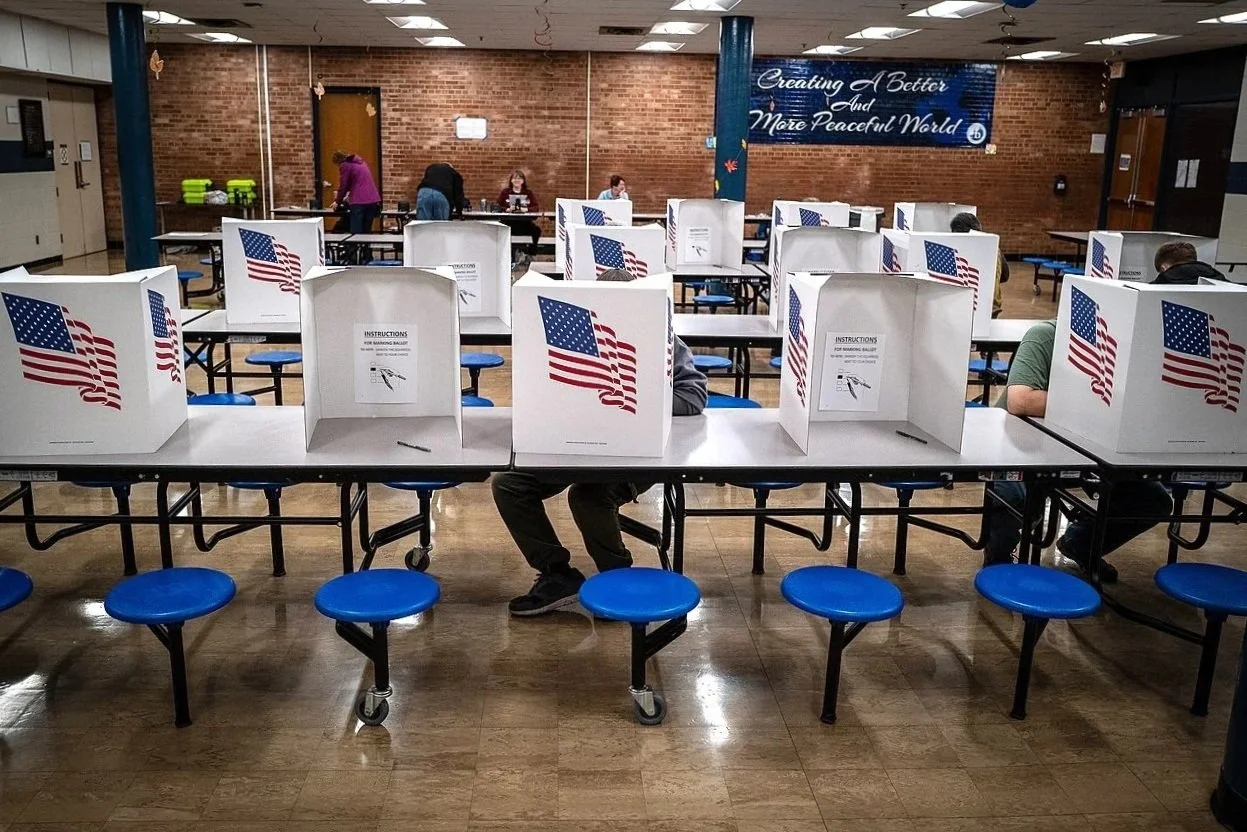
Imagine if we no longer had Midterm Elections in the United States or, if instead of just voting for the President and Vice President, we expanded the team ticket idea to include a voters’ Representative and Senator as well.
While these ideas may sound far-fetched, particularly the first given that we are currently in the midst of what may be the most expensive Midterm Election in modern history, they are just two of the many proposals that reformers have advocated for over the last century.
One of the best books on the history of U.S. reform efforts is John Vile’s Rewriting the United States Constitution. In it, he analyzes more than forty proposals to amend the Constitution in the period from Reconstruction to the late 20th Century. Amongst his findings is that interest in reform increases during periods like the one we are currently in – a constitutional anniversary. Likewise, interest in reform tends to be elevated during and just after periods of crisis. Unfortunately, once the crisis subsides or the anniversary concludes, interest wanes.
Vile also finds that a common theme amongst American reformers is the belief that a major structural problem in need of repair is the amount of division in the system, particularly as it pertains to the separation between the first and second branches. It is a deficiency that is blamed on that “evil genius of American institutions, Montesquieu” (Yandell Henderson 1913). While he refrained from casting aspersions directly at Montesquieu, in a now famous article, Lloyd Cutler (1980) described in pointed language the “shortcomings” of the Frenchman’s construction (‘trias politica’ or separation of powers):
A particular shortcoming in need of a remedy is the structural inability of our government to propose, legislate and administer a balanced program for governing. In parliamentary terms, one might say that under the U.S. Constitution it is not now feasible to ‘form a Government.’
For Cutler, like so many others, the solution involved mimicking a parliamentary or cabinet style government. For William Lawrence (1880), this took the form of the Swiss model. As he noted, “I know of nothing more suitable... than the present Constitution of Switzerland.” Many other American reformers, however, were more familiar with and therefore chose to advocate in favor of something more akin to the English system.
Wherever they looked for inspiration, few advocated in favor of wholesale adoption of a parliamentary system. As James Sundquist (1992) wrote for most of these reformers, the parliamentary system was “only a source of ideas for incremental steps that might bring more unity to the American government” as opposed to “a model to be adopted in its entirety.”
In keeping with this, most of the proposals I detail in my book, American Democracy in Crisis, are modest in scope and aimed at encouraging cooperation between branches, diminishing deadlock, and increasing responsiveness, effectiveness, and accountability.
In addition to coordinated terms for office and a team ticket, other proposals include: (a) removing the Emoluments Clause to allow members of congress to serve in the cabinet (dual office holding); (b) allowing congress to take a vote of no confidence in the president and call for new elections; (c) allowing the president to dissolve congress periodically and call for new elections; (d) removing the Electoral College and allowing for direct election of the president; (e) revising the amendment process to make reform easier to achieve; and (f) restoring the line item veto.
Each of the proposals is fraught and, once fully vetted, would rightly be subject to enormous criticism and debate. Not only would each require a constitutional amendment, something that is very difficult to achieve, but since they focus on reducing the division between the branches, they would likely run into criticism from those who are concerned about the aggrandizement of power in the executive branch. While this has been an issue since our Founding, concern has grown over the last decade and specifically the last year.
The challenge of how best to come “to grips with the problem of power” may seem timely and urgent, and it is, but it is not unique to our current era. In the post-war period, E.E. Schattschneider (1948) argued that at its core, the root of our governing problems in the U.S. have always stemmed from the fact that we have never adequately addressed the issue of how power should operate in a democracy. John Kenneth White traces the “American discomfiture with power” back to the ratification period when for the Federalists “power had such negative connotations they often substituted the word energy for it.” Almost 250 years later, this challenge remains, heightened as it is in the current environment. Nevertheless, the hope is that this concern does not inhibit consideration of reform proposals, but rather spurs further conversation, new ideas, and greater efforts that do not wane once the current moment is over.
Jeanne Sheehan Zaino is professor of Political Science, Senior Democracy Fellow at the Center for the Study of the Presidency & Congress and Visiting Democracy Fellow at the Ash Center for Democratic Governance and Innovation, Harvard Kennedy School.This piece draws on themes in her latest book, American Democracy in Crisis (Palgrave, 2025), and her Substack newsletter, The New Realist. It is the tenth in a series on reform marking America’s Semiquincentennial.
America’s blind spot in Europe: The Neutrals
By Victoria Flick
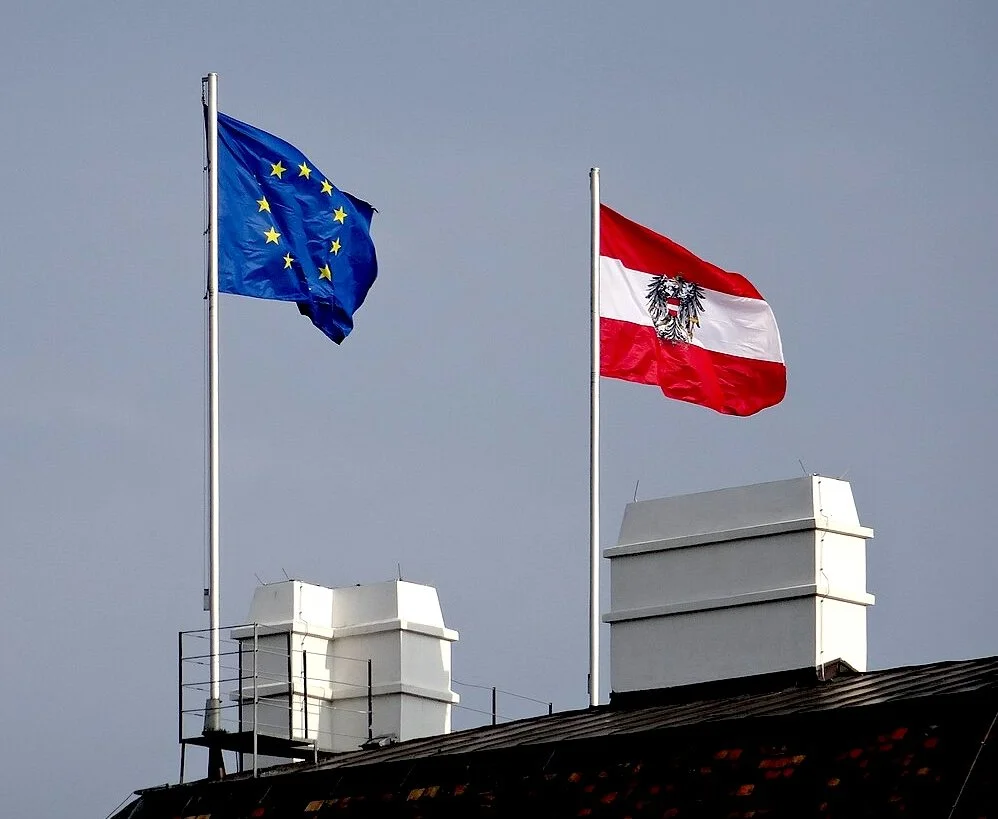
A neutral country scrambles two Eurofighter Typhoon fighter jets under Priority 1, the highest level of military alert, not once, but on two consecutive days. Yet the perceived threat did not come from a familiar adversary like Russia, nor from an unidentified aircraft violating its airspace. Instead, the aircraft in question belonged to one of its closest allies. The story becomes even more striking when the countries involved are Austria and the United States.
The incidents unfolded on Sunday, May 10, and Monday, May 11. According to Colonel Michael Bauer, Head of Crisis Communication at the Austrian Ministry of Defense, the U.S. Air Force initially filed a flyover request for two PC-12 aircraft on May 10. However, those aircraft never entered Austrian airspace. Instead, later that day, two different U.S. Air Force aircraft approached Austria without prior notification, prompting the Austrian military to scramble Eurofighter jets under Priority 1 alert. Before crossing into Austrian airspace, the aircraft turned away. The following day, the U.S. Air Force submitted another flyover request, which Austrian authorities approved. Two PC-12 aircraft subsequently flew over Austria while Austrian Eurofighters monitored the flight to confirm that the aircraft matched those listed in the approved request.
While some critics may view Austria’s response as excessive, it is important to recognize that this was neither an isolated incident nor simply a Trump-era anomaly. Against that broader backdrop, Austria’s decision to react more forcefully to the attempted incursions becomes easier to understand. The most well-known case unfolded in 2002, when the United States tried to transport F-117 stealth bombers, hidden under a KC-10 tanker across Austrian airspace in the buildup to the Iraq war. However, the Austrian Air Force discovered the two hidden jets, leading to a diplomatic dispute between Austria and the United States.
What makes these incidents so interesting is the connection between the concept of neutrality and the U.S.’ potential misinterpretation thereof as disloyalty. This misconception may in part stem from the fact that Austria is a Western-style democracy and a member of the European Union and thus might appear like a natural ally of the United States. But Austria’s neutrality is enshrined in the Austrian State Treaty which was signed in 1955 by representatives of the governments of the Soviet Union, Great Britain, the United States, and France, granting Austria independence and arranging the withdrawal of all occupation forces, coupled with the understanding that the newly independent state of Austria would declare permanent neutrality. Over the past 70 years, this neutrality has been a cornerstone of Austria’s foreign policy and identity. And to maintain this status requires adherence to several core principles: refraining from joining military alliances, prohibiting foreign powers from stationing troops or establishing military bases on national territory, and denying the use of that territory for foreign military logistics. In practice, this means maintaining strict sovereignty over Austrian airspace. Austria’s Eurofighter jets exist precisely to enforce that neutrality by policing the country’s airspace and responding to unauthorized incursions.
Since the United States and Israel launched military operations against Iran earlier this year, Washington has repeatedly asked European countries for permission to route aircraft through their airspace in support of the campaign. Austria refused from the outset, as did Switzerland, Italy, and Spain, citing neutrality, legal obligations, or simple opposition to the war. Against that backdrop, it is questionable whether the planes that appeared over the Dead Mountains in May were entering neutral airspace by accident. They were flying into airspace Washington had already been told, repeatedly and formally, was closed. Whether that reflects bureaucratic breakdown or deliberate probing is a question the United States has not yet answered publicly.
This means that Austria is not simply another disgruntled ally, but rather a neutral state that is legally prohibited from granting the United States permission to overfly its territory with fighter jets engaged in an active combat operation. This distinction is essential to understanding an American blind spot in Europe. In Washington, European resistance is often framed either as freeloading within the North Atlantic Treaty Organization (NATO) or as cowardice for refusing to participate in conflicts such as the U.S.-Iran war. Yet that interpretation ignores a crucial reality: Europe’s neutral states—Austria, Ireland, Switzerland, Malta, and Cyprus—are not NATO members and are bound by constitutional and legal obligations of neutrality. Criticizing these countries for enforcing those obligations is therefore a categorical misunderstanding. Calling these countries “paper tigers” for following their own constitutions isn't tough talk, it's a category error that reveals how poorly Washington understands the architecture of European security.
As a result, the United States risks applying pressure to the wrong countries while gaining little strategic benefit in return. Austria’s central position in Europe makes its airspace particularly valuable for the United States and its allies, and eroding the diplomatic goodwill necessary to secure cooperation there may ultimately prove counterproductive.
Every time a U.S. aircraft strays into Austrian airspace without proper coordination, it hands Vienna a diplomatic grievance and reinforces the perception that Washington views sovereignty as negotiable when it becomes inconvenient. Yet geography is immutable. Neutral states such as Austria will continue to sit between key U.S. bases in Europe and operational theaters to the south and east, making cooperation not optional, but strategically necessary. The United States can choose to pressure these countries or work with them respectfully, but it cannot afford to ignore them. In 2002 as well as in 2026, the United States did not encounter an adversary when flying over this small European alpine country. It encountered a country doing exactly what it promised it would do, in 1955, in a treaty that four great powers, including the United States of America, signed.
Victoria Flick is a Research Fellow at the Center for the Study of the Presidency & Congress.
The Generation Left to Foot the Bill
By Michael Wheeler

As a proud member of Gen Z and a recent college grad, I can say we are the most financially literate generation in history. We track our credit scores on apps, follow finance creators on social media, and have been lectured by parents and teachers about compound interest, saving, and maxing out our 401(k)s.
Now here is a number worth knowing: $1 trillion. That is what the US federal government will pay in interest on the national debt this year, more than it will spend on the military. As this number grows with no real effort to bring it down, younger generations will be the ones who have to pay it off, or we will lose the benefits older generations had, the same generations that told us to stay away from debt and save our money.
America turns 250 this year, an achievement worth noting, given that our founders called this country an experiment. Every lasting nation has to answer one question: can it govern itself well enough to leave the next generation better off? On the national debt, the answer is no longer clear, and my generation will live with the outcome.
Interest on the debt is now the fastest-growing line item in the federal budget. This year, for the first time, we will spend more on servicing debt than on funding our military, and the gap only widens from here. The Congressional Budget Office projects net interest will climb from roughly $1 trillion in 2026 to $2.1 trillion by 2036, for a total of $16.2 trillion over the next decade. Unlike defense, education, or research, interest is not optional, and we pay it first, before anything else.
Every dollar going to interest is a dollar that cannot go to defense, Social Security, Medicare, infrastructure, research, or education. When we spend more on debt payments than on our own armed forces, we have less room to respond to a crisis and less credibility with the allies who depend on us. The math is simple but unforgiving. If interest doubles in a decade, something has to give. Either spending gets cut, taxes go up, or, more likely, both.
My generation didn't vote for the spending packages of the 2010s and 2020s, or for the tax cuts of 2001 and 2017 that were never paid for, but we will pay for all of them, with interest, for the rest of our working lives. The people who made those calls will not feel the full cost, and my generation will be left to carry it.
Social Security's own trustees project the trust fund will be insolvent within 7 years. The benefits, the strong dollar, and the global standing that older generations took for granted may not be there for us. We will spend our working lives paying down decisions we never got to make.
There is a routine story told in Washington that the debt is the other party's fault, and both sides point the finger. Mitch Daniels, the former Republican governor of Indiana and OMB director, recently named it "fiscal denialism," the habit of grasping at any straw, the next tech boom, the next growth surge, the next miracle, that lets politicians look away from the reality of continuous borrowing.
That borrowing has become a bipartisan play, with Republicans cutting taxes they didn't pay for and Democrats expanding programs they didn't pay for. The balance sheet doesn't care which party held the pen, and fixing the problem will require leaders on both sides willing to admit that.
One leader willing to bring this issue to light is former Senator and West Virginia Governor Joe Manchin. I heard him speak at the CSPC Presidential Fellows event earlier this year and read his book Dead Center: In Defense of Common Sense afterward. What stayed with me was not his record but his message: putting constituents ahead of party, working across the aisle on problems no single side can solve, and taking votes that cost him politically. He put it plainly: the only people who can hire or fire him are the people of West Virginia.
He tried to live that out. In 2023, he joined Republican Senator Mitt Romney to introduce the Fiscal Stability Act, which would have created a bipartisan commission to stabilize and reduce the national debt. The bill did not pass, but it represented the kind of cross-aisle work the moment calls for. The federal deficit will not be fixed by one side declaring victory. It will take leaders willing to make difficult choices that neither party wants to make alone.
We may be the generation left to foot the bill, but we do not have to be the generation that stays quiet about it. In 4 years of leadership across student government, state higher education policy, and national fellowship work, I have seen people with very different priorities come together when the issues are clear.
We can vote for and support leaders who take the budget seriously, break with their own party when the numbers say so, and tell us the truth even when it is hard to hear. As America turns 250, the question is whether our generation will recognize that kind of leadership when we see it and support it when it is unpopular. We have a voice. We can use it to tell our leaders this problem has to be fixed, not passed on.
Michael Wheeler is a CSPC Presidential Fellow Alumnus from the 2025-2026 cohort and a recent graduate from the University of Kentucky with a triple major in Economics, Finance, and Management.
CSPC IN THE NEWS
What Past Doctrines Can Teach the Trump Administration on Military Force
Published on May 21, 2026.
CSPC Senior Democracy Fellow Jeanne Zaino writing in the London School of Economics' US Politics and Policy blog examines Trump's ad-hoc foreign policy decision-making and asks whether the absence of a guiding doctrine—like those of Weinberger or Powell—has come at a cost.
Read the full article here.