
The CSPC Dispatch - July 24, 2026
In this issue, James Kitfield argues that the widening war between the United States and Iran is repeating the same miscalculations about human terrain and the limits of military force that once turned Afghanistan and Iraq into America's longest wars. Jeanne Sheehan Zaino continues her series on American reform at 250, examining why the Constitution's amendment process has become so difficult to use that meaningful change now seems nearly impossible, even as most Americans say the system needs it. Isabelle Deng explores the growing standoff between the Smithsonian and the White House, asking who should have the final say over how the nation's public memory is shaped. Kaiana Kotero looks back at the Cold War-era cooperation that built the International Space Station and asks whether similar "cold cooperation" could help ease rising tensions with China in orbit. And Carolina Viera reports on how the SAVE Act's proof-of-citizenship provisions are already reshaping elections across the states, well ahead of any action by Congress.
Is the Trump Administration Mired in a “Forever War” Quagmire?
By James Kitfield

President Donald J. Trump attends the transfer of U.S. soldiers killed in Iranian strikes in the Middle East, held on July 22, 2026, at Dover Air Force Base, Delaware. (Official White House Photo by Molly Riley)
This week the United States and Iran returned to all-out war, abandoning a “ceasefire” in name only and conducting escalating military attacks that once again throttled the Strait of Hormuz and clamped shut the world’s maritime oil pipeline, threatening a global recession. At pains to explain how the same tactics that failed to bring about Iran’s anticipated “unconditional surrender” in the first weeks of the war in February and March would now bring “victory,” President Donald Trump took to social media to admonish the American public for its lack of patience.
“Afghanistan War, 20 years, 2,000 DEAD” Trump wrote, referring to one of the recent “forever wars” that he promised to avoid.
“Iraq War: 9 years, 4,600 DEAD,” Trump continued.
“Vietnam War: 19 years and 5 months, 58,220 DEAD.”
The commander-in-chief compared those conflicts favorably to one of his own recent military adventures.
“Venezuela War, 1 day, 0 Dead,” Trump wrote of another operation he greenlighted earlier this year to seize Venezuelan President Nicolas Maduro.
Putting aside the fact that the Venezuela operation was more akin to the thousands of “capture or kill” missions that U.S. Special Operations Forces conducted over the past two decades than to all-out war, Trump left out the fact that his war of choice with Iran – now in its fifth month – is already less popular with the American public than either the Iraq or Afghanistan conflicts were after many years of fighting. A recent Washington Post-Ipsos poll showed, for instance, that 68% of Americans said the Iran war was not “worth fighting,” while just 28% said it was worthwhile. That negative 40-point split is worse than either the Iraq or Afghanistan wars clocked during years of Washington Post-ABC News polling.
Not All Wars Equal
The problem confronting the Trump administration is that not all “forever wars” are created equal or judged by the same stopwatch. After the horror of the September 11, 2001, terrorist attacks, the American public was in a vengeful mood and much of the world understood that U.S. retribution was justified against the Al Qaeda terrorist group and its Taliban enablers in Afghanistan. The Iraq War was a war of choice sold on the false premise that Saddam Hussein was intent on attacking the United States and its allies with a nonexistent stockpile of weapons of mass destruction, but the George W. Bush administration spent the better part of a year preparing the American public and the international community for the war, including convincing a bipartisan majority in Congress to pass an Authorization for the Use of Military Force in Iraq in October of 2022. It was only after the alleged WMD stockpiles failed to materialize, and the war dragged on for years with a mounting death toll, that public sentiment turned decisively against the war and the Bush administration for starting it.
By contrast, the Trump administration bypassed Congress entirely and did little to prepare the public in advance for a major conflict with Iran that has claimed the lives of 18 U.S. service members and caused global oil prices to spike, exacerbating a domestic affordability crisis. The administration has also struggled to explain without convincing evidence how Iran was an imminent threat or was on the cusp of acquiring a nuclear weapon, especially after Trump insisted for much of the past year that the U.S. military “obliterated” Iran’s nuclear program in strikes in June 2025.
Other rationales the administration has promiscuously offered for attacking Iran – including regime change, protecting Iranian dissidents, shielding U.S. forces in the region in anticipation of an Israeli strike on Iran, destroying the country’s missile capabilities, air force and navy, ending its support for proxies, and reopening the Strait of Hormuz – have served mostly to confuse the public about the strategic objectives of the war and when they might reasonably be met.
Forever War Lessons
The irony is that there is ample institutional memory in the U.S. military and intelligence agencies, and among the journalists who have covered them, about the lessons learned from the country’s longest wars in Afghanistan and Iraq. First and foremost is the need to have a granular understanding of the human terrain before committing to conflict.
In Afghanistan, after U.S. forces routed Al Qaeda and its Taliban enablers in 2001 and 2002 and supposedly achieved “regime change,” the Bush administration largely handed off the “peacekeeping” and nation building tasks to NATO forces and United Nations administrators and turned its attention to invading Iraq in 2003. That decision disastrously opened a second major front in its “global war against terror” and stretched U.S. military forces thin in both theaters. The lack of a clear understanding of the tribal dynamics involved in Afghanistan also allowed the Taliban and Al Qaeda to reconstitute in sanctuaries across the border in Pakistan, ultimately leading to the Taliban sweeping back into the country and U.S. forces retreating in defeat in 2021.
“In Afghanistan understanding the human terrain as well as the operational environment was critical, because the conflict wasn’t just about Al Qaeda, but rather all the factors that led to the Taliban taking power in the first place, and all the tribal roots behind that,” said Linda Robinson, former foreign correspondent for U.S. News and World Report, and author of “Tell Me How This Ends,” a New York Times notable Book of 2008, speaking this week at the Council on Foreign Relations in Washington, D.C. “What we learned in Afghanistan is that if you don’t understand the human terrain, you’re not going to succeed.”
After an Israeli strike killed Iran’s supreme leader and many of his top aides and military commanders earlier this year, President Trump claimed that Iran had undergone "regime change" and the country’s new leaders were "much more reasonable".
"Because the one regime was decimated, destroyed. They're all dead,” Trump told reporters aboard Air Force One. “The next regime is mostly dead. And the third regime, we're dealing with, different people than anybody's dealt with before. The third group of people seem to be much more reasonable. It truly is regime change.”
Many analysts believe that is a fundamental misreading of the human terrain in a revolutionary Islamist theocracy that for decades has made “death to America” a rallying cry. After the assassination of Iranian supreme leader Ayatollah Ali Khameinei, his wounded son Mojtaba Khamenei assumed the role, and following the killing of his father and other family members he is reportedly not in a very compromising mood. Worse yet, the leadership vacuum has increased the sway of an even more radicalized Islamic Revolutionary Guard Corps (IRGC), which reports directly to the supreme leader.
More recently, even Trump has seemingly caught on to the fact that “reasonable people” in charge in Iran are in short supply. "I don't want to deal with them anymore. They're scum. You know what scum is? They're scum. They're sick people. They're led by sick people," Trump said of Iran's leadership in response to a recent question from ABC News.
Limits of Military Power
Another major lesson of America’s recent “forever wars” is to be very cautious of what can be achieved by even overwhelming military force. After toppling the Taliban in Kabul largely with air strikes and a small number of U.S. Special Forces, and sending Al Qaeda scurrying across the border into Pakistan at the battle of Tora Bora in late 2001, the Bush administration largely assumed that the hard goals had been achieved with military force. It thus very early began turning its attention to Iraq and Saddam Hussein. Former Defense Secretary Donald Rumsfeld and his aides then designed the “Iraqi Freedom” campaign in 2003 to be one of “shock and awe,” and he confidently predicted that the job of U.S. military forces would largely be completed in a matter of months.
In both instances the Bush administration vastly overestimated the power of military force to achieve sweeping strategic objectives and failed to appreciate the unpredictable ripple effects of kinetic action on a sweeping scale.
“After going into Iraq on false pretenses [about nonexistent WMD stockpiles], the United States discovered that [former Secretary of State] Colin Powell was right in warning about the ‘Pottery Barn’ rule in Iraq: You break it, you own it,” said author and journalist Robinson. As the U.S. military began to understand counterinsurgency doctrine, she noted, “it came to realize that every insurgent it killed had a radicalizing effect and tended to manufacture more insurgents and terrorists. As a result, we started to see Al Qaeda franchises spread all around the world. The lesson we should have learned was to be much more humble about what military force can achieve.”
The Trump administration may believe that it can launch a major war against a regional power like Iran and just walk away when it tires of the effort and blowback at global gas pumps, but it’s finding that the Pottery Barn rule still holds. Before the U.S. and Israeli military strikes the Strait of Hormuz, through which roughly 20% of global oil and liquefied natural gas supplies flow, was open for passage as a designated international waterway. That status was upheld by the principle of “freedom of navigation” that underpins the global trading system the United States has enforced for decades as the global superpower.
The Trump administration knows there is no way to spin the Iran war as a “victory” if Tehran continues to exert control over one of the most critical maritime chokepoints in the world, and the Iranians know that failure to do so would surrender the last leverage they have to deter future U.S. and Israeli military attacks. That is the stalemate behind the past week’s escalation in the conflict, and it has derailed negotiations even before the equally complex issue of Iran’s nuclear program and enriched uranium stockpiles have been addressed.
An even more immutable lesson of war than the Pottery Barn Rule is the Law of Unintended Consequences. Consider that when Al Qaeda struck on 9/11 at the height of the post-Cold War era, the United States was that rarest of historical entities, an unrivaled superpower in a unipolar world. After the two decades of “forever war” that followed, America today is challenged from without by a rising China and a revanchist Russia, and riven by political polarization at home over its rightful role in the world.
“I worry that Al Qaeda’s attack on the United States was largely a success,” said Alan Cullison, a former staff writer at the Wall Street Journal and a Pulitzer Prize finalist for his reporting from Afghanistan and Russia, speaking this week at the Council on Foreign Relations in Washington. When U,S. military forces descended on Afghanistan in the wake of 9/11, he noted, Osama bin Laden wrote to his lieutenants to have faith in the long-term strategy of drawing America into a protracted quagmire that would end in their defeat, much like the once mighty Soviet Army left Afghanistan in defeat in 1989, shortly before the dissolution of the Soviet empire.
“So much of what the United States did after 9/11 was an overreaction, and the impact of that on the U.S. government and American society are still with us,” said Cullison. “Unfortunately, in many ways we followed Osama bin Laden’s script.”
James Kitfield is a Senior Fellow and author-in-residence at the Center for the Study of the Presidency & Congress, and author of “War and Destiny: How the Bush Revolution in Foreign and Military Affairs Redefined American Power.”
At 250, Reform Ought to Be Hard, But Not That Hard
By Jeanne Zaino

The Preamble and 1st Article of the Constitution of the United States. (Photo courtesy of the National Archives)
Whereas most people in high-income countries say their political system needs only minor or no change, Americans are an exception. According to a recent survey by Pew Research Center, despite having the highest gross domestic product (GDP) of all the countries studied, more than three-quarters (77%) of American say their nation’s political system needs either “major changes or complete reform.”
This is in keeping with results of a Navigator study which found that almost nine out of ten Americans say our democracy is broken. The same study found that more than 70% of Americans say the system needs major changes or needs to be torn down completely.
While there is widespread agreement on the fact that system is broken and change is needed, respondents lack confidence in its realization. Their skepticism is warranted. Merely replacing those in office is not enough. Real reform requires changing the system in which our elected officials operate; and throughout the last two centuries, our system has proven almost completely immutable to this type of restructuring.
In the US, systemic change can be achieved in two ways – constitutionally or extra-constitutionally. To this end the last few pieces in this series move from focusing on the why and what of structural reform to the more difficult issue of how.
I begin in this essay with the prospect of reform via the constitution (specifically via the ‘regular’ process), then move in subsequent articles to focus on change via a ‘Con-Con’ and later extra-constitutional avenues for change.
The Framers included two processes for amendment in Article V of the constitution: (1) the so-called ‘regular’ mode - via vote of two-thirds of the members in both the House and Senate (the subject of this piece) and (2) the ‘Con-Con’ - a constitutional convention called by legislatures of two-thirds of the states.
The U.S. Constitution has been amended twenty-seven times in American history, ten times after the Founding (The Bill of Rights, #1-10), five times from 1794-1869 (#11-15), and twelve times since Reconstruction, two of which cancel each other out – prohibition (#18) and its repeal (#21) – leaving us with just ten amendments in the 20th and 21st centuries (#16-#17, #19-#20, #22-#27).
The last amendment ratified was in 1992. The 27th Amendment concerns congressional pay and while it was ratified in the late 20th Century, it was written by James Madison in the late 18th Century! Prior to this, the 26th Amendment, which lowered the voting age to 18, was ratified in 1971.
As this brief history underscores, the U.S. Constitution has proven exceedingly difficult to amend. This is because it takes only a small minority to obstruct attempts at amendment. If just one legislative house in thirteen states fails to approve a proposed change, the amendment dies. Supreme Court Justice Antonin Scalia determined that it would take less than two percent of the population to prevent an amendment. “It ought to be hard,” he said, “but not that hard.”
The fact that the Constitution is perennially difficult to amend is supported by the numbers. Since the Constitution was adopted, more than 12,000 amendments have been proposed yet just thirty-three of those have garnered enough support to move to the states for approval, and just twenty-seven of those have passed.
In the modern era members of congress have introduced approximately forty constitutional amendments each year. These proposals have dealt with topics ranging from flag burning and a balanced budget amendment, to term limits for members of congress and six-year terms for the president. Even though most of these proposals were narrowly limited and few, if any, called for major changes to the system’s architecture, almost none were successfully voted out of committee; of those that were, the vast majority failed to achieve the necessary two-third vote in the House and Senate.
The last time a proposal gained two-thirds support from both the House and Senate was in 1978 when there was a move to give residents of the District of Columbia representation in Congress. The proposal, which was subsequently sent to the states for ratification, garnered support from sixteen states but was unable to meet the necessary threshold before the time limit expired.
One of the most well-known proposals to come close to adoption in the modern era was the Equal Rights Amendment (ERA). Passed by the House and Senate in the early 1970s, it ultimately failed to get the support necessary at the state level, even after the original deadline was extended. Despite widespread, bipartisan support, ERA ultimately failed because of a massive lobbying effort by a small group of conservative activists and special interest groups led by Phyllis Schlafly who advocated against it on a variety of grounds, including its impact on the draft, privacy, abortion, family life, etc.
The defeat of ERA confirmed what scholars have long said, for an amendment to get ratified it takes an “extraordinary combination of social, economic, and political forces.”
Few countries, or states, make the revision process as difficult as the U.S. Take India, for instance, which adopted its constitution little more than seventy years ago and has already amended it three times more than the United States has since the 1790s. The same is true at the state level. James Sundquist finds that as of 1989, the states had approved almost 6,000 amendments to their constitutions (one hundred sixteen per state) versus the federal government which, at that point, had ratified only twenty-six.
There are, of course, some benefits to the fact that the amendment process is difficult; primary among them is what Publius (ie., Madison) said in Federalist #43 when he spoke about stability and longevity. Mary Frances Berry, a strong proponent of the ERA, made a similar case when she noted that despite her disappointment at the ERA’s failure, the fact that amendment is so difficult helps ensure that the document is one “for the ages.” Article V, she writes “allows our government to adapt itself to social change… at the same time, it gives us a check against beliefs that may be strongly held but are not widely approved.” To that extent, it helps “preserve the stability and continuity that lasting republican government requires.”
While Madison and Berry’s points are well taken, the Constitution has come to be defined by an almost unmovable stasis. The formal avenue for revising it exists on paper, but in practice it is almost unworkable. As a result, it is difficult to achieve the kind of change via the ‘regular amendment process’ that people today are demanding.
At the Founding, Madison warned about the dangers that might ensue if an amendment process is not mechanized and regularized. If the people are not provided with “an easy, regular and Constitutional way” to revise, he wrote, then we are leaving it up to either “chance” or “violence.”
His argument is well-taken. In the absence of a working mechanism for peaceful change, there is always the danger that the people might get so frustrated that they either resort to violence or cast the document aside in favor of an entirely new one. Neither of these options are ideal, but both have precedent. They have not only occurred in the U.S., but our Founders provided philosophical justification for them. As the Declaration of Independence notes, if the government fails to ensure life, liberty, and happiness, people have a right and duty to alter their government and erect a new one in its place.
For these reasons, and at a time when the public is demanding change, the fact that it is almost impossible to realize it via the constitution’s ‘regular process’ is deeply concerning. It has led some reformers to suggest that the Amendment process itself should be revised. Given how difficult that would be, it has led others to suggest that it is time to consider a Constitutional Convention and still others to abandon constitutional reforms entirely in favor of extra-constitutional avenues for change.
Jeanne Sheehan Zaino is professor of Political Science, Senior Democracy Fellow at the Center for the Study of the Presidency & Congress and Visiting Democracy Fellow at the Ash Center for Democratic Governance and Innovation, Harvard Kennedy School. This piece draws on themes in her latest book, American Democracy in Crisis(Palgrave, 2025), and her Substack newsletter, The New Realist. It is the twelfth in a series on reform marking America’s Semiquincentennial.
Smithsonian vs. The Presidency: Who Controls America’s Public Memory?
By Isabelle Deng
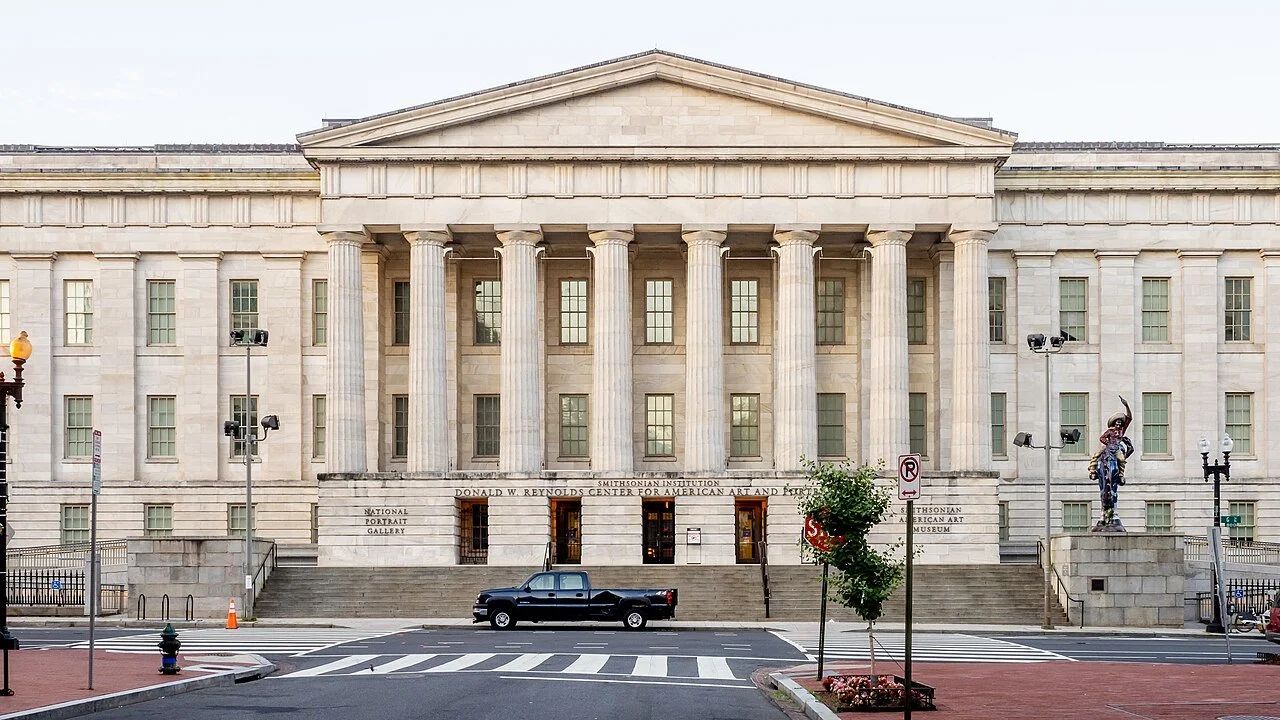
“Museums can no longer confine themselves simply to preservation, scholarship, and exhibition independent of the social context in which they exist,” states a report from the American Association of Museums, first published in 1992.
The Smithsonian Institution in Washington, DC, the world’s largest museum, education, and research complex, is a nonpartisan institution. In recent months, however, it has increasingly come under political pressure. In an Executive Order early in its tenure, the Trump administration argued that the Smithsonian had, “in recent years, come under the influence of a divisive, race-centered ideology” by “portray[ing] American and Western values as inherently harmful and oppressive,” citing examples such as an exhibit in the Smithsonian American Art Museum that describes how “[s]ocieties including the United States have used race to establish and maintain systems of power, privilege, and disenfranchisement.” In January of this year, the Smithsonian, facing an ultimatum from the White House, handed over thousands of documents “regarding its content, plans and operations.”
A particular point of contention that has emerged in this debate within the past few weeks is related to the Smithsonian National Portrait Gallery’s “Outwin Boochever Portrait Competition” and the public display exhibition of the winning entries. This year, most winning pieces were displayed without the wall text that artists had submitted alongside their works. While the exact reasons why they were not included are unclear, it conveniently allows the Smithsonian to bypass the Trump administration’s criticisms of similarly politically polarizing works.
Although the Smithsonian has long received the bulk of its funding from the federal government, it has historically operated with significant independence. Today, however, the leverage this provides the government might increasingly lead to self-censorship to avoid any potential political backlash.
Of course, the decision to omit the wall texts in the recent portrait exhibition, produced a backlash from historians and museum-goers, arguing that such additional descriptions are standard practice in museums. While they vary in their length and depth, they are used to provide context for pieces that are often far removed from the lives of the viewer, helping to more clearly communicate the artist’s intent or the object’s significance. At a more general level, even such potential forms of self-censorship are ultimately only part of the much bigger debate about who controls the public memory of a nation. Attempts by the Trump administration to compel the Smithsonian—a nonpartisan institution—to follow a specific (and at times partisan) historical narrative interfere with one of the core missions of museums like the Smithsonian: reflecting the changing public memory of a nation in line with the latest academic research and societal changes.
To be sure, the Trump administration’s decision to scrutinize the museum’s operations, even on small issues such as exhibition wall texts, can be valid, to a certain extent. By their very nature museum exhibitions and published texts cannot be entirely apolitical, since even the decision what pieces to show to the public can have political undertones. Descriptive information accompanying an exhibition can certainly be interpreted as advancing certain ideologies, especially if the content of the wall text happens to be a politically divisive topic to begin with.
However, providing additional context about exhibitions is necessary even in situations that are politically contentious to begin with. Visitors interpret art and work by filtering what they see through their own experiences and beliefs about reality. Thus, in its role as a public curator and memory-keeper, the Smithsonian should provide museum-goers the context in which the art that it displays was created. Given the museum’s long-standing experience and expertise, it should be the one deciding what additional context is beneficial, instead of the White House.
In their efforts, the Trump administration seems to have mistaken “doubt about the United States and the West,” which it has claimed the Smithsonian is promoting, as a broader campaign against the United States itself. But this approach overlooks that the essential role of a national museum, such as the Smithsonian, is to remind the ordinary person that their place in the world is not an isolated incident, but part of a wider story that began a long time ago.
The desire to scrutinize and to inform what is enshrined in the public memory is understandable and legitimate. Nations are not built merely on physical infrastructure and functioning institutions, but on a shared collective identity. Thus, it is reasonable to be cautious about how that collective identity is shaped, especially when that collective identity is on view to the millions of people who pass through the Smithsonians annually. As leaders, it’s crucial to inspire sentiments like hope and a steadfast belief in the potential for renewal when times are difficult. However, the wish to present a hopeful national narrative does not have to be mutually exclusive with a more accurate depiction of some of the more polarizing elements of American history, society, and culture that the Smithsonian showcases. As one of the preeminent American institutions preserving public memory, it is essential that the Smithsonian remains independent enough to make decisions, even as small as those regarding the wall texts accompanying an exhibition, on its own.
Isabelle Deng is an intern at CSPC and a rising junior at the University of Michigan majoring in Political Science and English.
Space Cooperation Falling to Earth: Learning Lessons from the International Space Station
By Kaiana Kotero

The International Space Station photographed above the earth from the space shuttle Atlantis in 2011. (Photo courtesy of NASA)
Even at the height of the Cold War, when the United States and the Soviet Union engaged in a runaway nuclear arms race, American astronauts and Russian cosmonauts regularly lived, worked, and conducted research together in space. Cooperation began with the Apollo-Soyuz Test Project in 1975, continued into the 1990s through the Shuttle-Mir Program, and ultimately culminated in the modern day International Space Station. Space repeatedly proved a unique domain for international collaboration between competing major powers, despite deteriorating diplomatic ties on earth
As the International Space Station (ISS) approaches its planned retirement in 2030, and newer space-faring powers like China emerge, the next era of space exploration appears increasingly competitive, and potentially contentious. The development of the CNSA International Lunar Research Station (ILRS), built in partnership between Russia and China, suggests that the moon itself could even become contested terrain and a potent symbol of space competition. Lessons in cooperative space exploration, learned from the decades-long ISS program, are thus arguably more important than ever.
Post-Cold War U.S.-Russian space cooperation especially was made possible by a convergence of strategic interests and mutual benefits. Russia possessed valuable spaceflight expertise but needed funding, while the United States sought to stabilize post-Soviet scientific institutions and integrate Russia into a U.S.-led international order. This raises a central question: Can the cooperative legacy of the ISS be adapted to future U.S.-China-Russia relations vis a vis space, or did cooperation depend solely on conditions unique to the early post-Cold War era?
U.S.-Russian Cooperation
Collaborative efforts between the U.S. and Russia began as early as the 1960s, when U.S. President John F. Kennedy and Soviet Premier Nikita S. Khrushchev initially explored the possibility of space cooperation. Collaboration advanced further during the policy of détente in the 1970s, when President Richard M. Nixon and Premier Aleksei N. Kosygin signed an agreement to establish a compatible docking system, which led to the first multinational human spaceflight carried out in July 1975, the Apollo-Soyuz Test Project.
The fragile U.S.-Russian relationship in space exploration was given a major boost by the end of the Cold War. After the Soviet Union collapsed, Russia underwent severe economic disruptions that bled space exploration funding dry. The economic crisis placed the future of Mir, the proposed Mir-2 station, and the viability of Moscow’s aerospace workforce in doubt. Beginning with the 1992 Shuttle-Mir agreements and Russia’s invitation to join the International Space Station in 1993, American contracts not only helped maintain Mir, but also purchased Russian space services and Russian-built ISS components.
The United States was also interested in Russia’s technical capabilities. Decades of operating Salyut and Mir had given Russian engineers valuable experience in long-duration space habitation, space station maintenance, and orbital resupply. NASA had not exercised those capabilities since Skylab in 1973. The Shuttle-Mir agreements consequently allowed American astronauts and engineers to acquire critical knowledge before permanent ISS operations began.
With victory in the Cold War, the United States was also eager to help stabilize post-Soviet Russia and bring it into a Western-led order. With the Gore-Chernomyrdin Commission and Russia’s incorporation into the ISS program, the Clinton administration sought to preserve peaceful employment for Russian rocket scientists and thus reduce proliferation risks, while at the same time binding Russian institutions to a Western-led international project. The ISS consequently proved instrumental to post-Cold War geopolitics.
The China Challenge
China differs fundamentally from post-Soviet Russia because it is a rising power with the money, technology, and political will to build an independent space architecture. According to the Secure World Foundation, China views spaceflight as part of its rise toward major-power status. Beijing’s human-spaceflight programs are thus closely connected to its broader military and geopolitical ambitions.
Research indicates that both Chinese civilian and military research activities are deeply integrated, making it difficult to ensure that knowledge obtained through civil collaboration with the United States will not support Beijing’s strategic military programs (Research Security Committee). That explains why Congress enacted the Wolf Amendment, a legislative provision that prevents NASA, the Office of Science and Technology Policy (OSTP), and the National Space Council from using government funding to cooperate with any Chinese entity without advance authorization from Congress and the FBI.
According to Makena Young of the Center for Strategic and International Studies, the prohibition of U.S.-Chinese bilateral cooperation in space has only “incentivized China to accelerate its space development programs, creating a serious challenger to U.S. leadership in this vital domain of exploration.” Excluding China did not halt its progress, she argues, but rather encouraged Beijing to develop independent space capabilities and other international partnerships. The Secure World Foundation agrees, explaining that the Wolf legislation limits transparent communication and increases already growing tensions between the world’s two preeminent powers.
Lessons from U.S.-Russian Cooperation
Given Russia’s revanchist tilt and invasion of Ukraine, U.S.-Russian space cooperation as typified by the International Space Station will prove unlikely if not impossible for the foreseeable future. Similarly, U.S.-China cooperation is currently limited by distrust over technology transfer, military-civil fusion and legal restrictions like the Wolf Amendment.
Yet a major lesson of U.S.-Soviet space collaboration and the ISS program is that the benefits of even “cold cooperation” in space vastly outweigh those of complete isolation. For instance, early U.S.-Soviet cooperation began with limited exchanges of weather data, scientific measurements, and communications experiments before the relationship developed sufficiently for more integrated missions (Princeton, U.S.-Russian Cooperation in Space). Similarly, cooperation in select civil space projects today could open pathways for communication that clarified China’s intentions and established some acceptable guardrails in space.
In fact, NASA has already engaged in limited communication of this type, as seen in the Chang’e 4 lunar landing, where China exchanged mission information and publicly shared findings under safeguards designed to prevent sensitive information transfer. The United States’ Artemis Accords likewise propose cooperation and joint standards regarding the creation of dangerous space debris, astronaut rescue missions, and warnings of dangerous space weather. Collaboration on those topics would not pose a national security threat and could serve to ease proliferation risks and gradually incorporate China into a more cooperative international order.
ISS-type cooperative space exploration grew out of a geopolitical context that is currently not relevant. But just as nuclear arms control treaties and negotiations helped keep the Cold War cold, “cold cooperation” on some relatively generic space issues may help pave the way for a lessening of today’s rising geopolitical tensions. Afterall, cooperation between the Soviet Union and the United States during the Cold War proved that space partnerships can help participants eventually escape even the gravitational pull of earth-bound geopolitics.
Kaiana Kotero is an intern at the Center for the Study of the Presidency & Congress, a rising senior at the University of California, Berkeley double majoring in Legal Studies and Psychology.
How the SAVE Act Is Already Reshaping Voting, State by State
By Carolina Viera
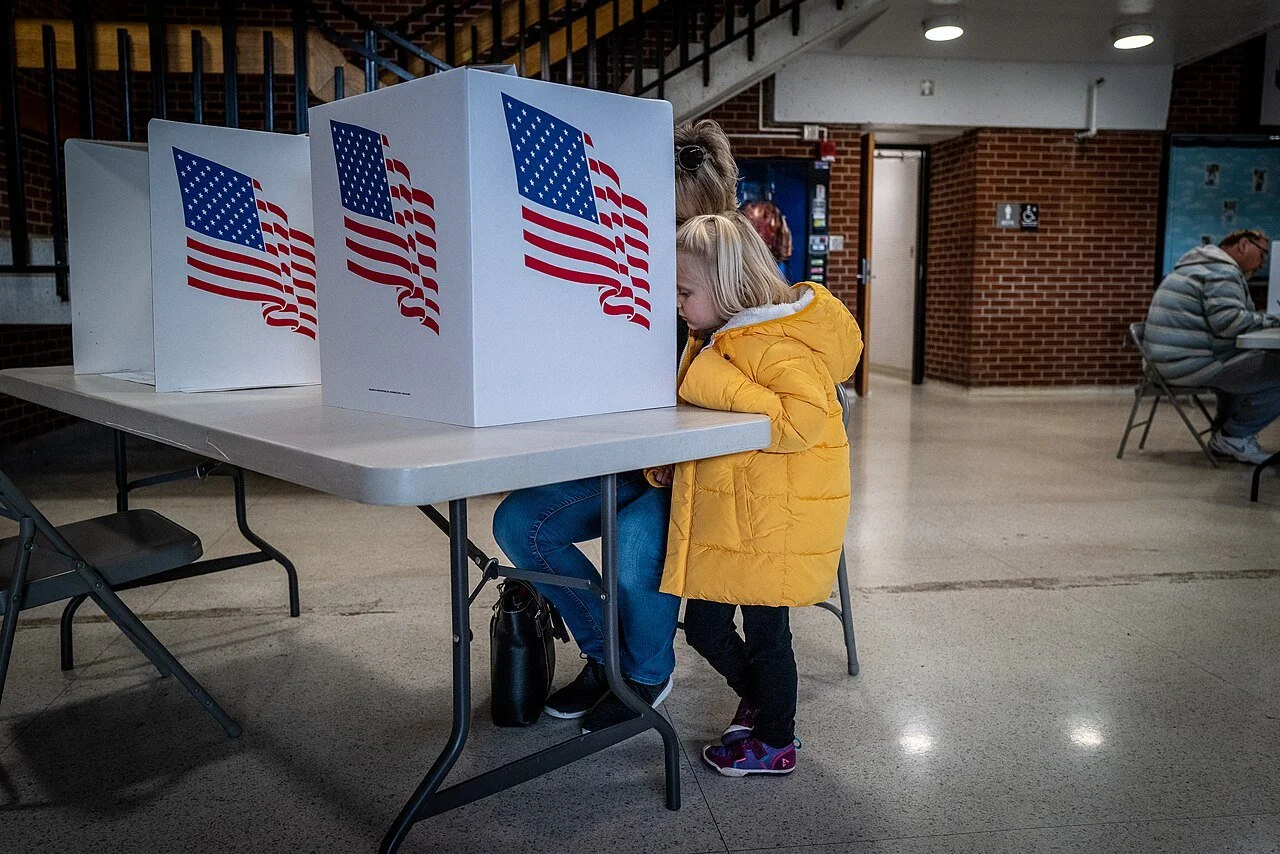
Brooke Yonge stood at the folding table in her Derry, New Hampshire polling place and felt the sinking realization that she was about to be sent home from the one civic responsibility she had shown up specifically to fulfill. It was March 2025, a town election, nothing dramatic in itself. Then a poll worker told her that in order to vote she would need to provide proof of citizenship, something she had not brought. She drove home, dug out her birth certificate, and returned to the polling station, only to learn that the document she had brought would not suffice. The name on it was her maiden name, and – since she had changed her name when she got married – it did not match the one on her driver's license. So, she left a third time, this time to collect her marriage certificate.
A few towns over in Concord, a recently divorced woman walked into her polling place carrying no such paperwork. She had reverted to her maiden name after her divorce, but she had nothing on hand to document the change, and unlike Yonge, she didn't get a second or third chance. She was turned away outright, denied her right to vote. Her ex-husband, registered under a name that still matched his old records, voted minutes later without a single question asked.
More than a thousand miles away, Chris Lee didn't even get the curtsey of being told to his face that he could not vote. A truck driver and registered Republican who has voted in South Dakota for nearly a decade, Lee has always planned his delivery routes around Election Day so he can cast a ballot in person. This year, a new state law quietly reclassified him as a "federal-only" voter, locked out of every state and local race on the ballot, over a technicality in how his address was listed when registering to vote or voting by absentee ballot. Nobody from the state told him. He found out only when a reporter called to ask how it felt.
None of these people were stopped by the SAVE Act that is currently being debated in Congress and has received national attention. Among other provisions, the Safeguard American Voter Eligibility Act would require anyone registering to vote in a federal election to present documentary proof of citizenship, generally a passport, birth certificate, or REAL ID marked to indicate citizenship status. The House has passed it twice and as of July 2026 advanced components and funding frameworks through broader budget reconciliation and defense packages. The Senate has not, and cannot, without either a supermajority which Republicans don't have or a change to the filibuster that party leadership has so far declined to force.
Yet Yonge, the Concord voter, and Lee were all denied something at the ballot box this cycle, in states that had not waited for Congress to finish that fight. That is the real story: while the SAVE Act sits stalled in D.C., state legislatures have already written its substance into law in many states, in several cases going further than the federal bill itself ever proposed. The federal fight makes headlines while the state-level rollout is where people are actually losing access to the ballot, right now, ahead of a midterm election.
As of late July 2026, Senate Republicans remain divided over the SAVE Act, and House Republican leaders are pursuing multiple strategies to keep the proposal alive. This month, the House approved a budget resolution launching work on a $95 billion reconciliation package that includes approximately $10 billion in election-related funding intended to encourage states to adopt SAVE Act-style proof-of-citizenship requirements. Reconciliation would allow Republicans to bypass the Senate's 60-vote filibuster, but the process is constrained by the Byrd Rule, which is expected to prevent many of the bill's substantive election provisions from being included. House Republicans have also attached a SAVE Act-style voter identification provision to separate legislation restricting congressional stock trading, further illustrating the party's effort to advance election-related policies through must-pass or bipartisan measures even as the standalone bill continues to stall in the Senate. Senate Majority Leader John Thune has repeatedly acknowledged that the standalone legislation lacks sufficient support to pass the chamber. The maneuvering underscores what the states have already been proving for two years: that Congress cannot agree on this issue, and the most likely path forward, if any, involves only limited, budget-related or attached provisions rather than enactment of the SAVE Act as standalone legislation.
In these efforts, no state has gone further than New Hampshire. Its law, House Bill 1569, passed in September 2024, eliminated the old safety valve that let unregistered voters sign an affidavit and prove citizenship later; instead, it demands a passport, birth certificate, or naturalization papers on the spot, with no exception for married or divorced women whose documents may not match their voter registration. A poll-watching coalition tracked roughly 250 voters turned away during the 2025 town elections alone, most for insufficient proof of citizenship, the provision that precluded Yonge and the Concord voter above from casting a ballot. In June 2026, a federal judge struck the law down, ruling that it placed what the court called "a particularly heavy burden" on young voters and married women, and noting that only eight noncitizens had ever been identified in voter registration rolls statewide. Yet, the fight is not over as the state's Attorney General's Office is appealing that ruling and has asked the court for a stay that would let the documentary requirement take effect again this fall. For now, first-time voters can sign a sworn affidavit instead of producing hard documents for the September primary and November general election.
Other states have moved ahead with similar plans. Utah offers the clearest official numbers on what these laws actually catch. After a 13-month "comprehensive citizenship review" of the state's roughly 2 million registered voters, Lt. Gov. Deidre Henderson's office confirmed exactly 27 noncitizens on the rolls. Under the state's new law, more than 5,000 additional voters have since been notified that their citizenship couldn't be confirmed through state or federal records and must produce documents or be limited to a "federal-only" ballot that excludes every state and local race.
South Dakota, where Lee, the truck driver, lives, built a similar two-tiered system. Under a law signed this spring, any new registrant who can't provide proof of citizenship is automatically designated a federal-only voter. By the state's June primary, at least 1,500 South Dakotans had already been placed in that category, and the state doesn't always communicate the change clearly to the voters it affects. A local voting-rights group's petition to let photocopies of tribal IDs count as valid documentation was rejected by the state election board this month, on a technicality.
Florida, Iowa, and Pennsylvania sit at three different stages of the same rollout. Florida's new law, signed by Gov. Ron DeSantis this spring, runs new registrants through a database cross-check instead of rejecting incomplete applications outright, and it won't take effect until after this year's midterms. Iowa shows what happens once a system like the one described above is already running, flagging a voter's registration as "unconfirmed" whenever a citizenship check can't clear them and giving voters 90 days to prove citizenship or lose their registration. Of 2,176 Iowans flagged as possible noncitizens before the 2024 election, only 277 were ultimately confirmed as noncitizens, meaning nearly nine in ten flagged voters were eligible all along and had to prove it or risk losing their registration anyway. Pennsylvania hasn't passed a SAVE-style law, yet this month the Trump administration warned Secretary of the Commonwealth Al Schmidt he could face criminal prosecution over noncitizen voting disputes, making the swing state a likely early target if federal action ever moves.
Justice Louis Brandeis called the states laboratories of democracy, meant to test policy on a smaller scale before they would go national. That idea is playing out in real time with the SAVE Act, except the test subjects have names. Ordinary citizens are encountering these unexpected barriers that diminish their ability to vote, often because of administrative rules and a lack of communication from the state. While the Senate spends its days on cloture votes and budget workarounds to consider passing the SAVE Act, state legislatures have already implemented rules that may impact who gets to vote in November: some, like Florida, building carefully enough to survive a courtroom fight; others, like New Hampshire, learning in real time, and in front of a federal judge, what happens when they don't. These laws add up to more than individual inconvenience. Roughly 31,000 New Hampshire voters alone are estimated to lack the documents the law demands, and thousands more in Utah and South Dakota have already been shifted onto federal-only ballots that exclude every state and local race. That means these laws are already reshaping who decides school board seats, town budgets, and other local contests often won by a handful of votes, well before they ever touch a presidential or congressional race. Whatever the Senate eventually does or doesn't do, the laboratory is already open, and the results are already showing up at the ballot box.
Carolina Viera is an intern at the Center for the Study of the Presidency & Congress a rising junior at the Pennsylvania State University double majoring in Political Science and Journalism: Digital & Print, and a minor in Business and the Liberal Arts.
CSPC in the News
Washington Warned Us — Now America Must Renew Its Democracy
Published by The Fulcrum on July 16, 2026.
A broken incentive system is driving division — and structural reform is the path to renewal. In his latest for The Fulcrum, CSPC President & CEO Glenn Nye reflects on how the nation can heed Washington’s warnings and renew our democracy at 250 years.
Read the full analysis here.