
The CSPC Dispatch - July 10, 2026
In this issue of the CSPC Dispatch, Peter Sparding explores why foreign policy is unlikely to decide this year's midterm elections, but could still influence the outcome by shaping perceptions of presidential leadership and the economy. Kaiana Kotero examines whether the Artemis Accords can help preserve international cooperation in space as strategic competition with China and Russia intensifies. Finally, Lily McAfee looks at the rapid expansion of AI data centers and how growing public opposition is turning AI infrastructure into an unexpected political issue for governors and candidates across the country.
Foreign Policy Won't Decide the Midterms—But It Could Shape Them
By Peter Sparding
It is one of the most widely shared tenets of American electoral politics that foreign policy issues do not decide elections. This will almost certainly also be the case in this year’s midterm elections. Although James Carville’s well-known quip that “it’s the economy, stupid!” which decides American elections seems slightly outdated today, new axioms, such as “affordability,” have taken a similarly prominent place. And certainly, these “kitchen-table” issues hold greater significance for most Americans than matters of international relations. Still, even as foreign policy issues do not rank among the top concerns of the American electorate, there is some evidence that voters do care about their leaders’ ability to handle international affairs. The political scientist Jeffrey Friedman has coined the term “commander-in-chief test” to describe this phenomenon, noting that while electoral decisions may rarely be based on a candidate’s specific foreign policy positions, voters place a high priority on supporting leaders who appear competent in foreign policy decision-making. Competence in this regard is exhibited in particular through two key attributes: strong leadership and good judgment. Of course, this angle is most relevant in presidential elections, where a candidate’s persona can be evaluated through this lens. So, does this in turn mean that foreign policy issues will be irrelevant for this year’s voting, since there are no presidential candidates to evaluate? Considering Congress’s limited role in shaping U.S. foreign policy, this would seem only logical.
Yet, there are a few reasons to believe that international matters could indeed influence the outcome of this year’s vote, if perhaps indirectly or on the margins. For one, though he is not on the ballot, midterm elections are widely considered to be a referendum on the incumbent president. Two years after voters elected a new chief executive, Congressional elections present the first opportunity for the public to render a verdict on the administration’s performance. This assessment often manifests as a backlash, or even a “shellacking,” as Barack Obama famously described his party’s poor showing in the 2010 midterms. In addition, the advancing nationalization of American politics – the fact that voters increasingly base their electoral choices on national political developments rather than on local conditions or candidates – likely exacerbates these dynamics. Most forecasters currently assume that this fall’s vote will thus follow a similar pattern and that the noteworthy decline in President Trump’s overall approval rating since his inauguration will negatively impact Republican candidates at the polls. To be sure, one major reason, if not the primary one, for the president’s low approval has come as the result of voters’ ongoing frustration regarding the cost of living and other economic issues. But a referendum-style midterm election imports some characteristics of a presidential contest into races where the president himself is not running. And recent polling shows that voters have grown more skeptical of the president's personal traits and his ability to make good decisions, concerns that echo Friedman’s “commander-in-chief test” mentioned above. For example, an April Reuters poll found that only 26% of Americans considered the president to be “even-tempered” and a majority thought that his “mental sharpness” had gotten worse over the past year. Similarly, in a May Washington Post/ABC poll, 54% of Americans stated that they did not consider Trump to be a “strong leader”, while fully 67% thought the president did not “carefully consider important decisions”. In all likelihood these numbers, at least in part, reflect effects of the Iran war, which the same poll found was as unpopular among Americans as the Iraq War in 2006 and the Vietnam War in the early 1970s. While the war itself, though unpopular, may not be a decisive issue for many voters, the prolonged conflict has undoubtedly had a negative impact on the president’s image. Such image shifts emanating from a foreign policy quagmire are challenging to dislodge once firmly established, as Trump’s predecessor, Joe Biden, discovered after the chaotic American withdrawal from Afghanistan. Consequently, if the midterms turn out to be a referendum on the president, and the president’s image is in turn declining due to issues like the Iran war, foreign policy may indirectly contribute to a reduced vote share for Republican candidates in the fall.
The second vector through which foreign affairs may impact the election is economic. Again, the Iran war plays a major role, as the on-again, off-again closure of the Strait of Hormuz and the resulting shock to global oil markets and the supply chains of many other intermediate goods has caused spikes in inflation and elevated economic uncertainty. These are developments voters tend to punish no matter the cause, and they play right into existing concerns about the “affordability crisis”. In this case, however, the Iran war and its economic spillovers are clearly attached to the president’s decision-making so that even if successful negotiations with the Iranian leadership could provide some inflationary relief ahead of the elections, the episode may have already deepened an existing political liability (“affordability”) for Republicans. In this way, the Iran war may doubly, albeit indirectly, impact the midterms: once through the president’s image, and again through the economic spillover effects and their clear connection to the administration’s decision to go to war.
None of this means that foreign policy will decide the elections. Any potential Republican losses will first and foremost be the result of voters’ concerns about domestic and economic issues, the president’s decreasing approval rating, and of the political pendulum swinging back as “thermostatic” public opinion takes hold. Yet, in a political environment that is already primed for a referendum on the president in the midterms, the fact that major foreign policy decisions have had effects on issues that voters do care about – views of the president’s leadership and decision-making qualities and the cost of living – may further contribute to existing trends. So, is this year different? Only a little. Foreign policy will not decide the November elections. But it may impact results indirectly and on the margins. In some of the closest races this fall, that may be enough.
Peter Sparding is Senior Vice President and Director of Policy at CSPC, and author of “No Better Friend? The United States and Germany since 1945.”
Artemis Accords: A Giant Step in Space Cooperation?
By Kaiana Kotero
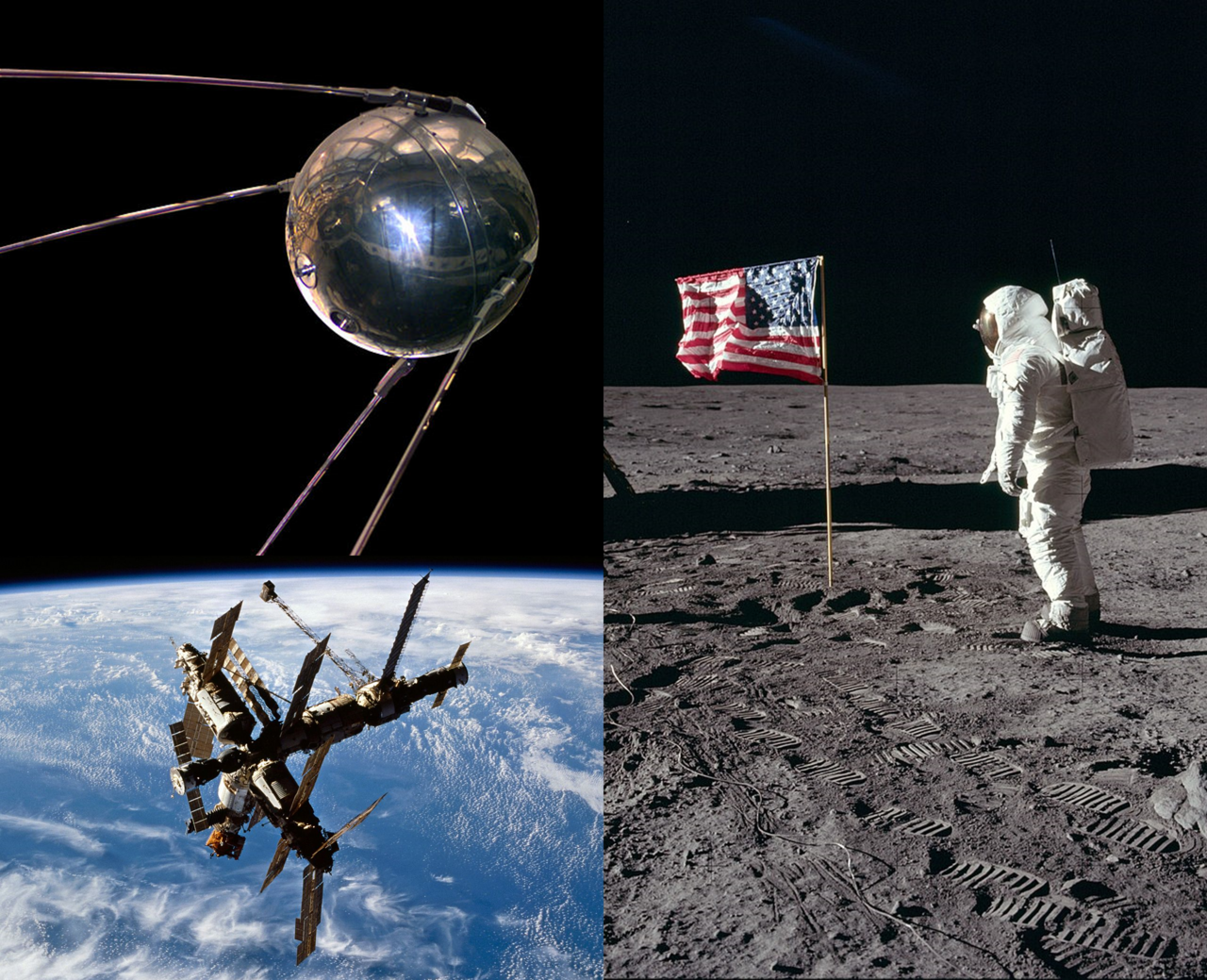
Sputnik 1, humanity's first artificial satellite, the United States directed the Space Race to landing humans on the Moon, the Soviet Union concentrated on low Earth orbit space stations such as Mir. (CC BY-SA 4.0)
Scheduled for 2030, the International Space Station (ISS) will hurtle back to earth as a molten fireball visible to millions of people. The spectacle will offer an ironic but apt metaphor for the state of modern international collaboration in space. As the ISS—one of the last, most visible symbols of once close U.S.-Russian cooperation—disintegrates in earth’s atmosphere before impact, it will force the world to confront a question with real gravity: What comes next for international space collaboration?
Since November 2000, the space station has achieved historic feats through the collaborative effort of five major space agencies: NASA (United States), Roscosmos (Russia), ESA (Europe), JAXA (Japan), and CSA (Canada) (NASA, “International Space Station”). In an era of growing geopolitical tensions and confrontation, the ISS is the physical embodiment of an increasingly fading yet fundamental tenet of global stability: international cooperation.
With no cooperative endeavors yet planned to replace the ISS, the United States confronts a fateful inflection point. Along with the other major powers, Washington is testing the boundaries of space as another potential arena for military competition. The Pentagon’s [United States] Space Force warns that both China and Russia are developing “sophisticated counterspace capabilities with the intent to disrupt and degrade U.S. space-enabled capabilities.” According to the Secure World Foundation, Russia is actively building an anti-satellite (ASAT) system that would employ nuclear weapons to disable or destroy satellites. Meanwhile China has deployed both kinetic and non-kinetic anti-satellite weapons, including lasers, direct-ascent missiles, and advanced jamming technology (Galbreath, Counterspace Capabilities). This modern race to target space-based systems and weaponize space demonstrates the intensity of hostility that now characterizes great power relations.
This intensifying competition among major powers raises a profound governance question: Is the space domain destined to become just another militarized battleground for future threats and potential conflict, or is there still hope that space-faring nations could recapture some of the spirit of cooperative exploration that birthed the International Space Station?
By presenting the Artemis Accords as one path forward, the United States has created an opportunity to ease military tensions and put guardrails on our lunar race to the moon with China (lunar race). As both countries compete to establish permanent infrastructure at the Moon's resource-rich south pole, it is more important than ever that the United States proposes international standards that preserve space as a domain of peaceful competition, and potentially even future cooperation.
The Accords are a good faith set of principles established by NASA and the U.S. Department of State currently embraced by 68 signatories. Built on previous international space agreements, including the Outer Space Treaty of 1967, the accords were established with the intent to “enhance the governance of civil exploration and use of outer space” with a primary focus of enabling the Artemis Program (NASA, “Artemis Accords”). The accords are not just a space-exploration framework, but also an attempt to preserve space as a global commons.
The Artemis Accords: Ground Rules for Space Exploration
The proliferation of anti-satellite weapons developed by both China and Russia, combined with their partnership in establishing the International Lunar Research Station (ILRS), signals that the next era of lunar exploration will not be isolated from broader geopolitical competition. The current escalation in developing anti-satellite and potentially space-based weapons is a reality that cannot be ignored, and which the Accords cannot completely defuse.
However, the Accords set a potential benchmark for global accountability and behavioral norms in space that if uniformly adopted could increase transparency and even forestall space militarization. The Accords establish norms of transparency, for instance, that make hostile or aggressive behavior related to space operations easier to identify and diplomatically condemn. As new space-faring nations and private entities emerge, the Accords offer a set of principles designed to keep the space domain a global common.
The Accords foresee a potential era of international collaboration via alliances and commercial partnerships, for instance, and they offer guidelines for space-resource use, interoperability of space systems such as fuel-storage, collective debris mitigation, and shared scientific data. As more countries and private entities embrace space exploration, and mankind establishes a presence on the surface of the moon, these protocols for common operations will become increasingly critical. As outlined in NASA’s ISS Transition Plan, the agency’s transition toward operations with more commercial partners will heavily depend on such transparent, common standards. Should Russia and China exhibit hostile behavior in space, the accords will also enable coalition-building to defend the United States and its democratic partners in space.
Competition vs Conflict in Space
The Artemis Accords are obviously a U.S.-aligned agreement that enables the U.S. Artemis program specifically. Neither China nor Russia are signatories, and both of these major space-faring nations have announced their own joint development of an International Lunar Research Station. This lunar base will be led by China's CNSA and Russia's Roscosmos, and it is designed to support short-term human and long-term robotic missions to the moon itself. The development of a competing station demonstrates that the future of lunar governance will be shaped by rival coalitions attempting to define the rules of space exploration before permanent infrastructure is established. In this sense, the Artemis Accords are not merely a technical agreement; they are a strategic instrument of American leadership, designed to rally allies around transparency and peaceful use before an alternative lunar order can be shaped by authoritarian competitors.
While NASA’s Artemis program may prove that America can still reach the Moon, the Artemis Accords will test something arguably harder: whether America can still lead on Earth while reaching beyond it. At a moment when U.S. credibility has weakened, space offers a rare chance to rebuild trust through cooperation. If Washington succeeds, the next space race does not have to repeat the mistakes of earthly rivalry. It can show that American leadership is strongest not when it goes alone, but when it builds a future others want to join.
Kaiana Kotero is an intern at the Center for the Study of the Presidency & Congress, a rising senior at the University of California, Berkeley double majoring in Legal Studies and Psychology.
AI May Own the Future, But It’s a Political Headache in the Present
By Lily McAfee

An aerial view of data centers and other commercial buildings in Loudoun County near Ashburn Virginia, a city currently home to roughly 169 data centers.
In Utah, State Senate President J. Stuart Adams recently lost his primary after supporting a massive data center development near the Great Salt Lake, according to Newsweek. After supporting the same project, former Box Elder County Commissioner Lee Perry had this to say: “Do I think that the data center vote cost me the election? Yes, I do.”
The unpopularity of data center development has already demonstrated that the massive projects can prove decisive among voters. Candidates running for election this year have taken note. A number of the 18 governors running for reelection have already adjusted their stance on the issue. Increasingly, politicians are responding to residents who complain that their concerns on the issue are not being heard. Politicians' actions are starting to show that this issue could be reshaping elections this year.
In Texas, incumbent Republican Governor Greg Abbott has been a longtime advocate for AI infrastructure. The state is already home to an estimated 490 data centers today (see map). Last June, however, Abbott sent a letter to state regulators directing them to take action to make sure that data center development does not increase residential electric bills. He also pledged to work with legislators to “repeal sales tax exemptions and other outdated or unnecessary incentives for data centers.” On June 30th Abbott went further, calling for a ban on data center development in rural parts of the state. His notable shift towards these developments has caught the attention of Abbott’s opponent in the upcoming election, Democrat nominee Gina Hinojosa. She called him out for reversing his stance, saying this is a “CYA move” (cover your assets: actions taken to protect yourself from blame).
Abbott isn't alone in qualifying his support for AI infrastructure. Last June, Pennsylvania Governor and rumored presidential candidate Josh Shapiro celebrated a $20 billion investment from Amazon to build data centers. His administration said at the time they were “all in” on AI. Currently, Pennsylvania already has 134 data centers. In his February budget address, Shapiro proposed expedited speed, permitting guarantees and access to state tax incentives if developers met particular environmental affordability and transparency standards. Amid the continuous community backlash for these developments, on May 27th Shapiro confirmed and implemented those standards. The GRID standards require developers to follow guidelines in terms of energy affordability, transparent and community engagement, economic development and environmental protections to qualify for those incentives. Sensing an advantage on the issue, Shapiro’s opponent Stacy Garrity has stressed that she will “pause” data center development. Both candidates have publicly called each other out for hypocrisy regarding the issue, as Garrity also formerly praised Amazon's investment last year.
In Arizona, Democratic Governor Katie Hobbs approved a budget on June 13th that includes a three-year moratorium on sales tax exemptions for data centers. Arizona is also a data center hotspot, with the state currently hosting 156 projects. She also vetoed a bill pushed by data center developers that would have allowed referendum petitions brought forth by citizens to be withdrawn before they are put to a vote.
In June, Illinois’ Governor J.B. Pritzker also paused tax incentives for data centers. According to a 2024 report by the state, at least 27 data centers had received $983 million in estimated lifetime tax breaks and benefits. The state is currently home to 239 data centers.
The sudden changes on the issue of AI data centers by these governors coincide with a recent survey by Gallup that found 71% of Americans oppose the local construction of AI data centers. The survey also revealed that this opposition is bipartisan, with 56% of Democrats, 48% of Independents and 39% of Republicans strongly opposed. The respondents didn’t oppose artificial intelligence as a technology, but they did object to the impact of massive data centers on energy costs, state resources including water, and quality of life issues such as intrusive noise.
Even though there is no polling evidence yet directly linking AI data centers to shifting support, incumbents and candidates for office have been put on notice that unless they listen to and mitigate voter concerns on the issue, they are taking a big political risk. AI has been touted as the technology that will define the future, but politicians would do well to consider how it is already impacting their constituents in the present.
Lily McAfee is an intern at the Center for the Study of the Presidency & Congress and a rising junior at the Pennsylvania State University, double majoring in Broadcast Journalism and Political science.
CSPC in the News
The Defence Investment Plan: The View from Washington
Published by the Council on Geostrategy on July 6, 2026.
Following the release of the UK's Defence Investment Plan last week, CSPC Senior Vice President for National Security and Intelligence Programs Joshua Huminski examines how the strategy is being received in Washington, the trade-offs it reflects, and what it could mean for the future of transatlantic security.
Read the full analysis here.
Norway Provides Both a Model, and a Warning, for NATO
Published by Breaking Defense on July 6, 2026.
As NATO adapts to an evolving security environment, Norway continues to play a vital role in defense and deterrence in the High North and Arctic. In his latest for Breaking Defense, CSPC Senior Vice President for National Security and Intelligence Programs Joshua Huminski reflects on Norway's strengths and what the rest of the Alliance can learn from its approach.
Read the full analysis here.
250 years of the USA: All is Not Lost Yet
Published by Süddeutsche Zeitung on July 4, 2026.
CSPC Senior Vice President Peter Sparding joins Süddeutsche Zeitung’s To the Point podcast, to discuss how the Trump presidency fits within the broader history of the American presidency and what it may mean for the future of American democracy.
Listen to the full podcast [in German] here.