
The CSPC Dispatch - April 24, 2026
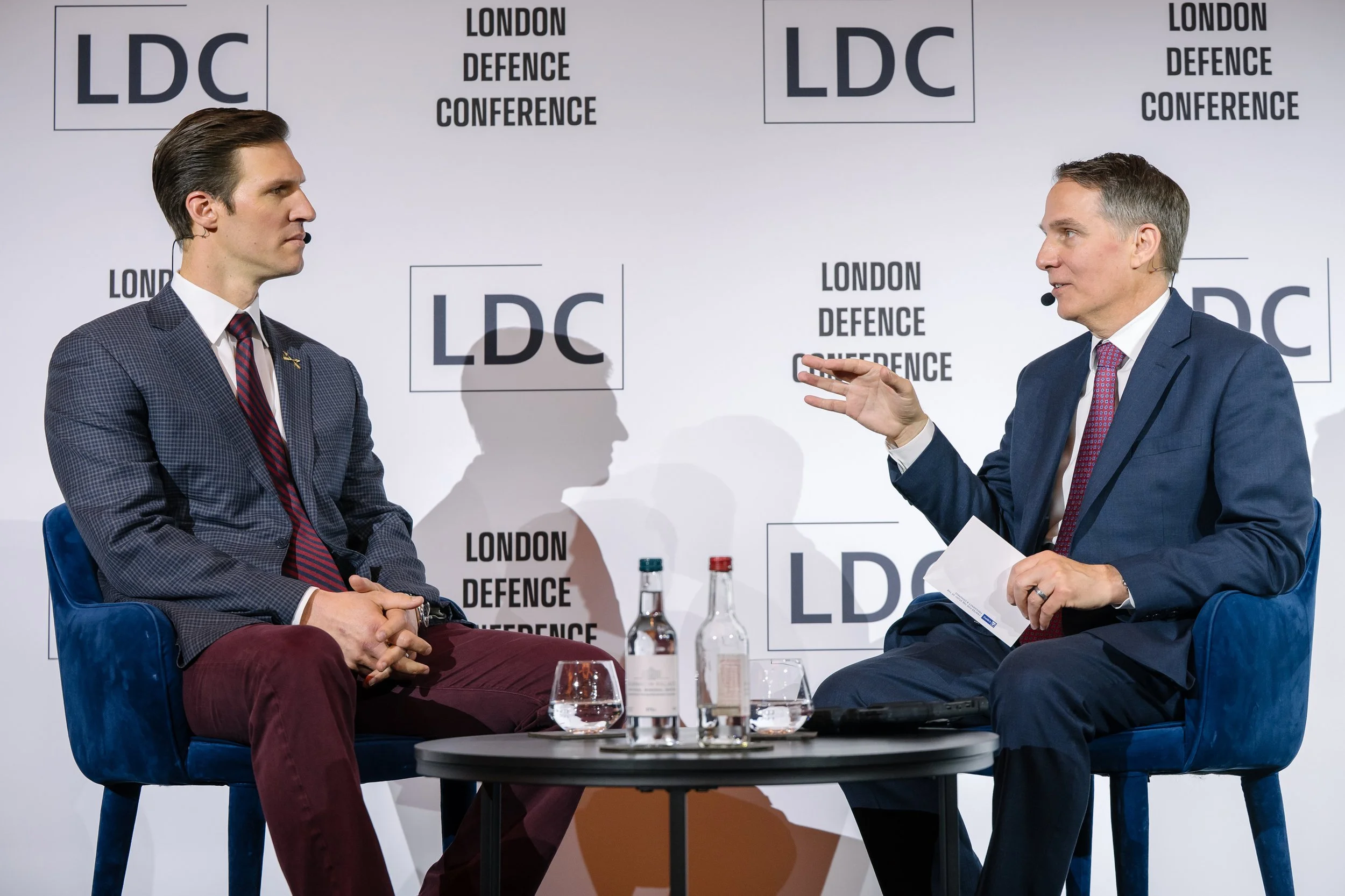
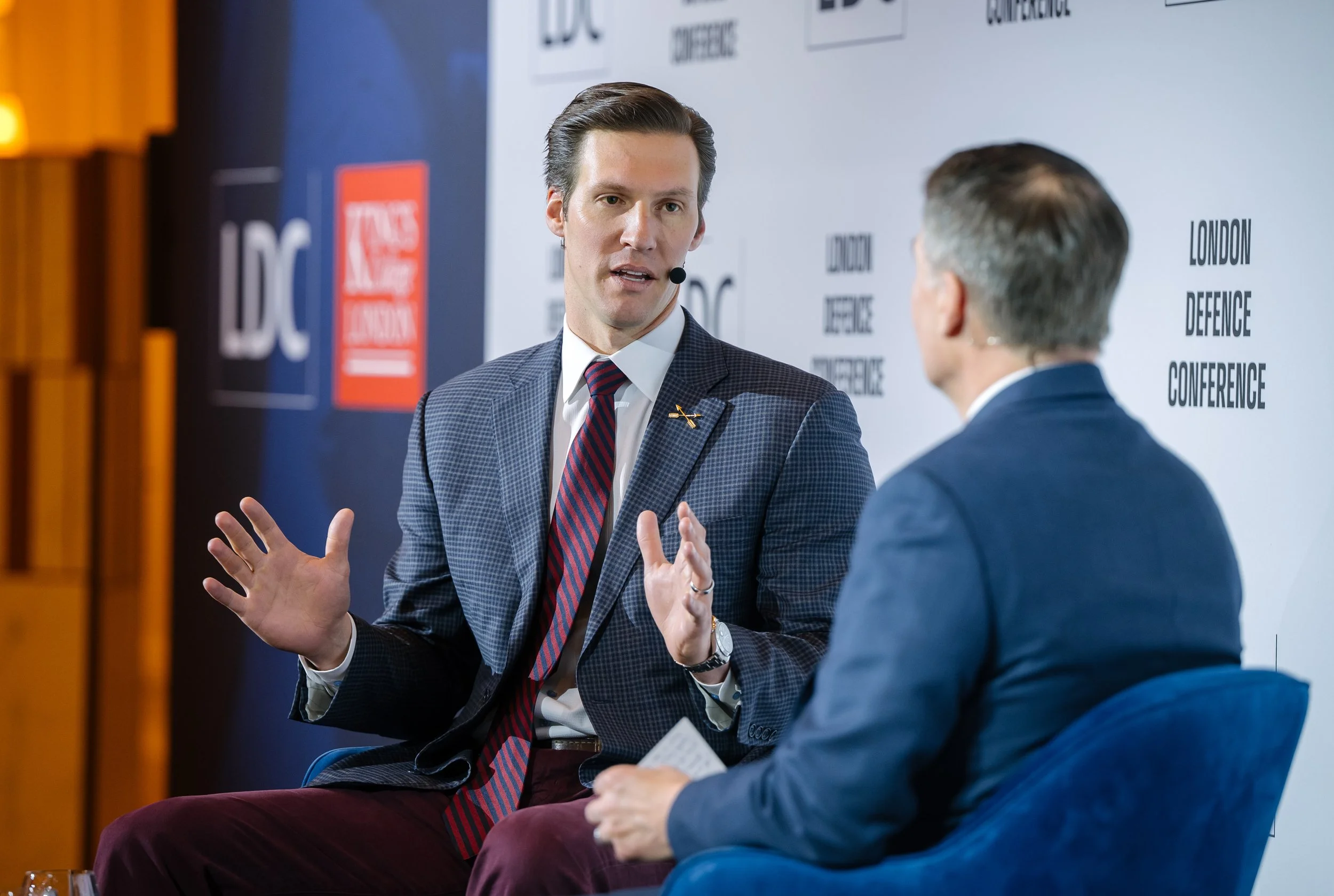
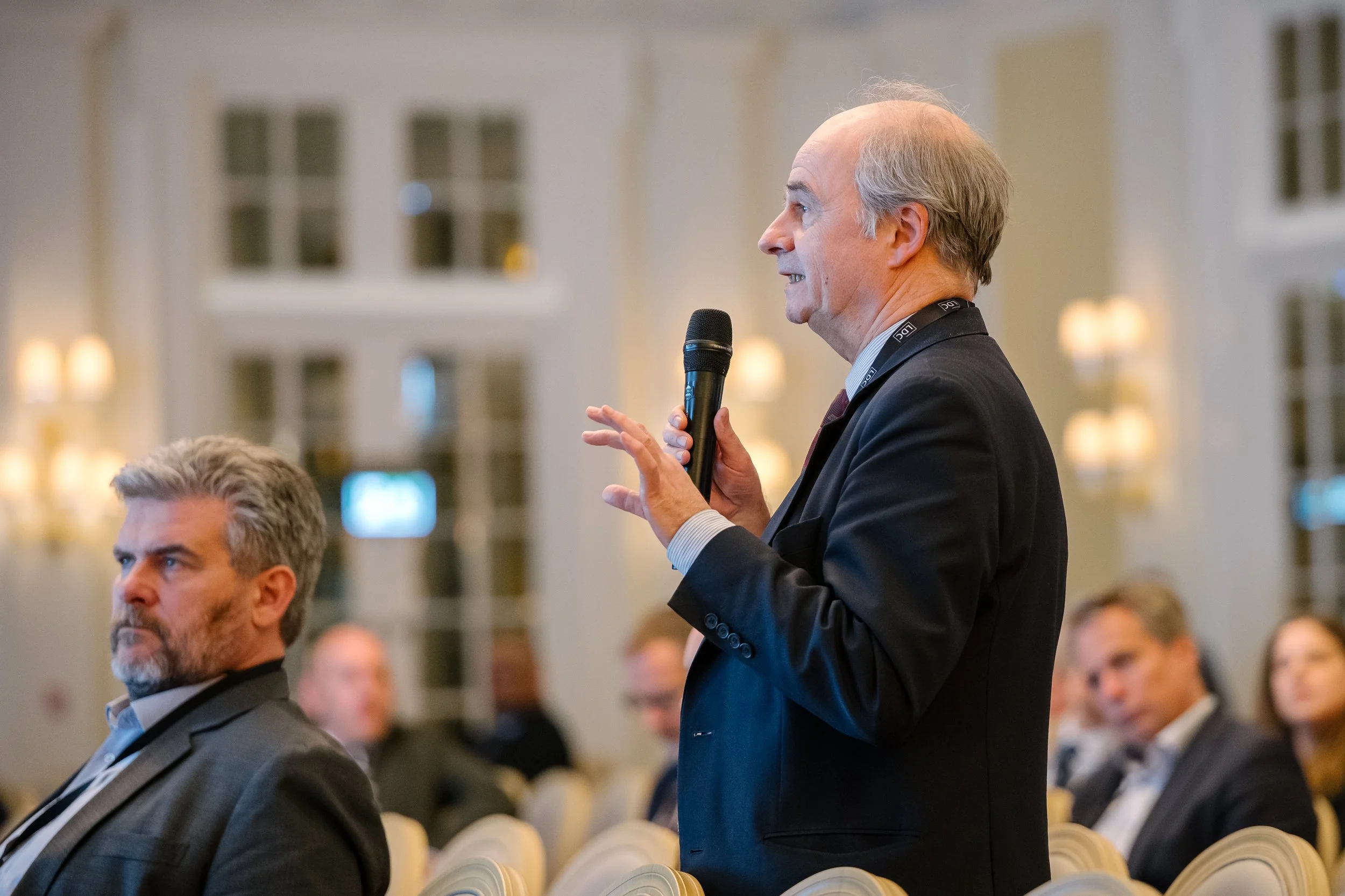
Last week, CSPC was pleased to participate in the London Defence Conference, which brings together leaders from government, industry, and academia to address today’s most pressing global security challenges. Our panel featured Congressman Pat Harrigan, who offered perspectives on the state of NATO, lessons emerging from Ukraine, and the importance of principled compromise in Congress. The conversation was moderated by CSPC President & CEO Glenn Nye. We look forward to continuing these partnerships and bringing together transatlantic leaders as we host the LDC Washington Forum on September 23 in Washington, D.C.
Building on these discussions of global security and institutional resilience, this edition of CSPC Dispatch turns to a set of essays examining the pressures facing international norms, domestic institutions, and long-standing policy frameworks.
James Kitfield examines whether recent U.S. rhetoric and military actions are undermining the rules-based international order, drawing on insights from a leading expert in the law of armed conflict. Jeanne Zaino revisits the legacy of Woodrow Wilson, tracing how one of America’s most prominent reform thinkers ultimately grappled with the limits of structural change. Victoria Flick explores the renewed relevance of Just War Theory, analyzing how modern conflicts are exposing deep disagreements over when war is justified and how it should be conducted.
Turning to regional and domestic challenges, Maria Reyes Pacheco critiques the persistence of enforcement-heavy counternarcotics strategies in Latin America, arguing that military approaches continue to displace rather than resolve the drug trade. Blaine Ravert considers how emerging forms of warfare—from cyberattacks to supply chain disruption—are eroding the long-held assumption that the U.S. homeland is insulated from conflict. Finally, Jordan Reyes investigates the rising cost of running for Congress, highlighting how fundraising demands and financial barriers are reshaping who can realistically seek federal office.
Has America Gone Rogue?
By James Kitfield
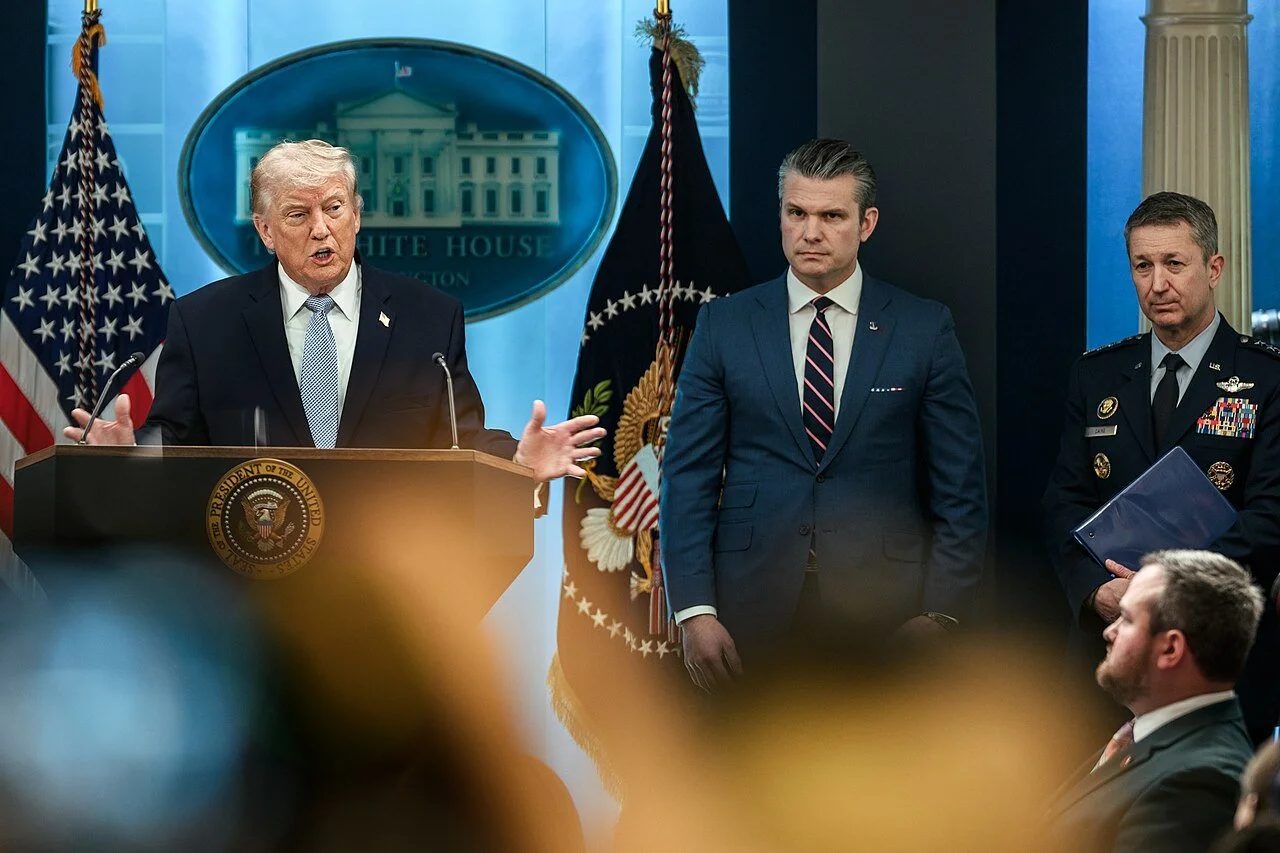
President Donald Trump updates members of the media on the rescue of missing U.S. airmen in Iran on April 6, 2026. Photo courtesy of the White House.
This past week President Donald Trump threatened that unless a deal is reached to end the current conflict the “United States is going to knock out every single Power Plant, and every single Bridge in Iran,” once again raising the possibility that the United States is prepared to commit a likely war crime. The most recent outburst followed Trump’s earlier threat to bomb Iran “back to the stone ages,” with the follow-on proclamation that “a whole civilization will die” unless Tehran unblocked the Strait of Hormuz. The bellicose rhetoric from a leader wielding one of the world’s largest arsenals of nuclear weapons has alarmed already shaken allies and even helped spark a public feud between the White House and the Vatican. It has also pushed the U.S. military and a nation previously viewed as the chief defender of a rules-based international order into unchartered territory.
Those outbursts came in a year in which the Trump administration had already launched military strikes killing an estimated 180 low-level drug runners in the Caribbean; captured and later imprisoned the strongman president of Venezuela with a lethal military operation; mounted an oil embargo of Cuba of questionable legality; and threatened to take Greenland by force from NATO ally Denmark.
Based on that record some international affairs experts argue that an American superpower that for decades upheld the post-World War II, “rules-based international order” has suddenly gone rogue. Shaken NATO leaders have even recently lined up for audiences with the autocratic Chinese President Xi Jinping in hopes of restoring stability to that global order. Xi was clearly referring to the United States when he recently told his Spanish counterpart that “chaos abounds and the international order is crumbling,” and the world cannot risk reverting “to the law of the jungle.”
For his part, President Trump has reinforced the perception of an America unmoored from global rules and norms and international law when he told the New York Times there was only one limit to his exercise of power. “Yeah, there is one thing. My own morality. My own mind. It’s the only thing that can stop me,” said Trump, adding “I don’t need international law.”
To better understand the laws and norms that undergird the rules-based order, I recently spoke with a noted expert on the subject, Geoffrey Corn, director of the Center for Military Law and Policy at Texas Tech University School of Law. Corn spent 21 years in the U.S. Army where he served as the former senior law of war adviser, and he has written extensively on the laws of war and international relations, including co-authoring the books “National Security and the Constitution,” “Law in War: A Concise Overview,” and “The Law of Armed Conflict: An Operational Approach.”
This interview has been edited for length and clarity.
Q: President Trump’s threats to destroy Iranian civilization and his administration’s actions in the past year certainly raise the question of what laws and rules still apply in the so called “rules-based international order.” Is the United States adhering to them in its war with Iran?
Corn: Well, President Trump’s bellicose and often overboard statements like “We’re going to bomb you back to the stone age” are not war crimes in themselves, but if they were acted on then it would certainly be a war crime. In that sense the war on Iran has been a stress test both for the military’s JAG (Judge Advocate General) corps and senior military officers with stars on their shoulders. Because the Trump administration has pushed the boundaries close to the point where senior military leaders would have to tell the commander-in-chief and defense secretary that the U.S. military can’t do what they’re asking it to do.
Q: Would Trump’s specific threats to destroy all of Iran’s power plants and bridges constitute war crimes if they were carried out?
Corn: If the military command was allowed to do the proper legal analysis of the campaign we’re waging in Iran, targets such as specific bridges could be legitimate. You need to take the necessary precautions and conduct a proportionality assessment including estimating potential civilian casualties, but if presumptively civilian objects such as bridges are used or reasonably anticipated to make an effective contribution to enemy military action, for example to move military equipment or impact military logistics, they could be legitimate targets.
Q: What about “bombing Iran back to the stone age?”
Corn: The real problem is that because of President Trump’s overheated rhetoric, every time one of these targets is hit the perception will be that we’re committing a war crime. That fundamentally compromises the legitimacy of our campaign, and it’s a tragedy because we’re fighting an enemy that shows no respect for the laws of warfare. The Iranian regime has indiscriminately attacked its own civilian population, and they are attacking civilian targets in neighboring Gulf States and Israel. It’s also illegal under international law for Iran to interdict shipping in international waters. So, Iran should have been the singular focus of international condemnation in this conflict, but with their bellicose statements President Trump and [Defense Secretary Pete] Hegseth have undermined the strategic legitimacy of our campaign.
Q: Why is it important for the United States to preserve a sense of legitimacy even while waging war?
Corn: We should have learned its importance by looking at the Israeli Defense Forces operations in Gaza. The IDF was conducting operations in a really complicated battlespace, and you had political leaders like [National Security Minister Itamar] Ben-Gvir and [Finance Minister Bezalel] Smotrich talking about nuking Hamas and driving out all the Palestinians from Gaza. And as a result, everything the IDF did after those comments was widely perceived as illegitimate in the eyes of the international community.
Q: Do you believe that the Trump administration is concerned about the opinions of the international community?
Corn: By his own words and actions the answer appears to be no. My frustration is that the perception of illegitimacy the Trump administration has created is unfair to the men and women of the U.S. military, the majority of whom are really trying to do this the right way. But we have completely lost the moral high ground because President Trump simply abandoned it. The U.S. military’s bedrock joint service doctrine for conducting operations lays out the classic principles of war, and as of several years ago it specifically includes “legitimacy” as one of the principles, defining it as the actual and perceived respect for law and morality. So, our own military doctrine identifies legitimacy as essential for effective military operations, and for good reasons.
Q: Such as?
Corn: Because you can win the battle, yet still lose the bigger war. Just ask the Israelis. The perception in global public opinion is now that the IDF is illegitimate and just blows everything up without caring about the impact on civilians – even though I am confident that in practice there is consistent effort to align military operations with the law of war [Editor’s note -- Last year, the American public’s approval of Israel’s military actions in Gaza fell to just 32% in a Gallup Poll, the lowest reading since Gallup first asked the question in November 2023]. Likewise, the United States is losing global public opinion. I hear that from my friends in allied militaries or former military people all the time.
Q: Does that loss of perceived legitimacy impact U.S. troops?
Corn: Yes. Just try to imagine a pilot, for instance, who is ordered to conduct a lethal strike knowing it is unavoidable that it will kill civilians. I hope that warrior will know that he or she followed the rules of war and rules of engagement and did the right thing. When this nation tasks young men and women with employing deadly combat power, they have the right to that kind of moral clarity, and it’s premised on legal clarity. The more legally questionable you make our military operations, the more you are depriving our service members of that critical moral clarity. And I think that’s a tragedy.
Q: So moral ambiguity carries consequences for individual service members?
Corn: One of the benefits of the laws of warfare and rules of engagement that very few people fully understand is that they help the men and women who fight our wars live with the consequences of their actions. That’s not easy to begin with even when killing the enemy. But war involves many instances where an attack is lawful with full knowledge it will cause civilian suffering as a collateral consequence. Men and women must live with those consequences for a long time.
Q: Before becoming Defense Secretary, Pete Hegseth wrote extensively about his time in Iraq as a National Guard platoon leader, and in his book “The War on Warriors” derisively referred to Judge Advocate General (JAG) officers such as yourself during your time in the Army as "JAG-offs.” When he quickly fired the top lawyers in the Army, Navy and Air Force on taking office, do you think that was a signal to the rank-and-file that the rules of engagement and the laws of warfare no longer applied?
Corn: Just the fact that Pete Hegseth was appointed as Secretary of Defense was problematic in my view, based on his past advocacy for convicted war criminals and his efforts to get them pardoned during the first Trump administration. He has demonstrated an attitude that the views of legal experts about the laws of warfare are nothing more than impediments to be overcome.
Q: In your long career as a U.S. Army JAG officer, have you witnessed similar views of the legal profession by other military officers?
Corn: My sense is that Hegseth brings the perspective of an infantry platoon leader in running this huge, strategic organization that is the Defense Department. In my experience it is common for junior combat leaders to chafe at the rules of engagement and feel constrained by the laws of warfare. The’d prefer to be able to unleash the great power the nation has entrusted to them unconstrained. They don’t see military operations and the world more generally through the same lens as more senior officers. But as rank and experience increases, our combat leaders understand the logic of these legal and policy constraints and that they often contribute to overall mission success.
Q: Can you cite an example?
Corn: For instance, there’s the common practice in the military of establishing different thresholds for civilian casualties at different levels of command. If you’re a battalion commander, you’re permitted to make a “proportionality” judgement if a military action is estimated to cause up to ten civilian casualties. If the expectation is that an operation will likely cause more than ten civilian casualties, then you have to elevate that decision to a higher level of command where more senior commanders have more resources, a broader perspective and hopefully more mature judgement. That enhances the legality and legitimacy of the ultimate attack judgment. This may not be intuitive for a platoon leader. But the Secretary of Defense is not a platoon leader – he’s a strategic-level decision maker and chief adviser to the president of the United States on military matters.
Q: What message do you think Hegseth was sending by firing the top legal advisers in each of the services?
Corn: Well, I know the Army JAG that he fired was a remarkably gifted military attorney. [Lt. Gen.] Joe Burger started as a West Point graduate, he served as a military policeman, deployed to Somalia, and was an adviser to Special Operations Command when they conducted the raid that killed Osama bin Laden. His credentials were off the charts, and he was highly respected inside the institution. And he was unceremoniously kicked to the curb, and replaced with a more junior officer with less experience. That’s just absurd. My sense now is that at the strategic level inside the Pentagon lawyering has become completely enabling. What I mean by that is, the policymakers come in and tell the Pentagon lawyers what they want to do, and the JAGS are expected to come up with a way to legally justify it.
Q: What about the operational level where rules of engagement for lethal operations are presumably determined?
Corn: I don’t think the operational level has been as infected by that enabling mindset as the Pentagon. Professional JAG officers are still in place at geographical commands and giving commanders advice, which I suspect is why [Admiral Alvin] Halsey resigned as head of U.S. Southern Command during U.S. military strikes on boats suspected of carrying drugs in the Caribbean. My guess is that behind closed doors, Southern Command’s staff judge advocate was telling him those boat strikes were of dubious legality, and Admiral Halsey didn’t want to be part of it. Now, he had the luxury of being a four-star flag officer and already vested [in his military retirement], and thus able to retire. If you’re a pilot flying one of those counter-drug strike missions and you have a young family to support, you don’t have that luxury. The decision to resign is far more complicated.
Q: Do you think the U.S. military’s lethal strikes against what the Trump administration calls “narco-terrorists” are legal, or potential war crimes?
Corn: I don’t want to dignify the idea that they are war crimes for the simple reason that I don’t think we’re in a war at all with drug cartels. These boat strikes the Pentagon has ordered are essentially unjustified killings under the law, like police who use excessive force. Secretary Hegseth has tried to justify the strikes by designating these drug cartels as “foreign terrorist organizations,” but that has nothing to do with whether or not we are in an armed conflict with them.
Q: What does the “foreign terrorist organization” designation accomplish?
Corn: The designation has only two consequences under the law: it permits felony prosecution of anyone who provides material support to the “terrorists,” and it allows for certain economic sanctions against the group. But the U.S. government arguing that simply designating them “narco-terrorists” permits it to treat them just like Al Qaeda terrorists is absurd. Al Qaeda attacked the United States, it has directly killed many Americans, and it has stated an intent to inflict harm on our country. Saying we are in “armed conflict” with groups trying to sell us drugs is simply invalid, and you’d have to be the dumbest drug cartel in the world to purposely try to kill your own customers. In reality, the boat strikes are an invalid assertion of wartime authority as a convenient way to bypass constraints on the use of lethal force placed on law enforcement agencies.
Q: Given that same reasoning, by what legal authority did the United States launch a violent military operation on foreign territory to capture and imprison Venezuelan President Nicolas Maduro, a strongman and head of state?
Corn: Look, I have no sympathy for Nicolas Maduro, but we had no international legal authority to launch a military attack on Venezuela to capture their president. It was illegal, period. And consider the irony: The Trump administration is targeting drug boats in what is by any objective measure an international law enforcement operation, and they are just calling it armed conflict in order to use lethal wartime authorities. Then they initiate an actual armed conflict with Venezuela to capture Maduro, and they call it a law enforcement operation in order to deny him protected Prisoner of War (POW) status. So, the Trump administration is using slight of hand to try and confuse people by conflating law enforcement and military operations and their legal underpinnings, and history suggests that someday it will endanger U.S. service members.
Q: How so?
Corn: Say a U.S. military pilot is shot down over enemy territory in the future and captured, or American soldiers wander over an invisible line on a map into hostile territory and are taken prisoner. That has happened in the past, and the United States has always insisted that they be treated with the protections accorded to Prisoners of War, which is an accurate statement of the laws of warfare regardless of the length of hostilities. But in the future an enemy could simply label our service members “illegal aliens” with no protected status, and if we protest they can just say, “Look what you did with Maduro.”
Q: Finally, after capturing and imprisoning Maduro, President Trump has demanded that Venezuela turn over millions of barrels of oil to the United States, and his administration plans to deposit the proceeds from the sale of that oil into offshore banks after taking an unspecified cut. How is that legal under domestic or international law?
Corn: There are so many elements of the Trump administration’s Venezuela operation that are legally problematic, so let me focus on just one: the administration has said the money from the sale of Venezuelan oil will be put into offshore accounts. Well, under U.S. law only Congress can appropriate money, and the Miscellaneous Receipts Act requires that any money donated to any element of the federal government must go into the U.S. Treasury. That’s how Congress regulates the allocation of our money on behalf of the nation, and how federal law prohibits the executive branch from operating unregulated slush funds. If a U.S. general were to create a slush fund like the administration is brazenly proposing, he or she would be immediately relieved of duty and probably court martialed. And yet the administration is proposing a clear violation of the Miscellaneous Receipts Act undercutting Congress’ power of the purse, and I haven’t heard a single protest about it on Capitol Hill. Where is the U.S. Congress in all this, and what is it even doing?
James Kitfield is a Senior Fellow at the Center for the Study of the Presidency and Congress, and a three-time recipient of the Gerald R. Ford Award for Distinguished Reporting on National Defense.
At 250, Ambiguous Reformer: Woodrow Wilson
By Jeanne Zaino
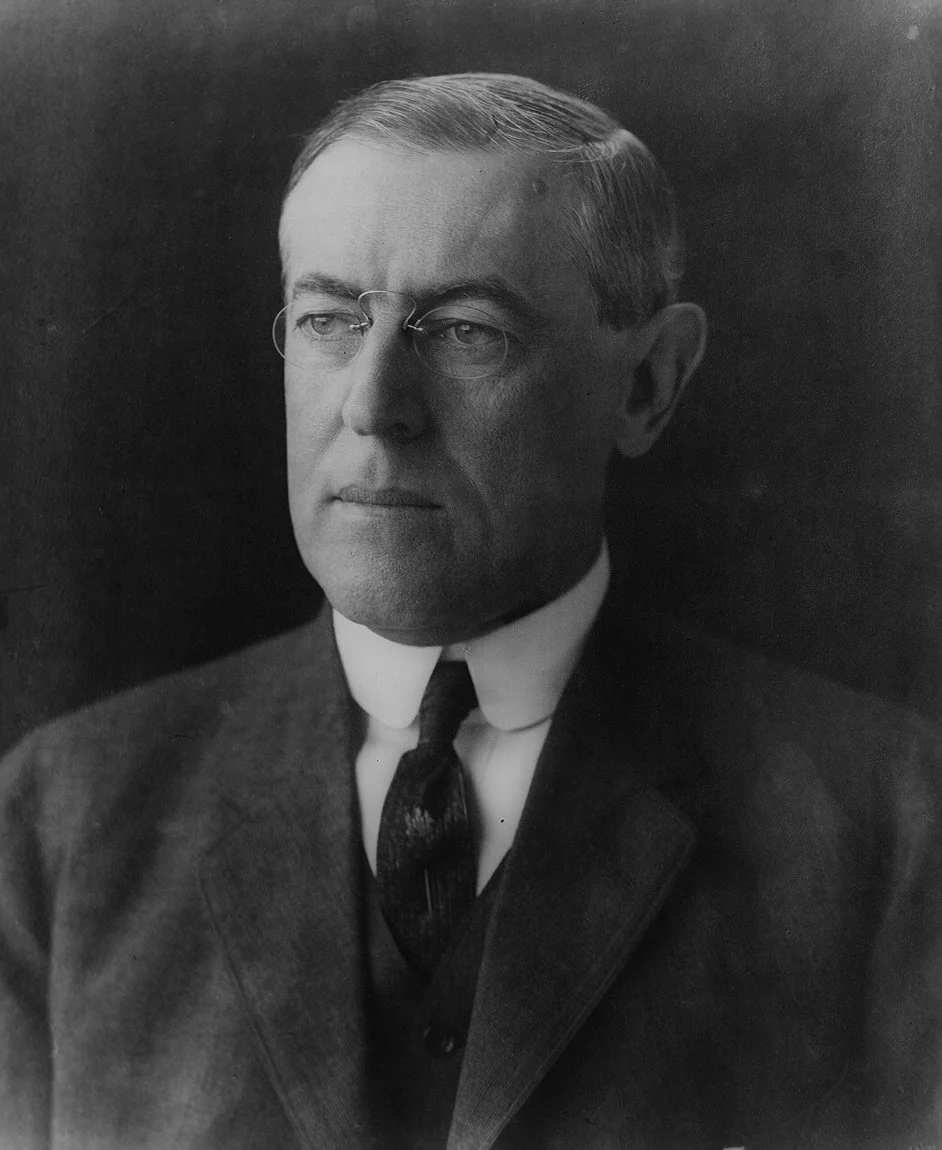
Woodrow Wilson, 1912. Photo courtesy of Library of Congress.
Note: As noted in my previous piece, the next few essays in this series are devoted to the advocates of structural reform and the types of recommendations they made. The intent is not to endorse one reform or reformer, rather to shine light on this work broadly in the belief that unless we celebrate the structural reform tradition in the U.S., it will be difficult to reimagine and revitalize our system going forward.
The most well-known and enigmatic of the post-Reconstruction reformers is also the only political scientist ever to ascend to the presidency, Woodrow Wilson.
Wilson published his earliest critique of the Constitution shortly after he graduated from Princeton University in 1879. In his early analysis, as well as what would become his seminal work in this area, Congressional Government, Wilson built on the critiques of Justice Joseph Story and Gamaliel Bradford, among others.
Like so many in the American reform tradition, he focused a good deal of attention on diminishing the divisions in the system, particularly those separating the executive and legislative branches; and in so doing, moving the U.S. towards a quasi-parliamentary system. Among the multitude of reforms he advocated was “allowing some of the higher officers of State to occupy seats in the legislature,” as well as “the principle of ministerial responsibility – that is the resignation of the Cabinet upon the defeat of any important parts of their plans.”
What prompted Wilson to promote these types of reforms was the position that President Rutherford B. Hayes found himself in during Wilson’s senior year at college. In the introduction to a re-publication of Wilson’s book, Thomas K. Finletter noted that in the late 1870s, Hayes found himself in the same position as President Truman and so many other presidents; his party having just lost the midterm election of 1878, the government of the United States was “in a deadlock.” “Deadlocks of this kind,” Finletter wrote, “which happen frequently in our Government, make men question the wisdom of our system of separated powers and checks and balances.”
While Finletter was writing in the post-World War II era, the fact that his words resonate today underscores how long-standing and structural the issues we face are; as well as how much they pre-date any individual.
That said, for all his efforts, none of the structural reforms Wilson advocated for, including increasing the length of congressional and presidential terms, were realized. Even as a young man, Wilson understood how difficult it would be to reimagine the system given the processes in place to achieve them – namely an anemic amendment process. Change prompted by congress, be it statutory or amendment, he argued, would likely fall flat unless public consciousness was raised enough to compel it. “National opinion must be invoked and the people called upon to act,” he wrote, before adding that amendment was so unlikely a path that nothing short of “a truly national sentiment can set it in motion.”
Almost a quarter century before he assumed the presidency, Wilson made his most famous plea for public action, writing:
“The Constitution is not honored by blind worship. The more open-eyed we become, as a nation, to its defects, and the prompter we grow in applying with the unhesitating courage of conviction all thoroughly-tested or well-considered expedients necessary to make self-government among us a straight forward thing … the nearer we will approach to the sound sense and practical genius of the great and honorable statesmen of 1787.”
For all his early efforts to compel public outcry that might result in structural reform, however, by the time he ascended to the presidency in 1913 he had largely abandoned the cause. Instead, like so many others, he moved from calling for the harder to achieve structural change to focusing on changes that could be realized via constitutional interpretation, presidential leadership, and extra-constitutional avenues such as strengthening political parties. This is in part why in his preeminent work on post-reconstruction reform, Rewriting the Constitution, John Vile describesWilson as “something of an ambiguous figure in the battle for constitutional reform.” It is an apt description, as well as a reminder of how difficult it has been over the last 250 years for even the brightest and most dedicated individuals in American history to reform our system.
Jeanne Sheehan Zaino is professor of Political Science, Senior Democracy Fellow at the Center for the Study of the Presidency & Congress and Visiting Democracy Fellow at the Ash Center for Democratic Governance and Innovation, Harvard Kennedy School.This piece draws on themes in her latest book, American Democracy in Crisis (Palgrave, 2025), and her Substack newsletter, The New Realist. It is the ninth in a series on reform marking America’s Semiquincentennial.
Revisiting Just War Theory in a Time of Global Conflict
by Victoria Flick
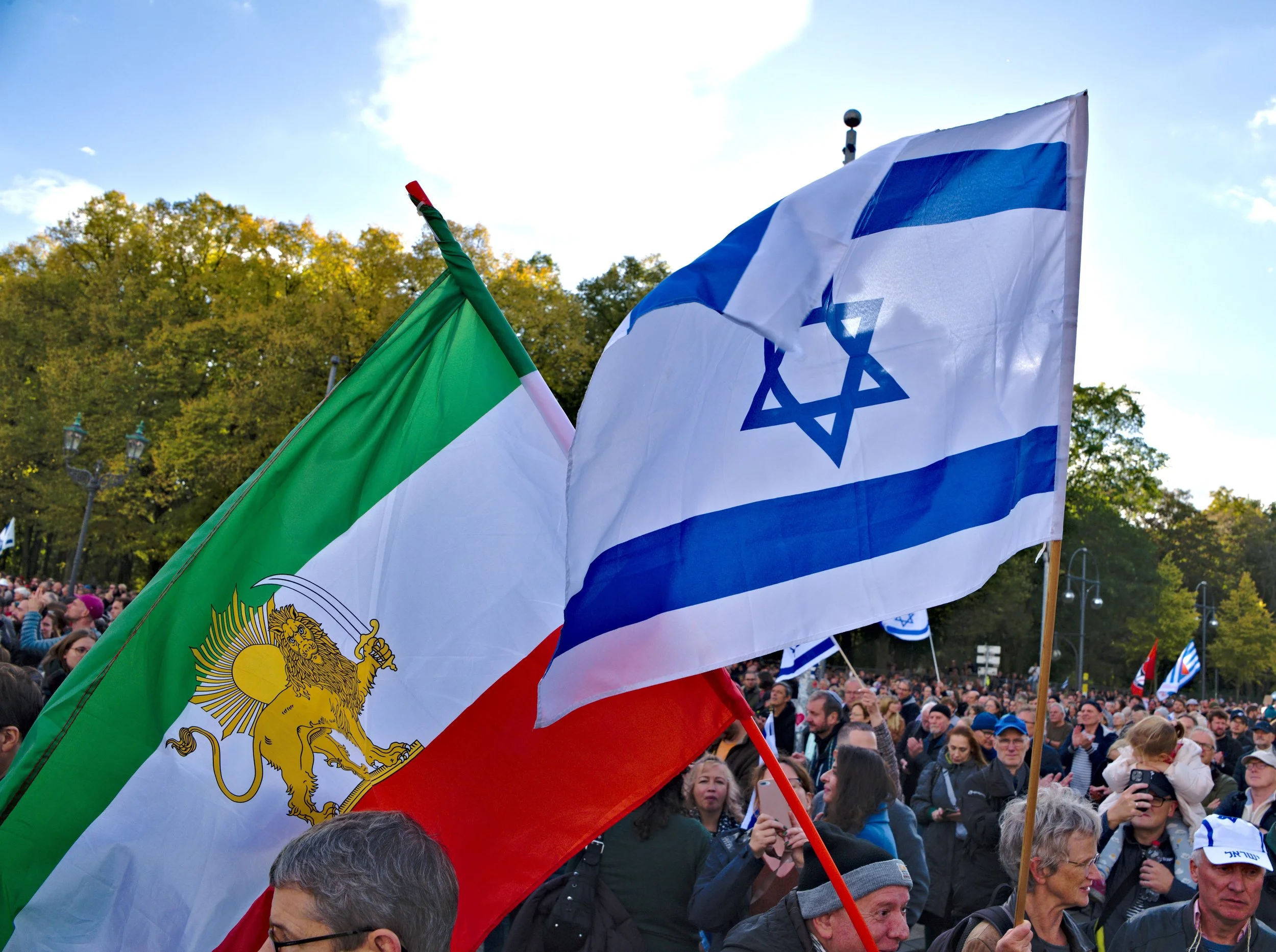
Photo courtesy of Leonhard Lenz.
Recent events, including the war in Ukraine, conflicts in the Middle East, and broader shifts in international relations marked by the decline of the liberal world order, indicate that what American political scientist Francis Fukuyama once described as“the end of history” may have been a mere “pause from history”. The end of the Cold War ushered in a period of relative calm and peace in international relations. But this comparative tranquility began to fray over the past decade and finally came to an abrupt end with the Russian full-scale invasion of Ukraine in February 2022. Now great power politics has returned to the world stage. This resurgence of global instability has also ushered in renewed interest in longstanding moral frameworks such as Just War Theory, which has reentered public debate in recent weeks following President Trump’s criticism of Pope Leo XIV over his comments on the Iran war. Just War Theory is a centuries old doctrine, rooted in two of the most influential theologians in Christian history, Saint Augustine of Hippo and Thomas Aquinas, and codified in modern international law, that attempts to answer two important questions: When is it right to go to war? And How must war be fought? The Israel-Hamas war and the U.S.-Iran conflict present two distinct tests of Just War Theory, exposing how modern warfare both challenges and reshapes its core principles.
Just War Theory is a moral tradition that forms the backbone of international humanitarian law, as laid out in the Geneva Conventions and the United Nations Charter. It rests on three core pillars: jus ad bellum (Justice of going to war), jus in bello (Justice in war), and a the more recent addition of jus post bellum (Justice after war). For a war to be considered “just” under Just War Theory, several conditions must be met. Under jus ad bellum (the justice of going to war), a conflict must have a just cause, the right intention, a legitimate authority, be used as a last resort, have a reasonable chance of success, and remain proportionate in its aims. Jus in bello (justice in war) focuses on how war is fought, requiring combatants to distinguish between military targets and civilians, use proportionate force, and act out of military necessity. Jus post bellum (justice after war) is less clearly defined but addresses how peace is established after conflict through reconstruction, accountability, and fair postwar settlements. In the catholic tradition, Just War Theory begins from an assumption against war in general. That presumption is not rooted in pacifism, since the doctrine permits defensive force under exceptional circumstances. Rather, it places the burden of moral justification on those who choose to resort to war. Right intention asks whether force is being employed for a legitimate purpose, rather than for punishment, revenge, conquest, or similar motives.
A prime example of this debate is the Israel-Hamas war, which started on October 7, 2023, when Hamas conducted a series of attacks on southern Israel, resulting in approximately 1,200 deaths and 240 hostages. According to scholars at Stanford Law School, there is little disagreement over jus ad bellum, as many view the October 7 attacks as establishing a clear just cause and affirming Israel’s right to self-defense. Debate instead centers on jus in bello, particularly the challenge of fighting a non-state actor embedded within civilian infrastructure such as hospitals, tunnels, and schools. Furthermore, concerning the proportionality of the response to the attacks, the question arises “What is the limit of acceptable actions that Israel can take” to stay within a proper limit of response. For an action to be considered “just”, any harm inflicted on civilians must be proportionate to the military objective being pursued. Among Just War scholars and legal experts, this issue remains more contested than questions surrounding jus ad bellum. Lastly, jus post bellum remains almost entirely unresolved as there is no clear articulation of what constitutes “victory”, who governs Gaza in the future, or how a sustainable peace will eventually be secured.
In the case of the U.S.-Iran conflict, which began on February 28 when the United States and Israel launched coordinated strikes on Iranian military and government, debate over Just War Theory centers largely on jus ad bellum. The central question is whether a preventive war, absent an imminent attack, can satisfy the requirements of self-defense, an argument many legal scholars, such as Dr. Michael Schmitt, professor of International Law at the University of Reading and Affiliate at Harvard Law School, [PS1] view as a weak basis for “just cause.” Opponents of the war argue that Just War Theory does not justify force based on speculative threats, regional hostility, or proxy involvement, as in Iran’s case. While these concerns may be serious, they do not meet the moral threshold for defensive action. Under Just War Doctrine, war must be driven by a legitimate defensive necessity (just cause) and a genuine intent to address that threat (right intention). Moreover, they claim that as negotiations were still under way at the time of the first U.S.-Israeli strikes, war was not the true last resort and diplomacy could have resolved the situation without having to resort to what Carl von Clausewitz famously called “the continuation of politics by other means.” With regard to jus post bellum, similar to the situation in Gaza, the question remains what “victory” looks like and what will be done to ensure a lasting peace in the area.
These two wars demonstrate that, much like the Powell Doctrine, named after former Chairman of the Joint Chiefs and U.S. Secretary of State Gen. Colin Powell, which argued that the United States should enter war only as a last resort and with clear objectives, public support, and an exit strategy, Just War Theory offers a framework rather than a definitive judgment. Its principles can be interpreted differently, leading to competing views over whether a conflict is ultimately “just” or “unjust”, necessary or unnecessary. The Israel-Hamas war and the U.S.-Iran conflict reveal two different moral dilemmas: the former raises questions about how war is conducted, while the latter questions whether it should have been fought at all. The issue, then, is not whether war should have rules, history has shown the alternative is catastrophe, but whether democracies and the international community are willing to uphold them.
Victoria Flick is a Research Fellow at the Center for the Study of the Presidency & Congress.
Enforcement Without End: The U.S. Drug War’s Recurring Problem
by Maria Reyes Pacheco
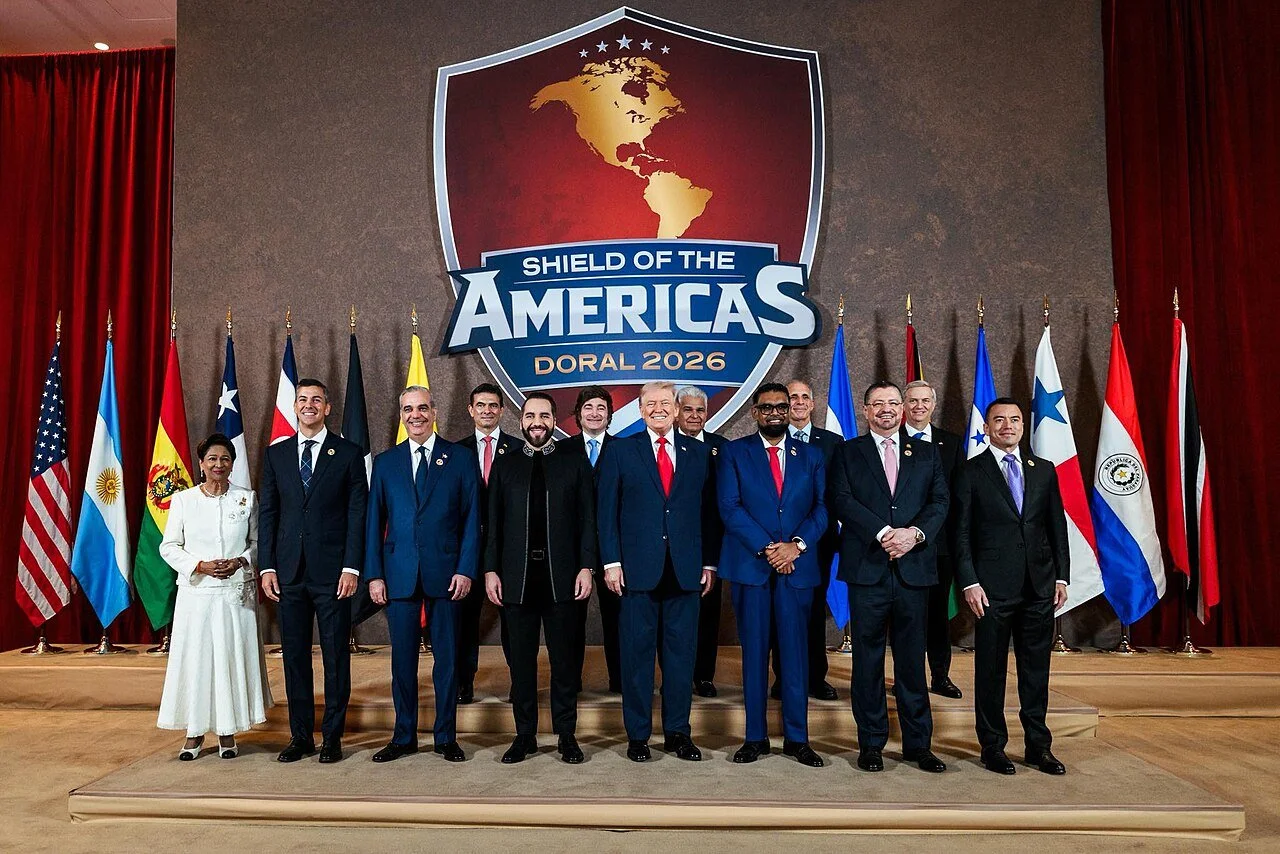
State leaders of North and South America at the Summit of the Shield of the Americas on March 7, 2026. Photo courtesy of the White House.
Earlier last month, President Trump convened Latin American leaders in Doral, Florida to launch the “Shield of the Americas,” a multinational initiative aimed at curbing mass migration and dismantling drug trafficking networks. The summit brought together a coalition of 12 largely conservative governments aligned with the administration, including El Salvador, Argentina, Honduras, and Chile. Meanwhile, major regional players including Brazil, Mexico, and Colombia were notably absent. Framed as a national security effort, the initiative places drugs and migration at the center of a coordinated regional response. However, the framework's emphasis on enforcement and military cooperation raises questions about whether force alone can dismantle networks sustained by corruption, economic instability, and U.S. demand—a strategy the region has tried before, with limited results.
Just weeks before the Shield of the Americas summit, the U.S. military assisted Ecuadorian forces through a series of joint anti-narcotics missions in early March —the first military land operation against Latin American drug cartels under the Trump administration. The operation was said to target a narco-terrorist supply complex which served as a hideout for a leader of a dissident group of the Colombian militant group FARC, known as Comandos de la Frontera. The Defense Ministry of Ecuador announced the operation “within the framework of bilateral security cooperation between Ecuador and the United States.” A video shared by the Department of War shows strikes and operations in the area of San Martin in northern Ecuador. In the days following the intervention, investigations by the New York Times and others raised questions about the official narrative. Based on interviews with local farmers and human rights lawyers, the Times reported that the strikes targeted a local dairy farm instead of a drug compound. In further interviews with USA Today, locals also recounted wrongful interrogation and violence by the Ecuadorian military in the days leading up to the land strike. The Alliance for Human Rights, an advocacy coalition in Ecuador, filed a complaint to Ecuadorian authorities and the United Nations. “There isn’t a single public official who has come to verify what happened,”said María Espinosa, a human rights lawyer.
Beyond the legal controversy of this particular mission, the renewed focus on military operations as part of efforts to counter drug trafficking it reveals, serves as an example of the decades-long “kingpin strategy” which relies on targeting leaders but risks fragmentation of criminal networks which leads to short-term victories but long-term complications. It was this approach which was used to bring down the Medellin Cartel. After leader Pablo Escobar’s US-assisted killing in 1993, the power vacuum left by the Medellin Cartel was filled by the rival Cali Cartel, which continued until its senior leaders were captured two years later. The end of the Cali Cartel, in turn, gave way to the emergence of other groups (including former members of the previous cartel), one of the largest being the Norte del Valle Cartel (NDVC). The NDVC at its peak was responsible for 60% of the cocaine reaching the United States. When the cartel fractured in the mid-2000s, its armed wings—including the Rastrojos and Machos—splintered off into independent criminal organizations. The ability for these groups to rebuild themselves hinges on the lack of strong governance throughout the region which allows the groups to infiltrate and influence law enforcement, politicians, and judicial systems in many countries. Furthermore, as analysts at the International Crisis Group have noted, intensified crackdowns often don't destroy part of a supply chain but simply move it “in a cat-and-mouse game of shifting routes and business relationships.”
The Department of War’s ongoing Operation Southern Spear raises these exact concerns as the administration focuses on limiting ocean smuggling routes. Since September, the strikes on small vessels in the Caribbean and eastern Pacific have killed 180 people. This week President Trump released a claim that “98.2% of Drugs coming into the U.S. by Ocean or Sea have STOPPED!” Outlets later confirmed this figure as a comparison from July to November 2025 that measure drug seizures. In July, the CBP seized 223,923 pounds of drugs in open water or near coasts, that number fell to 4,463 pounds in November, marking the 98.2% difference, though the latest figures from March show a renewed increase to 27,844 pounds. The reduced numbers would also be accounted due to the National Guard and U.S. military displacing previous CBP maritime seizures with lethal kinetic operations as part of Operation Southern Spear. But how much these numbers can actually tell us is a matter of dispute. Professor Dessa Bergen-Cico from Syracuse University, who studies drug trafficking, points out “as drug policy researchers have noted, no one knows how much goes uncaught, and changes in seizure data are insufficient to make definitive claims about policy outcomes.” Additionally, pressure on a single supply source often leads to its replacement elsewhere, a phenomenon known as the “balloon effect.” In 2001, the State Department acknowledged precisely this as a projected risk in Plan Colombia (2000-2016), a major U.S. initiative aimed at combating Columbian drug cartels and guerilla violence. Sure enough by 2010 Peru had reclaimed its spot as the world’s largest coca producer.
The Shield of the Americas represents the administration's most organized and ambitious push on counternarcotics in the region. The strikes in Ecuador and in the Caribbean follow a common pattern: sufficient force applied to the supply of drugs in Latin America will put an end to the cartel networks. As President Trump promised, “Once and for all, we’ll get rid of them,” referring to the cartels. However, if history is any indicator, increased militarization cannot guarantee long-term peace or eradication of drug networks. Furthermore, operations that lack accountability put civilians in danger and risk delegitimizing U.S. partnerships in a post-Trump era where partisan coalitions will change. That tension is already visible. This week, Mexico announced an investigation into whether a joint CIA-led counternarcotics operation in Chihuahua violated its national security laws. The history of the U.S. counter-narcotics strategy in Latin America suggests that pure force without structural reform does not end the drug trade, it merely relocates it. Without addressing the corruption, economic instability, and demand that sustain these networks, the Shield of the Americas risks becoming the latest in a long line of enforcement efforts that moved the problem without truly solving it.
Maria Reyes Pacheco is the Research & Programming Assistant at the Center for the Study of the Presidency & Congress.
In a War with China, the U.S. Homeland Might not Remain a Sanctuary
by Blaine Ravert
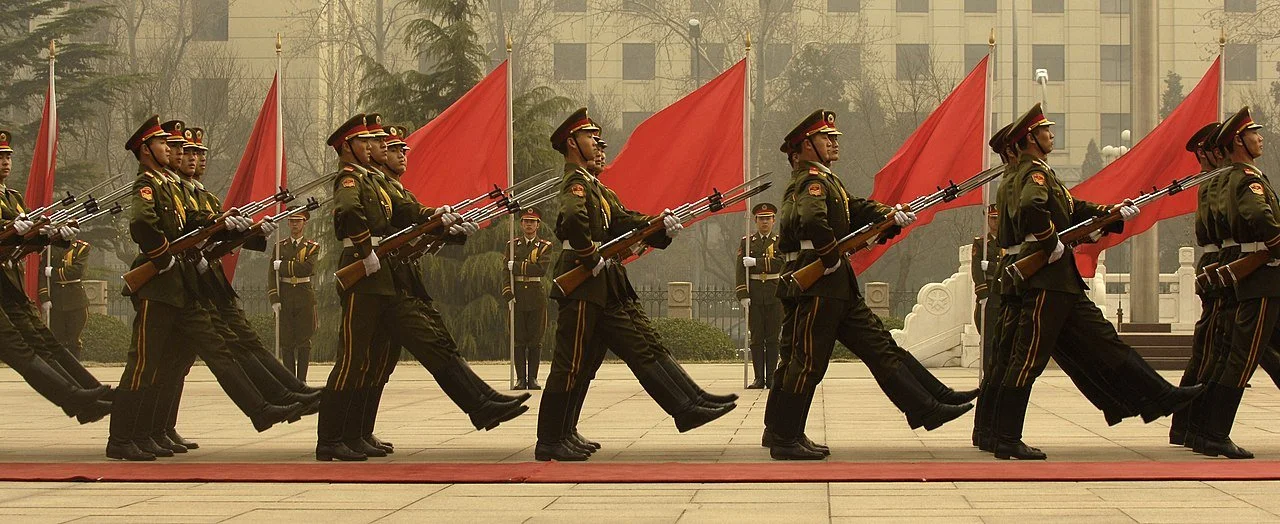
Members of a Chinese military honor guard march during a welcome ceremony for Chairman of the Joint Chiefs of Staff Marine Gen. Peter Pace at the Ministry of Defense in Beijing, China. Photo courtesy of the Department of Defense.
The U.S. homeland has traditionally been thought of as a sanctuary. The U.S. is geographically distant from many potential adversaries, including Russia, China, North Korea, and Iran. This separation makes it easy to think that while the U.S. might fight oversees, U.S. citizens will not have to face enemy attacks at home. This assumption is no longer sound.
The current U.S. and Israeli attacks against Iran highlight this truth in several ways. First, Iran has used drones to effectively limit access to the Strait of Hormuz, a major route for oil and gas shipping. This closure, in turn has led to a sharp spike in oil prices, with the average price of gas increasing to over $4 a gallon. While this example does not concern direct military action against the U.S. homeland, it highlights how the interconnected nature of the world economy means that U.S. actions abroad can have significant consequences. Second, Iranian linkedhackers have unleashed a wave of cyber-attacks against U.S. companies. Third, several recent domestic shootings appear to be linked to the ongoing conflict.
The strategic and moral ramifications of this current conflict are outside the scope of this piece. However, they highlight some possible ways the homeland could be impacted by a potential U.S. conflict with China. This conflict, which could originate in several ways, including the U.S. assisting Taiwan defeat a kinetic invasion by Chinese forces, would likely expose the U.S. to a level of conflict intensity it has not experienced since World War II. China could also directly extend this conflict to the homeland, using non-kinetic and kinetic options.
First, China might consider to leverage weaponized interdependence to undermine the U.S. economy. Specifically, China could use its position in U.S. supply chains to degrade U.S. access to militarily critical rare earth minerals, as well as the healthcare systems access to important medications. Second, Chinese linked hackers, utilizing weaknesses identified by Volt Typhoon, could seek to undermine the U.S electric grid and other critical infrastructure, such as water treatment facilities. Third, disinformation campaigns could seize on existing political divisions to create fake news stories to amplify political division, undermining the ability of the U.S. to respond with a united front.
China could also use kinetic means. First, in an attempt to degrade the U.S. space-based capabilities, China could seek to attack the U.S. global positioning satellite network, making it harder for civilians, as well as military forces, to navigate. Such efforts could include physical attacks against satellites, as well as cyber hacking and manipulation efforts. Second, China could use a combination of human agents and cyber-attacks to degrade U.S. manufacturing and transportation capacity needed to surge forces to the Indo-Pacific. For example, imagine the cargo cranes used in the port of Los Angeles being disrupted. Third, in perhaps the most extreme scenario outlined here, China could use advances in highly precise intercontinental ballistic missile technology technology to launch conventionalattacks against military bases in the continental United States.
At first glance, this list may seem like a series of nightmare situations, solely meant to spark dread and confusion. I do not argue that every attack described here is likely, or a foregone conclusion. These scenarios are meant to highlight how the U.S. homeland should no longer be considered safe from attack. In fact, as highlighted by Iranian responses to attacks by the U.S., along with Russia’s campaign of covertconflict against Europe, these types of attacks are increasingly a part of modern warfare.
In response, the U.S. should seek to strengthen cyber defenses, to the degree possible. Human workers, especially in critical infrastructure related companies, should be trained and tested in best practices of cyber security. To the degree that it is practical, increased monitoring of manufacturing and transport facilities is wise. Efforts to make U.S. space based assets more resilient to attack should be continued. Perhaps at the most basic level, however, voters, policymakers, and politicians should all understand that foreign policy decision making can have severe domestic consequences. Just because the U.S. can engage in conflicts few civilians can find on a map, does not mean the consequences of these conflicts will not return to the homeland.
Blaine Ravert was a 2021-2022 CSPC Presidential Fellow representing Westminster College. He received a master’s in Defense and Strategic Studies from Missouri State University in May 2025.
The Rising Cost of a Congressional Seat
By Jordan Reyes
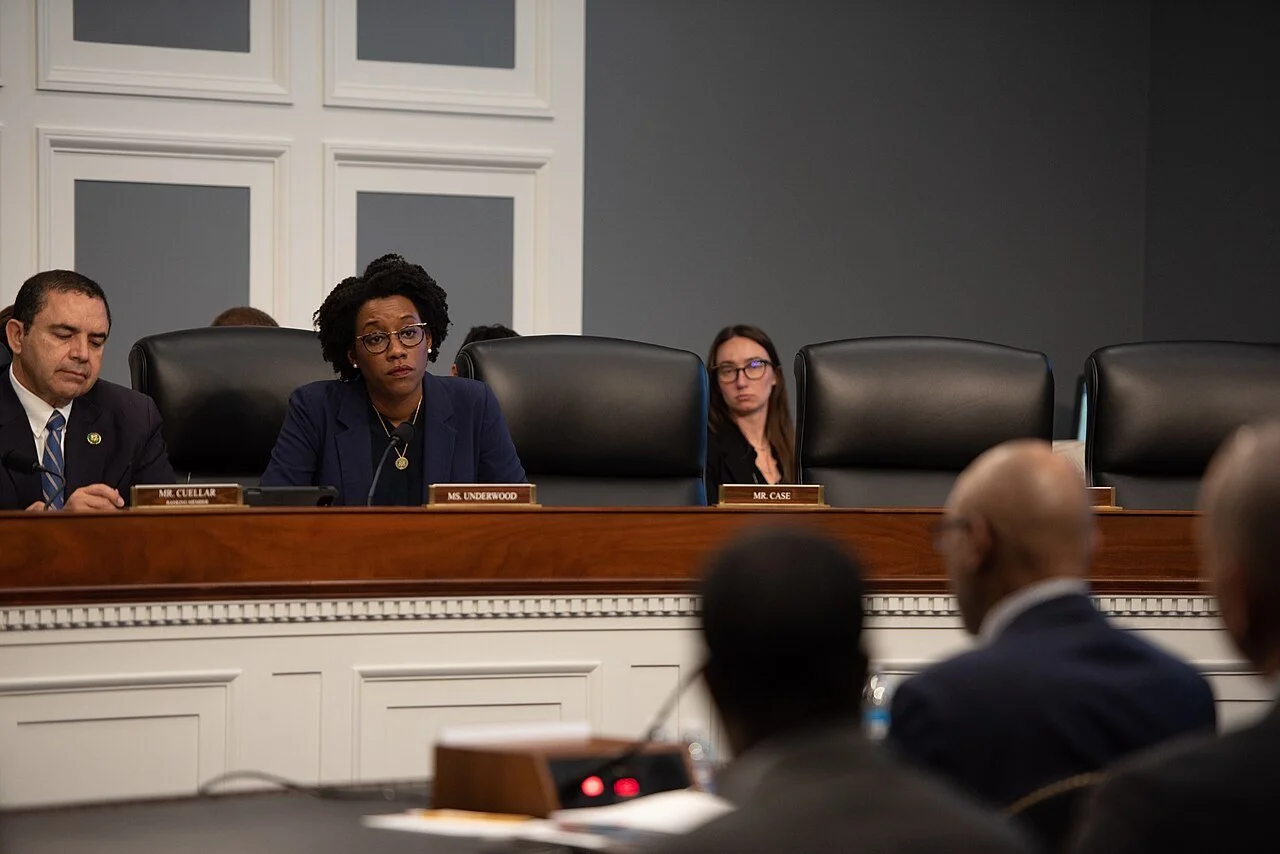
Congressional Budget Hearing in 2023, showing several empty seats. Photo courtesy of UCICE.
Article I of the Constitution sets only three requirements for candidates seeking a seat in the House of Representatives: they must be at least twenty-five years old, a United States citizen for no fewer than seven years, and a resident of the state they seek to represent. By design, the Senate demands slightly more: candidates must be thirty years of age and citizens for at least nine years. Beyond those thresholds, the Framers of the Constitution purposely declined to impose property requirements, the need for professional credentials, or financial thresholds.
The vision of the Framers differed from the colonial assemblies of their day, which restricted participation in government to only land-owning men. They rejected that model explicitly, and James Madison defended the choice in Federalist No. 57, questioning, “Who are to be the objects of popular choice? Every citizen whose merit may recommend him to the esteem and confidence of his country. No qualification of wealth, of birth, of religious faith, or of civil profession, is permitted to fetter the judgment or disappoint the inclination of the people.”
The gulf between the Framers’ vision and the current reality, however, has rarely, if ever, been wider. Spending on current House campaigns in the 2026 election cycle is topping out at over $16 million, with Alexandria Ocasio-Cortez’s current campaign spending $16.7 million with two months still remaining in the race. Competitive Senate races in larger states routinely exceed $30 to $50 million in total spending. These costs have risen steadily for decades, outpacing inflation and wage growth by substantial margins, and they show no sign of abating.
The financial burden of mounting a viable campaign for federal office carries a less visible cost as well. Candidates running credible congressional campaigns typically must spend several hours each day making solicitations to prospective donors, an unofficial burden that takes them away from voter outreach. Former Members of Congress from both parties have described schedules in which fundraising consumed as much time as constituency work, policy preparation, and legislative duties. Every moment spent raising money is thus time not spent on the job the Constitution describes.
Some Members of Congress have attempted to address this concern, proposing legislation that would limit fundraising when Congress is in session, or prevent members from personally soliciting donations. Despite these efforts, fundraising remains an essential part of the job, with members pressured by their own party to bring in donations. At times, that pressure even includes the threat of removal. The result is Members of Congress who have less time to focus on representing their constituents, and more pressure to bend to the interests of high-powered donors.
This dynamic has severely narrowed the playing field in terms of who is able to run for federal office and potentially win. Candidates with independent wealth, long-standing professional networks, or prior relationships with major donors begin with structural advantages largely unrelated to their qualifications for office. Those advantages are multiplied in the case of incumbents who benefit from a well-established donor infrastructure and party support, though that support may come at a cost. The result is a Congress whose membership is, on average, substantially wealthier than the constituents it represents, and drawn disproportionately from the fields of law (about 33% of members hold a law degree), business (about 40% of members cite business experience), and career politics (only 20% of members have not held previous political office). This concentration of wealth and favored professions does not reflect the original vision of Founders such as Madison, but it is also unlikely that they anticipated the diversity of the modern Congress, with 28.2% of representatives being women and 26% of members identifying as people of color.
The Framers put few limitations on prospective candidates because they trusted the American people to decide who should best represent them. What they did not anticipate was a system in which important decisions are made not at the ballot box, but rather in the fundraising call sheets and the backrooms where party deliberations take place. By creating a system that screens out candidates not based on age, citizenship, or residency, but rather wealth, donor access, and elite professions, Congress has inadvertently proven the wisdom of the Founders’ original vision.
Jordan Reyes is an intern at CSPC and a senior at the George Washington University.