
The CSPC Dispatch - Oct 2, 2026

Welcome back to the CSPC Dispatch! Last Wednesday, CSPC co-hosted the London Defence Conference (LDC) Washington Forum. Attendees from across government, business, and the policy community joined us for a full day of discussion on the challenges shaping the future of defense and security. Thank you to everyone who attended, to our speakers, and to the LDC team for making the day a success.
In this issue, Senior Fellow Robert W. Gerber opens a new series, "The Price of Doing Business," by looking at how tariff swings and policy uncertainty are making foreign investors think twice about the United States. He tells the story through North Carolina, where international companies employ about 350,000 people. Senior Democracy Fellow Jeanne Zaino returns with the 13th piece in her Semiquincentennial reform series, this time on the renewed push for a balanced budget amendment through an Article V convention. Chase Krawchuk draws on the Washington Forum's conversations, held the same week as Xi Jinping's state visit, to look at the growing gap between Washington and Europe on China. Lara Bhakdi looks at recent German state elections, and what the AfD's wins in Saxony-Anhalt and Mecklenburg-West Pomerania could mean for Germany's support for Ukraine and the CDU's ability to win back skeptical voters without giving up its core values.
The Price of Doing Business, Part I: Foreign Investors
By Robert W. Gerber
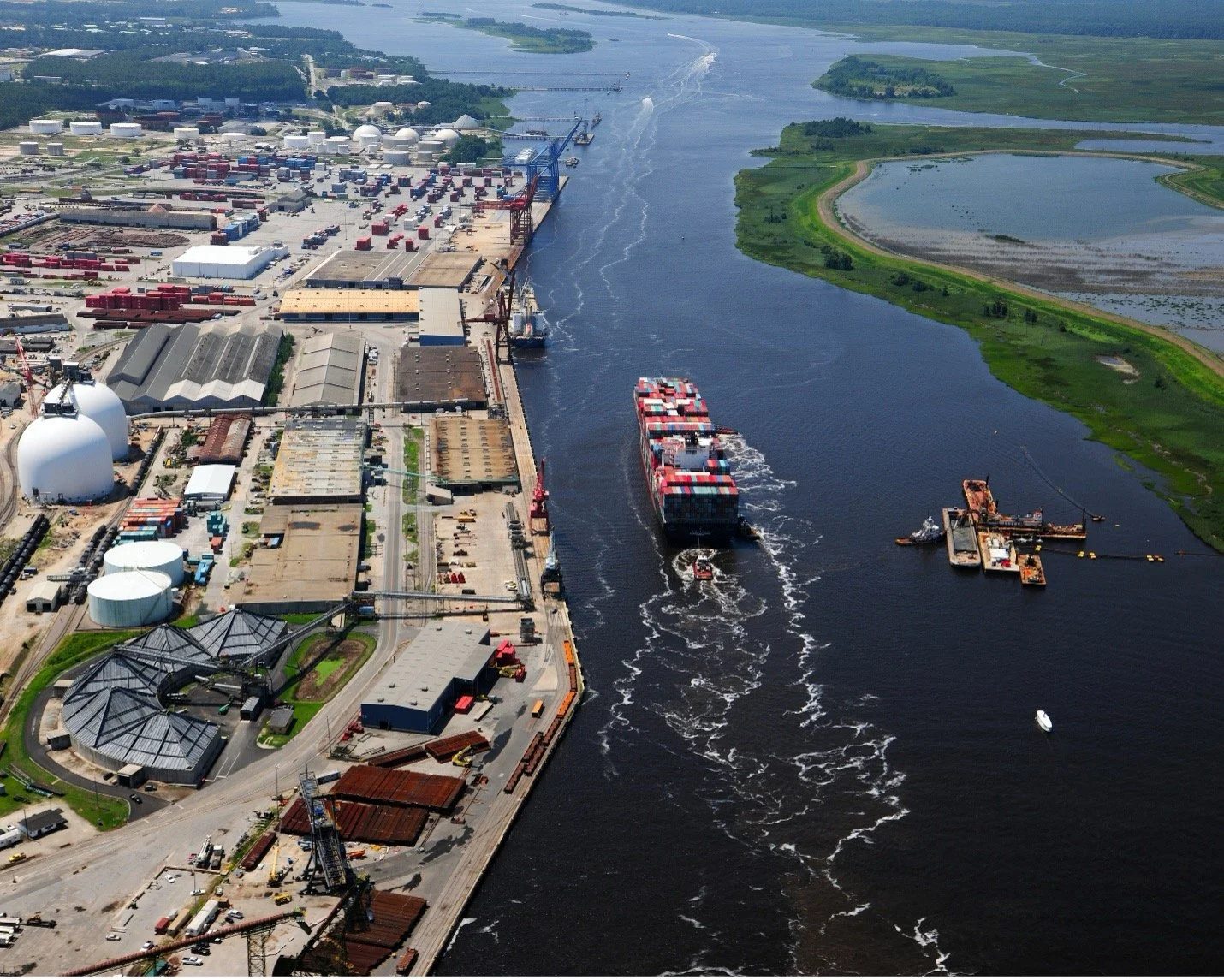
Port of Wilmington, NC. Photo courtesy of State Ports Authority.
The economy is very strong. The investment in our country is the biggest in the history of any country, not just our country.” – President Donald J. Trump, September 9, 2026, at Andrews Air Force Base
The President’s statement on the U.S. economy is not wrong. The United States remains the largest economy in the world despite China’s extraordinary growth. U.S. GDP growth -which registered 2.2% for Q2 2026 - is at least a point above Japan, the UK, Germany and France. The United States enjoys the largest stock of foreign investment of any nation. Trump has commitments from Japan and South Korea to invest billions more in the United States. The problem is that tariffs, regulatory uncertainty, and rising costs have made the United States a riskier place for foreign direct investment (FDI). This has led some foreign investors to pivot away from the U.S. market or to postpone their plans to expand operations here. This has implications for states whose economies rely on FDI and foreign export markets.
North Carolina is one of those states. North Carolina is the third fastest growing state in the nation. It hosts over 1,400 international companies. These companies employ 350,000 workers, or around 8% of total employment, which is above the national average. The state exported a record $43 billion in 2025, according to the Office of the U.S. Trade Representative. It is also a diversified economy built on agriculture, textiles, biotech, and manufacturing, and hosts a growing critical minerals and battery storage ecosystem as well. Its universities collaborate well with industry to spur innovation and build a modern workforce. North Carolina is a purple state: the governor is a pro-business Democrat while the state legislature is a Republican stronghold that pushes for lower taxes and deregulation.
All of this makes North Carolina a good case study for attitudes on business perceptions of market risk. Last month, the North Carolina World Trade Association hosted a gathering of exporters, manufacturers, and foreign company representatives in Charlotte. Unsurprisingly, many of the panel discussions centered on how companies can manage risk in an uncertain business environment. There was general agreement that the risk of doing business in the United States has gone up substantially. One panelist said the biggest problem was not geopolitical risk or inflation, but U.S. policy risk, which he described as government action and over-reaction. Specifically, he was referring to see-sawing of regulatory policy from one administration to another and the constant escalation – followed by retreat – of Trump tariffs. On the margins of the conference, I asked several company representatives what they saw as their biggest concern or challenge. The consistent answer was tariffs and trade compliance. High tariff rates on imported goods are raising the costs of vital manufacturing inputs, hurting profit margins for exporters and constraining supply chains. Furthermore, in the past companies had months to prepare for tariff increases, whereas today a new tariff rate can strike within 48 hours. The public consultation period – required by law for most tariff authorities – has effectively evaporated. One CEO said his company had been nearshoring over the past decade to take advantage of the U.S. Mexico-Canada (USMCA) agreement and reduce their exposure to Chinese supply chains. The company’s investments now face uncertainty because the Trump Administration levied new tariffs on Canada. Companies may still file for tariff exclusions in some cases, but today that requires hiring an expensive lobbyist that can reach someone within the Trump Administration, according to one a lawyer at a Charlotte-based public affairs firm.
Trade compliance is also a major challenge. For example, exporters do not only need to stay informed of rapidly changing tariff lines on imports, but they also need to double their “know your customer” due diligence work to ensure they do not violate new U.S. export control laws. These measures seek to prevent dual use items from reaching unfriendly countries.
These obstacles have contributed to what one panelist said was a trend among foreign companies to “decouple from the U.S.” and pivot to other markets.
A recent poll by trade association Business Europe echoes this sentiment. Europe is the #1 source of investment in the United States, with investments totaling $2 trillion and supporting 2.4 million jobs in the United States, according to the European Commission. The poll revealed that while 68% of European companies surveyed said the United States was among their top two markets, “the cumulative effects of volatile tariffs, shifting political and regulatory landscapes, complex customs procedures, and mounting administrative burdens have eroded both competitiveness and business confidence in the transatlantic trade environment.” When asked what priority areas they wanted addressed, beyond elimination of tariffs, the European companies surveyed asked for tariff rate stabilization and a streamlining of customs procedures to reduce the documentation burden and facilitate smoother trade flows. Companies also endorsed greater regulatory cooperation and harmonization of product testing and product standards, which have long been on their wish list.
Foreign companies are not alone in their woes: American domestic manufacturers and traders are being hit by a triple challenge of tariffs, high fuel prices, and rising interest rates which make capital investments and inventory financing more costly. Small and medium sized companies are disproportionately impacted as they tend to have fewer cash reserves compared to large corporations.
Traditionally, the size of the U.S. market, combined with relatively low production costs and easy access to capital meant that if your company wanted to grow, you had to go the United States. But this competitive advantage has eroded: costs have risen, including in energy and the cost of capital; consumer confidence has reached a 12-year low; and Trump tariffs have added a layer of unnecessary policy risk. Companies want certainty, and the United States, sadly, does not offer that currently. This changes the equation for foreign companies looking for new markets and new production centers, with negative implications for U.S. competitiveness in the global marketplace. It also hurts American jobs, particularly in states like North Carolina that have a significant foreign company presence.
President Trump is right when he says U.S. growth helps the global economy. But Washington’s policy trajectory is also a source of geopolitical risk, which creates an unnecessary burden for both domestic and international companies involved in cross-border commerce. On a positive note, G20 trade ministers -including EU trade chief Maroš Šefčovič met in Milwaukee yesterday and agreed on common steps to address Chinese subsidies and excess capacity in its steel industry. Small steps like this, built around shared problems, could create a pathway to addressing trade frictions across North America and the Transatlantic.
Robert W. Gerber is a a former U.S. diplomat and a Senior fellow at CSPC.
At 250, Americans Still ‘Tremble’ at the Thought of a ‘Con-Con’ – Should They?
by Jeanne Zaino
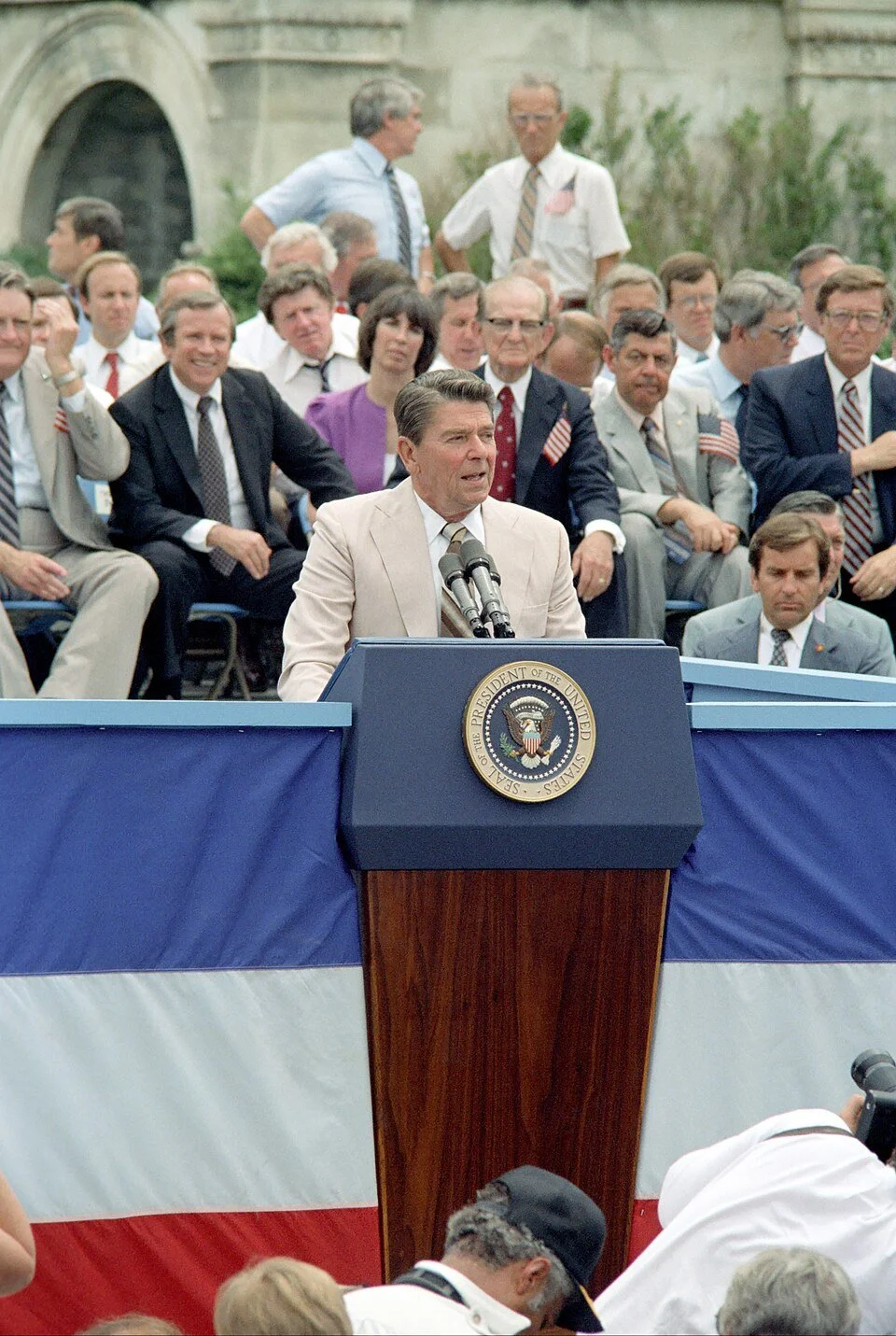
President Speaking at Balanced Budget Amendment Rally at U.S. Capitol in 1982. Photo courtesy of the National Archives.
This month, Harvard Law School is hosting “VthePeople,” a conference that brings together scholars, leaders and public intellectuals to discuss constitutional reform via an Article V convention or what is sometimes referred to as a ‘con-con.’
The idea of a second constitutional convention has been met with concern going back to the Founding. In a letter to George Lee Turberville in 1788, James Madison wrote, “[h]aving witnessed the difficulties and dangers experienced by the first Convention, which assembled under every propitious circumstance, I would tremble for the result of a second.”
In the last column I focused on amendment via the traditional or, what is sometimes referred to as ‘the regular,’ route (Method 1 below). To date this is the only way in which the Constitution has been amended, but it is not the only way it can be. The Framers also included a second path (Method 2 below). Unlike the ‘regular route’ which begins with congress, the second path begins when 2/3 of the states’ petition congress for a convention. While the first method has been used successfully twenty-seven times in American history, the second method is something of a poor stepsister in that it has never been employed successfully despite multiple attempts going back to the early days of the Republic.
Despite Madison’s concerns, it wasn’t long after the Founding that the Anti-Federalists began to push for a second convention. In the end, however, they were only able to convince legislatures in at least two of the thirteen states to apply. After that the calls dissipated until the Civil War period when demand for a convention to clarify issues regarding federal/state relations and slavery came to the forefront. In the modern era, we have seen calls for a convention to deal with everything from direct election of Senators and reapportionment to a balanced budget amendment (BBA). In none of these cases, however, has congress been moved to establish a convention.
The number of applications filed by the states over the years is uncertain in part because the Constitution is vague, and in part because the judiciary has not been clear regarding what constitutes a valid petition and a valid recission of an application. Nevertheless, according to one advocacy group, by mid-2010, over seven hundred applications had been sent to Congress to deal with various proposed amendments. Another study found that between 1789-1974 three hundred and fifty-six applications were filed; the issue that prompted the most applications concerned direct election of Senators, followed by re-apportionment, taxation, polygamy, and revenue sharing.
While Congress has never heeded these calls and implemented a convention, the applications were not in vain. In some cases, they were enough to push the legislature to address an issue or concern. After receiving several applications to form a convention regarding direct election of Senators, Congress proposed the 17th amendment. They responded in a similar manner to calls regarding repeal of prohibition, limitations on presidential tenure, and presidential succession leading to passage of the 21st, 22nd, and 25th amendments, respectively. State applications have not always resulted in congressional action, however, as was the case when it comes to polygamy. In this instance, despite several applications, neither a convention nor amendment was forthcoming.
In the second half of the twentieth century, several states filed applications for an Article V convention to address a pair of controversial issues. These two cases represent the closest the states have come to reaching the threshold of two-thirds of the states (thirty-four) needed to trigger a convention.
Following two divisive Supreme Court rulings in 1964 requiring states observe the “one man, one vote” principle in drawing legislative districts, thirty-three states appealed to Congress to convene a convention. The effort was spearheaded by Illinois Senator Everett Dirksen who came up just one state shy of the number needed to trigger a convention. Despite the amount of support, it initially engendered, the movement came to an end shortly after his death in 1969 and subsequently several states rescinded their applications.
About a decade later, concerns about a ballooning federal deficit and slowing economy prompted several state legislatures to apply for an Article V convention to pass a BBA. As in the previous case, the applications fell just shy of the necessary thirty-four (reaching thirty-two) and energy behind the movement stalled as concern that the convention might not be restricted to the BBA mounted and congress began to move forward in addressing the budget and deficit crisis. It was in part this movement that prompted Congress to pass the Gramm-Rudman-Hollings Act (GRH) which required a balanced budget; a bill subsequently overturned by the Supreme Court.
Following the 2008 economic collapse and with a rising federal deficit, states that had previously rescinded their calls for an Article V convention started applying once again. The renewed focus on a BBA started in 2010 in Florida, a state particularly hard hit by the economic downfall two years earlier. Over the next several years several states joined the call and by some estimates the number is now twenty-seven to twenty-eight depending on who is doing the counting.
While the threshold of thirty-four states has yet to be reached, the idea of a BBA remains popular. During the Covid pandemic and resulting economic downturn, former Wisconsin Governor Scott Walker spoke to the Annual Meeting of the American Legislative Exchange Council [ALEC] about renewing the call for a BBA in the wake of the nation’s $26.5 trillion deficit. “What we see is that politicians in Washington are incapable, regardless of party, of ultimately getting the job done when it comes to a balanced budget amendment,” Walker said. “So, thankfully, our founders presented another way to do this, and that is through the states.”
The plan, presented at ALEC, involved taking the ‘live’ state applications for a BBA and combining them with those passed over the last two centuries, the oldest passed by New York in 1789, and then making the case that the threshold had been met. Under this plan, if Congress refused to call a convention, the states’ attorneys general could seek relief in the courts.
That was six years ago, in the interim the U.S. deficit has soared to $40T. As a result, we continue to see calls for a ‘con-con’ to address the issue. Just last month there was an editorial in the Idaho Statesman calling on Idaho to join multiple other states in “passing its own BBA convention call.” As Mike Colson notes, even those who are concerned about an actual convention support the idea of at least calling for it to pressure congress to do what it has done in the past, act by amending the constitution via the ‘regular route.’ As he writes, the leaders of the BBA campaign “like Florida Gov. Ron DeSantis — do not want a convention. Like President Ronald Reagan, who led the BBA campaign from 1975 to 1989, they want to use the threat of a convention, at 33 states, to force Congress to propose a BBA for ratification. The threat of a convention has forced Congress to propose multiple amendments, and it will work for a BBA.”
Whether it will work is still unclear, but what is clear is whether we are talking about the BBA or any other reform, even those who are pressing for them share Madison’s concerns when it comes to the prospect of a second convention. I will address the nature and extent of the fear regarding a second ‘con con’ – which some say would be equivalent to opening a pandora’s box - in the next installment of this series.
Jeanne Sheehan Zaino is professor of Political Science, Senior Democracy Fellow at the Center for the Study of the Presidency & Congress and Visiting Democracy Fellow at the Ash Center for Democratic Governance and Innovation, Harvard Kennedy School. This piece draws on themes in her latest book, American Democracy in Crisis (Palgrave, 2025), and her Substack newsletter, The New Realist. It is the thirteenth in a series on reform marking America’s Semiquincentennial
The U.S.–Europe Divide on China
By Chase Krawchuk
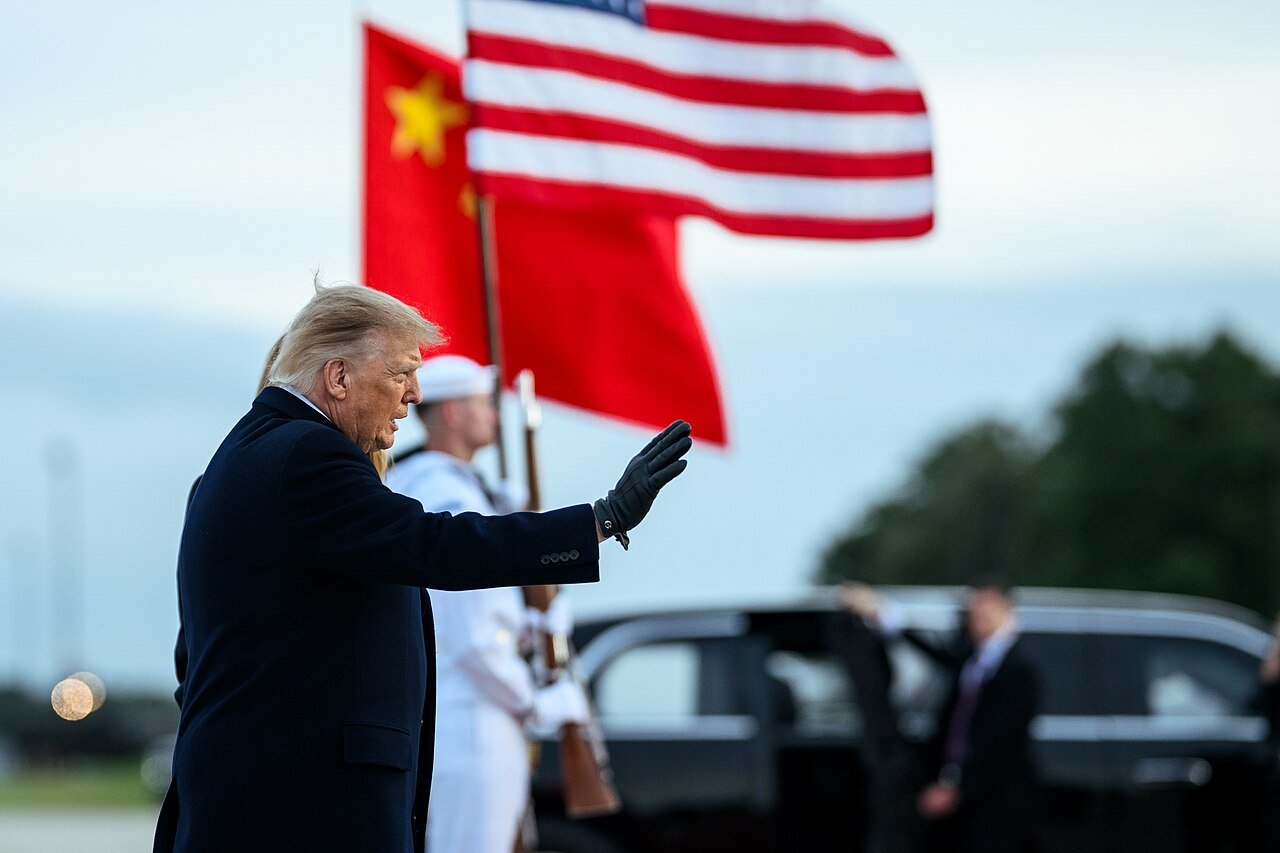
President Donald J. Trump participates in a welcome ceremony for President Xi Jinping as they arrive at Joint Base Andrews, Maryland for a state visit, on Wednesday, September 23, 2026. Photo courtesy of the White House.
Chinese President Xi Jinping arrived in Washington on Wednesday, September 23, for his first state visit to the nation’s capital since 2015. That same day, the Center for the Study of the Presidency & Congress (CSPC) co-hosted the London Defence Conference’s second annual Washington Forum, bringing together senior officials and experts from allied governments, think tanks, industry, and academia under the theme “Winning Future Wars.”
As President Trump and Xi prepared to discuss trade, artificial intelligence, and Taiwan policy, the forum’s panelists examined the widening policy gap between Europe and Washington on China. Europe has spent the past several years rearming in response to Russian aggression, working toward NATO’s commitment to devote 5 percent of annual GDP to defense spending by 2035, a target Trump has urged allies to embrace. Yet even as it rearms, Europe has deepened its economic dependence on China. Although its views of Beijing have begun to sour, that dependence still leaves Europe at odds with Washington.
Europe’s Opening to China
Europe has traditionally been far more permissive than the United States in letting Chinese firms into its markets. Consequently, its dependence on China now extends well beyond chips and critical minerals. As one panelist put it, the United Kingdom has become “subservient” to China for electric vehicles, wind power, and solar energy, with few credible Western alternatives. The electric vehicle sector is the clearest example.
Washington has effectively shut Chinese automaker BYD out of the U.S. market through a 100 percent Section 301 tariff on Chinese electric vehicles and restrictions on Chinese connected-vehicle software. In contrast, Brussels imposed a 17 percent duty, a fraction of the U.S. rate, and BYD is now building a plant in Hungary that will let it manufacture inside the EU while avoiding the import duty altogether. The UK has not matched even the EU’s lower rate, applying only its standard 10 percent tariff on imported cars, drawing criticism from Washington and Brussels alike.
BYD is already beginning to outsell some major European rivals in key markets. Volkswagen Group, Europe’s largest automaker, now plans to cut 50,000 jobs in Germany alone by 2030 as it faces mounting pressure from Chinese competitors not only in China and Europe but increasingly in global markets such as Latin America and Africa.
Dependence and Divergence
Europe’s dependence on China can be reduced by reindustrializing, developing sovereign alternatives, and mobilizing the European economy to build at scale. Co-production, whereby allied nations share manufacturing responsibilities, often drawing on each partner’s industrial strengths, is central to that effort. In practice, however, it can falter because it requires coordinating commercial firms and governments across several countries.
Yet success is possible when durable demand exists. A multiyear contract for the Naval Strike Missile program gave Kongsberg, a Norwegian defense firm, the demand certainty it needed to build three factories on three different continents. The United States and Europe can apply that model more broadly, promoting allied cooperation while rebuilding industrial capacity.
The divergence problem is harder to resolve. Much of Washington, reflecting a broad bipartisan consensus, views China’s economic outreach as a strategic threat. That view is not entirely settled, though. President Trump has sought deals with Beijing on agricultural exports and energy, while American companies such as Nvidia and AMD continue to lobby his administration to preserve their access to the Chinese market.
In Europe, China has long been seen as a commercial opportunity: a source of investment and cheap goods, and a major export market. This perception is beginning to shift. Concerns about unfair Chinese competition increasingly dominate national and EU debates, with major industry groups, such as the Federation of German Industries (BDI), calling for a tougher stance on Beijing. Even so, Europe’s harder line is driven mainly by domestic economic concerns, focused on protecting jobs and industry, rather than by a desire to align with Washington’s strategic view of China.
Panelists thus argued that Washington needs its European allies to recognize more explicitly that economic dependence on China is a strategic risk. That does not mean Europe must reflexively adopt every American policy toward Beijing, but it does mean sharing a common assessment of the threat.
This shared assessment, however, requires adjustment in Washington as well. Aggressive U.S. trade policies toward Europe, along with pressure on issues such as Greenland and uncertainty over American security commitments, have weakened European incentives to cooperate, strengthening Europe’s resolve to hedge rather than align fully with the United States. A common approach toward China will depend in part on Washington rebuilding the trust that makes such alignment politically tenable for European leaders.
A Familiar Tension
Building a common approach will require the allies to work through disagreements over burden-sharing, co-production, and how much economic dependence on China is acceptable. They have faced similar questions before, as panelists at the forum were quick to point out.
In the 1950s and 1960s, Presidents Eisenhower and Kennedy both pressed European allies to pay more for their own defenses and considered ways to reduce the U.S. burden in Europe and NATO but ultimately sustained the American commitment. Later, Washington and its allies split over Vietnam, as European governments distanced themselves from the war that consumed the United States.
In the early 1980s, the Reagan administration opposed a pipeline that would carry Soviet gas to Western Europe, arguing it would earn Moscow billions and leave Europe reliant on Soviet energy. After Poland imposed martial law under Soviet pressure, President Reagan extended U.S. sanctions to European firms using American technology to supply the project. The allies protested fiercely, and even British Prime Minister Margaret Thatcher—one of his closest partners in Europe—opposed him. Reagan began lifting the sanctions in November 1982, and the alliance worked together to develop common guidelines for trade with the Soviet bloc.
In these cases and others, disagreement proved inevitable, but the alliance endured. Such strains in the U.S.–European relationship have historically pushed both sides to recognize how much they need each other.
The Alliance Advantage
Washington wants a stronger Europe that can collaborate more closely and reindustrialize alongside the United States instead of depending on it. Europe, too, has a deep interest in sustaining a stable relationship with its American ally. The challenge is not to entirely eliminate disagreement between the allies, but to ensure that disagreement leads to greater cooperation.
Defense budgets and fairer burden-sharing matter, but they count for far less if the alliance itself is allowed to fray. Ultimately, the greatest advantage the West holds over China is not any one technology or weapon, but its network of allies—something Beijing has never been able to replicate.
Chase Krawchuk is a student at Boston College majoring in Finance with a minor in History.
Is Germany's AfD Party a Stalking Horse for Putin?

German Chancellor Friedrich Merz with Ukrainian President Volodymyr Zelenskyy. Photo courtesy of the President of Ukraine.
On September 6, voters in the German state of Saxony-Anhalt headed to the polls to elect their new state government. While the sparsely populated state seldom makes international headlines, this election became the subject of significant global news coverage when the Alternative for Germany (AfD) became the first far-right party in Germany to win a post-war state election – a feat it repeated two weeks later in Mecklenburg-West Pomerania. The news was met with triumph in some circles – including by President Trump – and alarm in others. In particular, the AfD’s state level successes have stirred concern among Ukraine and its supporters.
Germany is currently the single largest provider of aid to Ukraine; a decrease of the country’s support would have far-reaching implications for Kyiv’s war effort. Unlike other major European far-right parties, including the French National Rally, the Brothers of Italy, and Reform UK, who have at a minimum moderated previous connections and supportive views towards Moscow, the AfD maintains strong ties to Russia and advocates against aid to Ukraine. It has actively fostered negative sentiment toward refugees, including Ukrainians, aims to preclude Ukraine from joining the European Union (EU) in the future, and is pushing for an immediate end to the war, an outcome that would likely entail significant territorial gains for Russia. The party’s political manifesto for the campaign in Saxony-Anhalt called for gutting social services for Ukrainians in Germany, stripping them of refugee status, and preparing a ‘remigration’ to Ukraine. Its Mecklenburg-West Pomeranian equivalent echoes similar sentiments.
At the national level, the AfD’s polemics have clashed with recent Russian hybrid attacks in Germany, such as the failed August drone attack at Leipzig airport, and a federal government, led by chancellor Friedrich Merz of the conservative Christian Democratic Union (CDU), which has thus far remained determined to aid Ukraine. Amid worries about possible leaks of sensitive information should the AfD lead the state government in Saxony-Anhalt, German intelligence agencies have reportedly begun to reconsider information-sharing practices between and with German states.
Although the federal government’s stance towards Ukraine thus remains unchanged for the time being, Germany is under increasing pressure both domestically and internationally. The AfD's rhetoric has been endorsed by parts of Trump’s cabinet, and the party’s demands to resume energy purchases from Russia have been aided by the price disruption of the Iran war. Simultaneously, Chancellor Friedrich Merz faces an abysmal 13% approval rating and has even been subject to increasing calls to resign. Within the governing CDU, some splits regarding the war in Ukraine are starting to show, with Saxony’s premier Michael Kretschmer (CDU) publicly criticizing continued military support. The AfD's national co-chairwoman Alice Weidel recently claimed that she sees potential in the CDU's ranks. Similar instability, division, and dissatisfaction are often positive news for extremist parties, who profit from an alienated voter base and unmet demands for radical change.
Another concern for Merz’s CDU is not only increasing domestic polarization, but also the disparities between its own policy toward Ukraine and the AfD’s rhetoric. A 2025 IPSOS survey showed that East German voters oppose military aid to Ukraine nearly two to one, with national support sitting at a slim 52% majority. The governing coalition of the center-right CDU and the center-left Social Democrats (SPD) have maintained staunch support for Ukraine despite the popular sentiment in East Germany, including Mecklenburg-West Pomerania and Saxony-Anhalt. While the CDU’s continued aid to Ukraine thus echoes the party’s historic and fundamental values supporting sovereignty and democracy, its lack of a coordinated response to a growing base of AfD voters increasingly skeptical of this policy risks further alienation. If the CDU wants to regain its conservative base and recover some of its electoral losses, it must look to policies that respond to voters’ concerns without compromising its core values. In this regard, the CDU’s response to the AfD should not be to gravitate further toward the right. Instead, focusing on addressing high energy prices and the cost-of-living crisis that may contribute to critical views of Ukraine in some segments of German society, as well as pursuing a more concentrated effort to combat Russian propaganda and disinformation, would make for a stronger appeal. The party should also continue to explain why the answer to the question of continued aid for Ukraine goes beyond “doing the right thing”. After all, robust support for Ukraine is also in Germany’s long-term national security: limiting Russian gains now will protect NATO countries from similar encroachments in the future.
Lara Bhakdi is an intern at CSPC and recent graduate of Columbia University and Trinity College, Dublin.
CSPC in the News
James Kitfield on NPR's 1A: Friday News Roundup
CSPC Senior Fellow James Kitfield will appear this morning on NPR’s 1A Program in their Friday News Roundup during the International Hour.
Tune in between 11am-12pm here or your local NPR station.
The Ultimate Weapons Innovation Cycle
Published by First Breakfast on September 30.
President & CEO Glenn Nye recently returned from Ukraine, where he examined a defense production ecosystem built around rapid adaptation between soldiers and manufacturers. In his latest piece for First Breakfast, Nye explores what the U.S. can learn from Ukraine’s approach—and how faster procurement, testing, and feedback could help build a more adaptive defense industrial base.
Read the full piece here.